2026-06-22 シカゴ大学(UChicago)
<関連情報>
- https://news.uchicago.edu/story/nutrient-breast-milk-helps-boosts-immune-system-development-mice
- https://www.science.org/doi/10.1126/science.aea4041
- https://www.nature.com/articles/s41586-023-06749-3
母体由来のトランスバクセン酸が新生児のT細胞発達と生後早期の免疫インプリンティングを形成する Maternal trans-vaccenic acid shapes neonatal T cell development and early-life immune imprinting
Hao Fan, Zhong Zheng, Kaitlyn Oliphant, Jiacheng Li, […] , and Jing Chen
Science Published:18 Jun 2026
DOI:https://doi.org/10.1126/science.aea4041
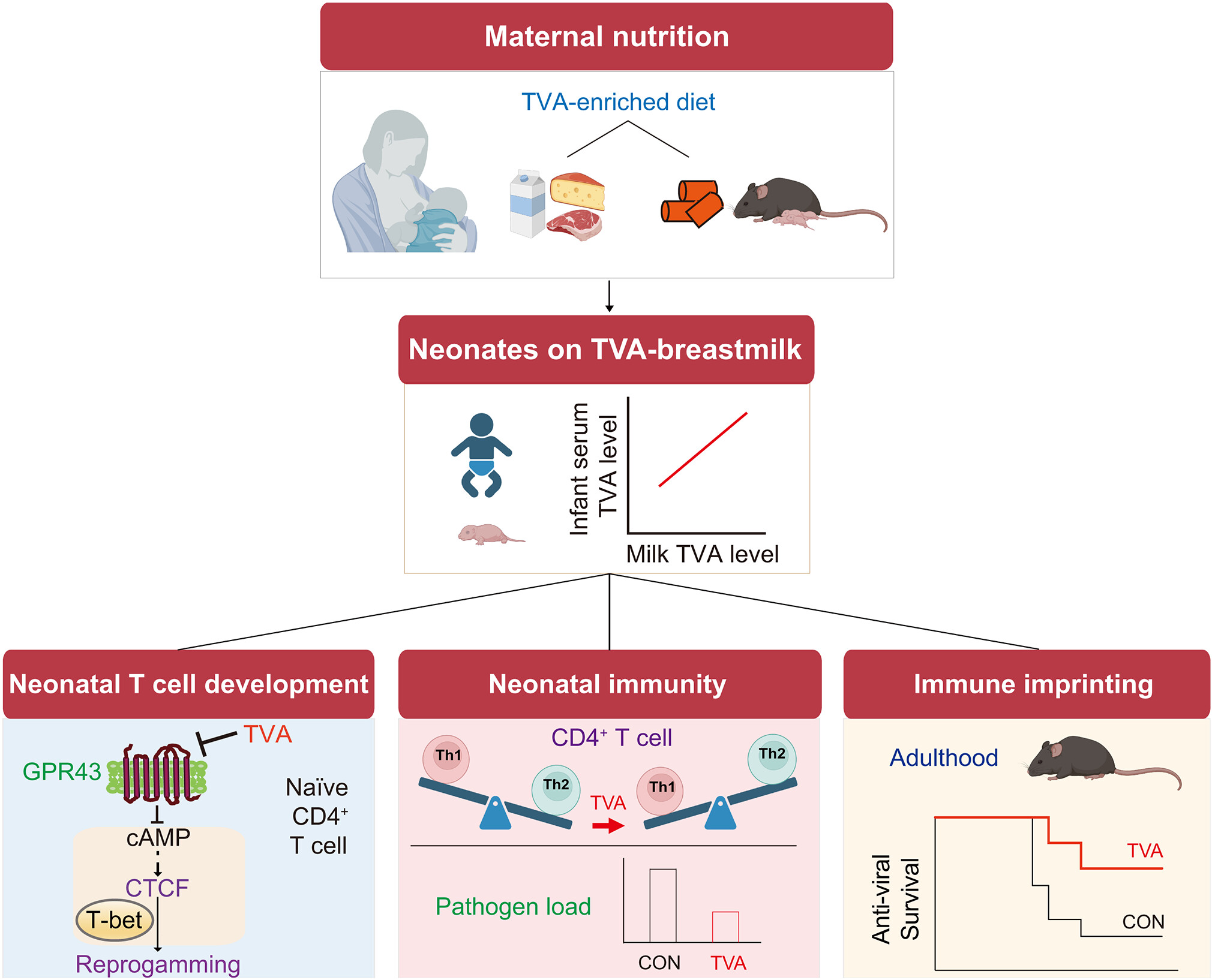
Maternal trans-vaccenic acid (TVA) in breast milk programs neonatal T cell development and immune imprinting.
Abstract
How maternal nutrition influences neonatal immune development and imprinting through breastfeeding remains largely unclear. We report that maternal supplementation with trans-vaccenic acid (TVA), the predominant naturally occurring trans-fatty acid in human breast milk, promoted neonatal T cell development in mice. Neonates fed by mothers on a TVA-enriched diet showed an expanded naïve cluster of differentiation 4 (CD4+) T cell population and enhanced adaptive immunity against infection. TVA reprogrammed neonatal naïve CD4+ T cells through a G protein–coupled receptor–CCCTC-binding factor axis and promoted T helper cells (Th1)–skewing by cooperating with the transcription factor TBX21. Early-life exposure to maternal TVA via breastfeeding supported long-lasting antiviral immunity in adulthood. Our findings establish the multifaceted benefits of maternal nutrition and breastfeeding via TVA in promoting infant immune homeostasis and protective immunity.
トランスバクセン酸はCD8 + T細胞と抗腫瘍免疫を再プログラムする Trans-vaccenic acid reprograms CD8+ T cells and anti-tumour immunity
Hao Fan,Siyuan Xia,Junhong Xiang,Yuancheng Li,Matthew O. Ross,Seon Ah Lim,Fan Yang,Jiayi Tu,Lishi Xie,Urszula Dougherty,Freya Q. Zhang,Zhong Zheng,Rukang Zhang,Rong Wu,Lei Dong,Rui Su,Xiufen Chen,Thomas Althaus,Peter A. Riedell,Patrick B. Jonker,Alexander Muir,Gregory B. Lesinski,Sarwish Rafiq,Madhav V. Dhodapkar,… Jing Chen
Nature Published:22 November 2023
DOI:https://doi.org/10.1038/s41586-023-06749-3
Abstract
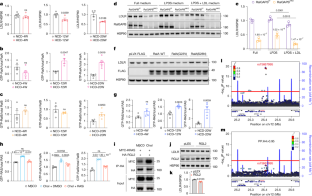
Diet-derived nutrients are inextricably linked to human physiology by providing energy and biosynthetic building blocks and by functioning as regulatory molecules. However, the mechanisms by which circulating nutrients in the human body influence specific physiological processes remain largely unknown. Here we use a blood nutrient compound library-based screening approach to demonstrate that dietary trans-vaccenic acid (TVA) directly promotes effector CD8+ T cell function and anti-tumour immunity in vivo. TVA is the predominant form of trans-fatty acids enriched in human milk, but the human body cannot produce TVA endogenously1. Circulating TVA in humans is mainly from ruminant-derived foods including beef, lamb and dairy products such as milk and butter2,3, but only around 19% or 12% of dietary TVA is converted to rumenic acid by humans or mice, respectively4,5. Mechanistically, TVA inactivates the cell-surface receptor GPR43, an immunomodulatory G protein-coupled receptor activated by its short-chain fatty acid ligands6,7,8. TVA thus antagonizes the short-chain fatty acid agonists of GPR43, leading to activation of the cAMP–PKA–CREB axis for enhanced CD8+ T cell function. These findings reveal that diet-derived TVA represents a mechanism for host-extrinsic reprogramming of CD8+ T cells as opposed to the intrahost gut microbiota-derived short-chain fatty acids. TVA thus has translational potential for the treatment of tumours.