2026-07-07 テキサスA&M大学
<関連情報>
- https://stories.tamu.edu/news/2026/07/07/making-the-invisible-visible-how-high-speed-movies-could-change-the-way-scientists-study-disease/
- https://www.pnas.org/doi/10.1073/pnas.2603591123
1kHzのフレームレートでの単一ショット広視野生化学イメージング Single-shot wide-field biochemical imaging at 1 kHz frame rate
Jizhou Wang wjzwjz1993@gmail.com, Nathan Marshall, Zehua Han, +8 , and Alexei V. Sokolov
Proceedings of the National Academy of Sciences Published:June 30, 2026
DOI:https://doi.org/10.1073/pnas.2603591123
Abstract
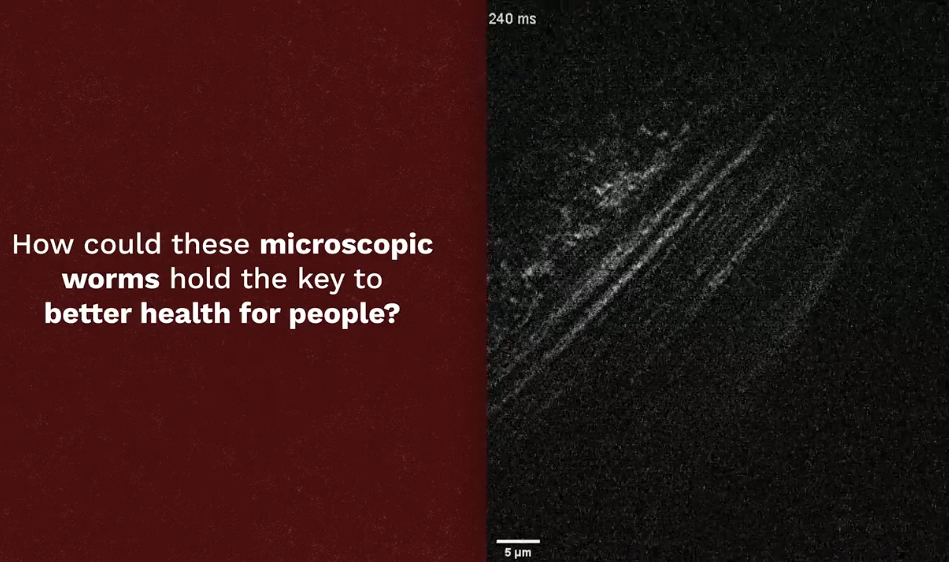
Vibrational microspectroscopy, including both Raman-based and infrared-based techniques, can map the chemical distribution of samples based on molecular vibrations without labeling. However, imaging fast dynamics in living organisms remains challenging. To address this, we propose a wide-field infrared microspectroscopy capable of single-shot imaging, where each image is captured with a single pair of laser pulses lasting approximately one picosecond. It minimizes motion blur and allows observing fast dynamic processes at frame rates up to the laser repetition rate. This approach is based on the infrared-resonant third-order sum-frequency process, which converts infrared light to visible signals. We demonstrate the capability through single-shot in vivo imaging of alive Caenorhabditis elegans worms in water, achieving a spatial resolution of approximately 400 nm. Additionally, 1,000 Hz single-shot videos of moving worms are shown by using a kHz laser system. This approach opens more possibilities for imaging chemicals involved in fast dynamic processes, offering diverse applications in both chemistry and biology.