2026-08-19 統計数理研究所
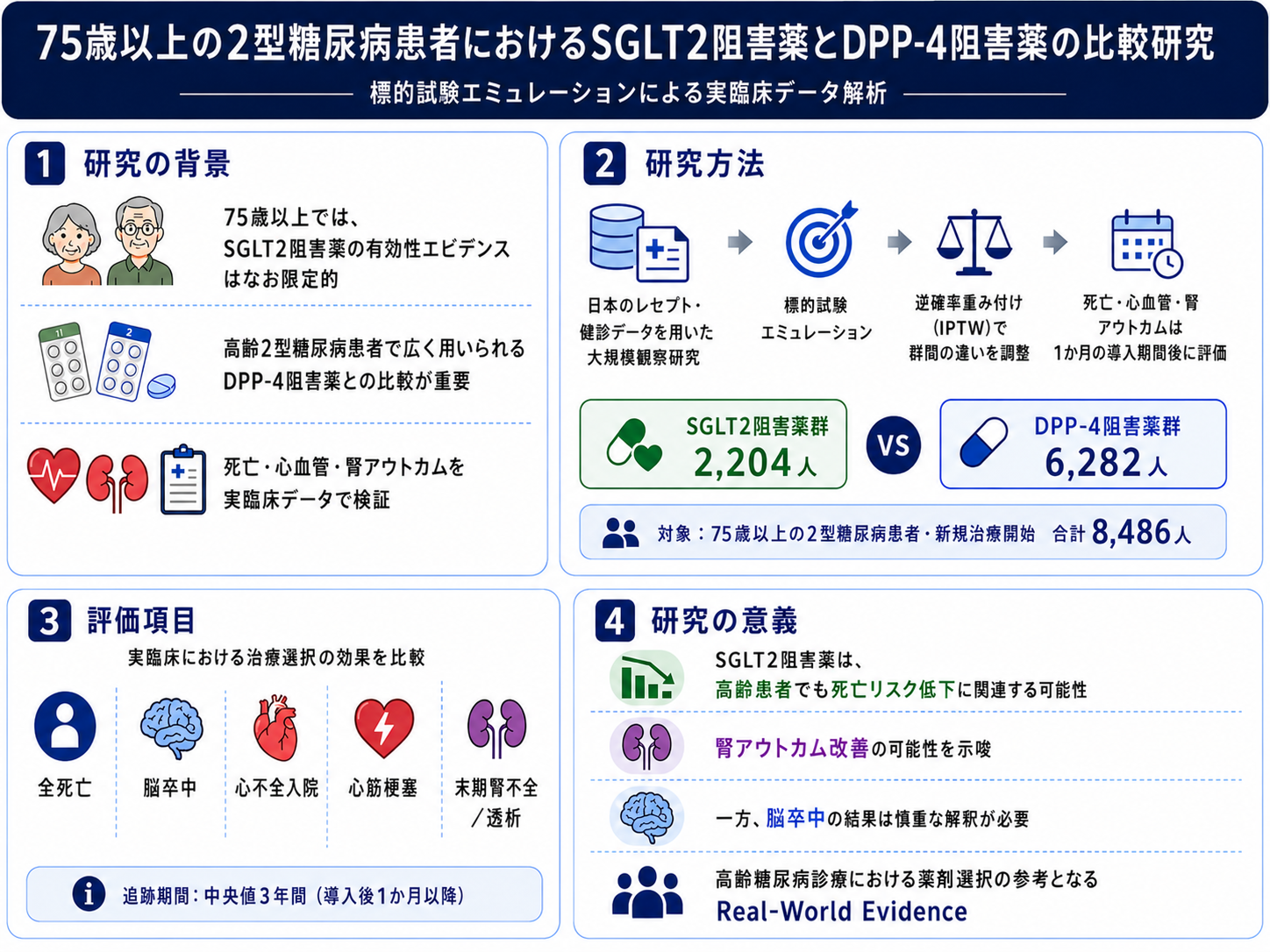
図1:約500万人規模のLIFE Studyを用いた、75歳以上の2型糖尿病患者におけるSGLT2阻害薬とDPP-4阻害薬の比較研究。
<関連情報>
- https://www.ism.ac.jp/ura/press/ISM2026-07.html
- https://academic.oup.com/ageing/article-abstract/55/8/afag246/8763887
75歳以上の成人におけるSGLT2阻害薬のリアルワールドでの有効性:標的試験エミュレーション Real-world effectiveness of SGLT2 inhibitors in adults aged 75 years or older: a target trial emulation
Hisashi Noma,Atsushi Goto,Taiki Sugimoto,Hiroshi Sunada,Futoshi Oda,Megumi Maeda,Haruhisa Fukuda
Age and Aging Published:19 August 2026
DOI:https://doi.org/10.1093/ageing/afag246
Abstract
Background
Sodium–glucose cotransporter 2 inhibitors (SGLT2i) improve cardiovascular and renal outcomes, but evidence in adults aged ≥75 years remains limited, particularly compared with dipeptidyl peptidase-4 inhibitors (DPP-4i).
Methods
We conducted a target trial emulation using linked administrative claims and health examination data in Japan. Individuals aged ≥75 years with type 2 diabetes who newly initiated an SGLT2i or DPP-4i were identified. Intention-to-treat (ITT) effects were estimated using inverse probability weighting, with a 1-month induction period for mortality, cardiovascular and renal outcomes.
Results
The study included 8486 individuals (2204 SGLT2i users, 6282 DPP-4i users). After a 1-month induction period, SGLT2i initiation was associated with lower all-cause mortality (hazard ratio [HR] 0.677, 95% confidence interval [CI] 0.500–0.916) and lower risk of end-stage renal disease or dialysis (HR 0.374, 95% CI 0.157–0.890). No clear differences were observed for heart failure hospitalisation (HR 1.103, 95% CI 0.854–1.426) or myocardial infarction (HR 1.015, 95% CI 0.768–1.341) in the ITT analysis. Stroke occurred more frequently among SGLT2i users (HR 1.420, 95% CI 1.165–1.828), although this finding should be interpreted cautiously.
Conclusions
Among adults aged ≥75 years with type 2 diabetes, SGLT2i initiation was associated with lower all-cause mortality and renal risk compared with DPP-4i initiation. The higher observed stroke risk requires cautious interpretation because residual confounding, competing mortality and heterogeneity in vulnerable older adults may contribute to this signal.