2026-09-14 国立成育医療研究センター
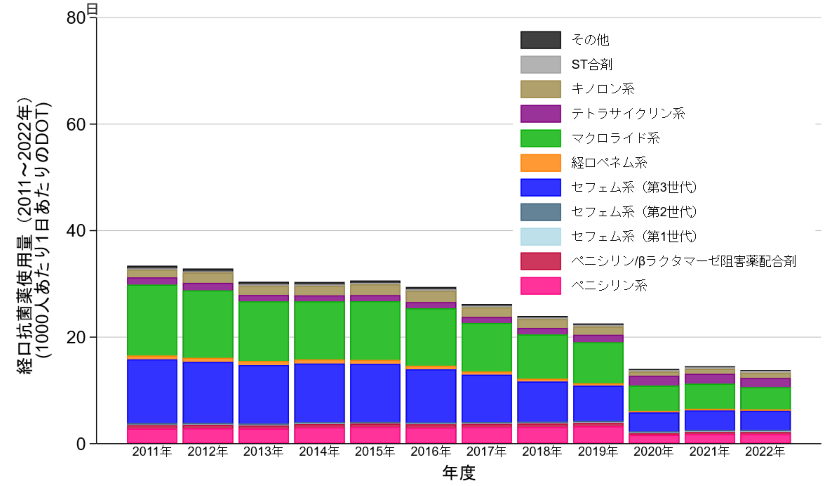
【図1:日本の小児における経口抗菌薬使用量の年次推移(2011~2022 年度)】
<関連情報>
- https://www.ncchd.go.jp/press/2026/0914.html
- https://www.jmaj.jp/detail.php?id=10.31662/jmaj.2026-0031
- https://onlinelibrary.wiley.com/doi/10.1111/1346-8138.70404
日本における小児経口抗生物質処方の長期的な全国動向、2011年~2022年 Long-term National Trends in Pediatric Oral Antibiotic Prescriptions in Japan, 2011–2022
Yusuke Okubo, Kazuhiro Uda, Noriko Iwamoto, and Isao Miyairi
JMA Journal Published: September 15, 2026
DOI:10.31662/jmaj.2026-0031
Abstract
Introduction: Antimicrobial resistance is a major global health challenge, prompting Japan to implement a National Action Plan in 2016. This study examined long-term national trends from 2011 to 2022 to evaluate the impact of national health policy and identify priority areas for future antimicrobial stewardship efforts.
Methods: We conducted time-series analyses of oral antibiotic prescriptions among children aged 0-19 years in Japan using 408 million outpatient claims from the National Database between fiscal years 2011 and 2022. Antibiotic use was measured as days of therapy per 1,000 pediatric inhabitants per day (DOTs/PID). Trends and relative changes were evaluated using multivariable Poisson regression, with additional analyses stratified by age and prefecture.
Results: Total antibiotic prescriptions decreased by 58.6% between 2011 and 2022 (from 33.4 to 13.8 DOTs/PID), with a marked slope change (–8.2%) following the implementation of the National Action Plan in 2016 and a substantial level drop (–36.4%) during the coronavirus disease 2019 pandemic. We also observed marked reductions in macrolides and cephalosporins but a 23.9% increase in tetracyclines. Reductions were limited among adolescents aged 15-19 years, and tetracycline use increased particularly after 2017. All prefectures showed declines in antibiotic use (38%-67%), although quinolone prescriptions varied widely, and tetracycline use increased in most prefectures.
Conclusion: Pediatric antibiotic prescriptions in Japan decreased substantially between 2011 and 2022, particularly for macrolides and cephalosporins, while tetracycline use increased among adolescents. These long-term national trends provide important implications for the need for sustained, age-specific interventions in the post-pandemic era.
日本における小児および青年への経口テトラサイクリンの使用:傾向、適応症、および治療パターン Oral Tetracycline Use in Children and Adolescents in Japan: Trends, Indications, and Treatment Patterns
Yusuke Okubo, Kazuhiro Uda, Noriko Iwamoto, Isao Miyairi
The Journal of Dermatology Published: 15 July 2026
DOI:https://doi.org/10.1111/1346-8138.70404
ABSTRACT
Antimicrobial use among children in Japan has declined substantially; however, tetracycline use has increased among adolescents, particularly after 2017 and during the COVID-19 period, and the underlying clinical indications remain unclear. We aimed to characterize long-term trends in oral tetracycline use, changes in clinical indications, and treatment patterns among individuals aged < 20 years in Japan. We conducted a time-series analysis using a nationwide administrative claims database of Japan Health Insurance Association from 2015 to 2023, including 24 million individuals aged < 20 years. Oral tetracycline use was measured as days of therapy (DOTs) per 1000 inhabitants per day, and clinical indications were identified using ICD-10 codes. We assessed trends in tetracycline use and indications over time and described treatment patterns, including concomitant therapies, among patients with acne vulgaris. Oral tetracycline use increased from 0.95 to 1.76 DOTs per 1000 inhabitants per day between 2015 and 2023, primarily driven by doxycycline, with a marked rise after 2020 and highest use among adolescents. The clinical indications shifted substantially, with the proportion of acne vulgaris increasing from 34.1% to 73.6% while respiratory infections decreased, and the mean treatment duration for acne was 37.9 days. Among patients with acne, concomitant use of adapalene- and benzoyl peroxide–based therapies was limited, whereas topical antibiotics were commonly used. Oral tetracycline use among individuals aged < 20 years in Japan increased substantially, with a marked shift in clinical indications toward acne vulgaris. These findings provide a basis for further evaluation of acne treatment patterns, including the use of oral tetracyclines and non-antibiotic topical therapies, in Japan.
.jpg "筋強直性ジストロフィー1型の筋病理に、 筋幹細胞の融合と筋核の成熟障害が関与することを発見")