2026-08-19 東北大学
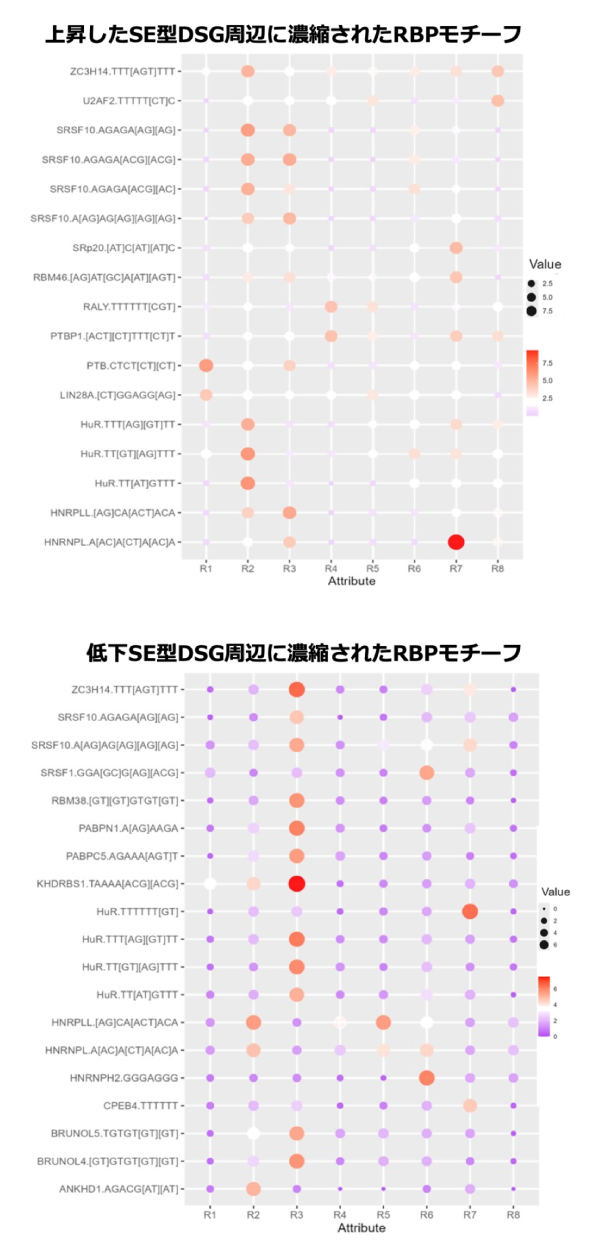
図1. スプライシングが起きた遺伝子のRNA結合タンパク質モチーフ濃縮解析による、選択的スプライシングの候補制御因子としてのHuRを特定。
<関連情報>
- https://www.tohoku.ac.jp/japanese/2026/08/press20260819-03-hur.html
- https://www.cell.com/iscience/fulltext/S2589-0042(26)01904-8
トランスクリプトーム全体にわたるスプライシング解析により、骨細胞におけるHuR制御の転写後プログラムが明らかになった Transcriptome-wide splicing analysis reveals HuR-regulated post-transcriptional programs in osteocytes
Ziqiu Fan ∙ Aseel Marahleh ∙ Hideki Kitaura ∙ … ∙ Kuniyasu Niizuma ∙ Sherif Rashad ∙ Hiroyasu Kanetaka
iScience Published:August 10, 2026
DOI:https://doi.org/10.1016/j.isci.2026.116529
Highlights
- High glucose induces extensive splicing changes in osteocytes
- HuR-binding motifs are enriched around spliced transcripts in high glucose
- HuR KD rewires translation signaling pathways (MNK and mTOR)
- HuR uncouples TXNIP mRNA-protein levels post-transcriptionally
Summary
Post-transcriptional gene regulation is central to maintaining cellular homeostasis. Among its mechanisms, alternative splicing (AS) fine-tunes cellular adaptation to stress. This study employed an approach combining RNA splicing analysis with RNA-binding protein (RBP) motif enrichment in primary osteocytes cultured in high-glucose conditions. Our analysis identified the RBP human antigen R (HuR) as a top candidate associated with AS regulation. Loss of HuR reshaped the transcriptome through gene expression and splicing changes, converging on two major pathways: stress response and translational control. Functional validation revealed that HuR depletion heightened oxidative stress, impaired mitochondrial function, and rewired key translational signals, while preserving global protein output. Mechanistically, we identified TXNIP mRNA-protein uncoupling following HuR knockdown (KD), characterized by elevated mRNA but reduced protein expression. Collectively, these findings support HuR’s role as a key post-transcriptional regulator of osteocyte metabolic adaptation under high-glucose stress, with potential implications for hyperglycemic bone fragility.