2026-07-17 テキサス大学オースチン校
<関連情報>
- https://news.utexas.edu/2026/07/17/publishing-in-a-leading-journal-as-undergraduates/
- https://www.nature.com/articles/s41586-026-10711-4
宿主細胞への定着に不可欠な分泌型内共生体タンパク質 A secreted endosymbiont protein essential for colonizing host cells
Gerald P. Maeda,,Allen Z. Xue,Ethan W. Yu,Aadhunik Sundar,Derrick L. Kamp,J. Elijah Powell,Thomas E. Smith & Nancy A. Moran
Nature Published:01 July 2026
DOI:https://doi.org/10.1038/s41586-026-10711-4
Abstract
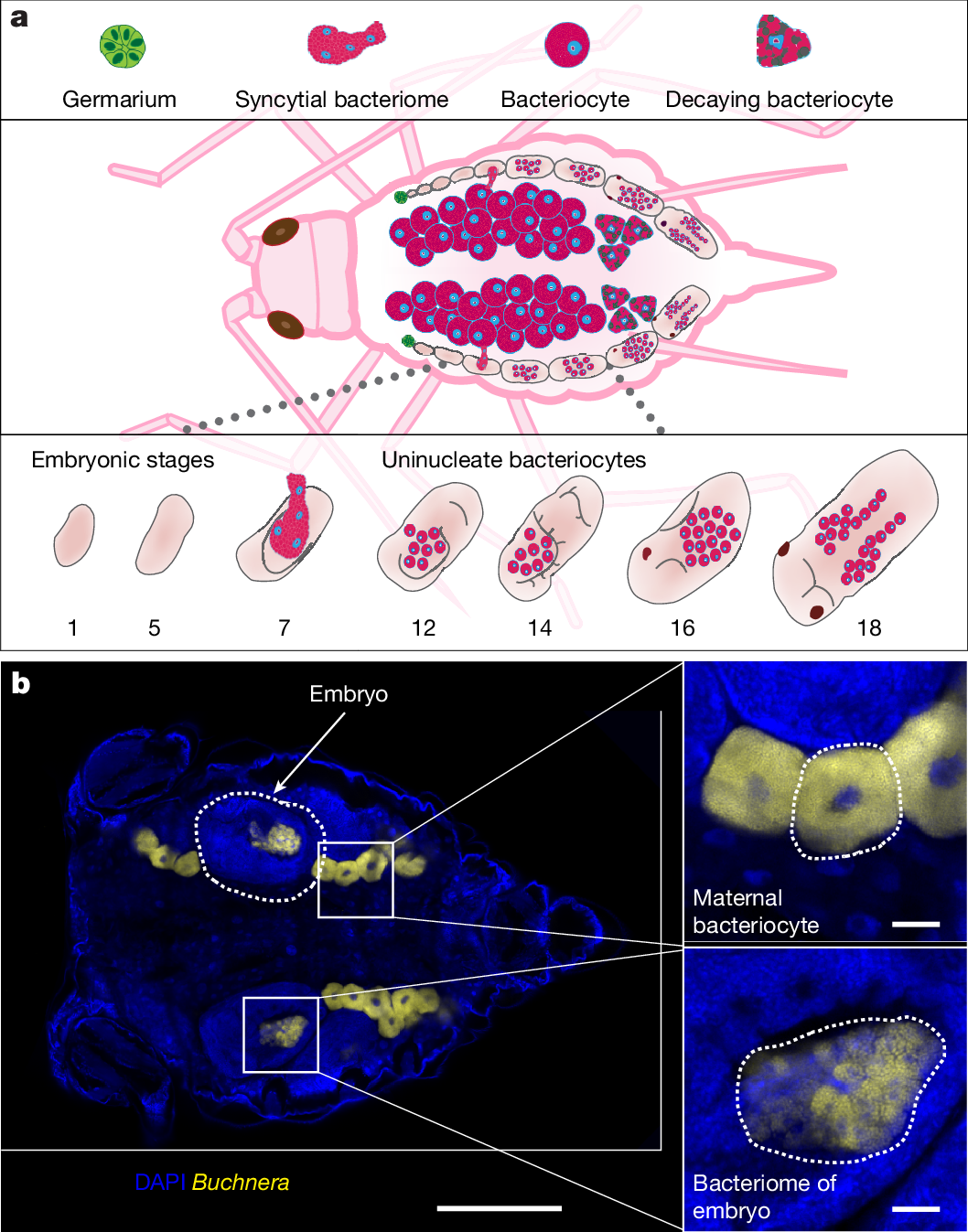
Intracellular bacterial symbioses have arisen myriad times in eukaryotes, with dozens known from insects alone1,2. Beginning with Buchnera, the obligate endosymbiont of aphids, genomes of endosymbionts have illuminated their evolutionary origins and metabolic contributions to hosts3,4. However, the mechanisms by which non-culturable endosymbionts enter host cells and suppress cellular immune processes have remained unclear. Here we show that an uncharacterized Buchnera protein, designated SyeA, was present in the Buchnera ancestor, is secreted into the host cytoplasm, is homologous to secreted effectors of bacterial pathogens and is essential for Buchnera transmission. Buchnera is transmitted through expulsion from specialized maternal cells and uptake by embryos5. Using immunofluorescence microscopy, we found elevated SyeA levels after colonization of the embryonic cell, accompanied by actin accumulation at the entry site. SyeA localizes outside the host-derived membrane and actin layer surrounding each Buchnera cell within host cytoplasm. Knockdown of syeA expression disrupts colonization of embryos and embryonic development and elevates lysosomal activity, leading to Buchnera destruction6. Our findings provide insights into how an anciently associated, mutualistic endosymbiont achieves its intracellular existence. SyeA represents a vestige of pathogenic origins that was followed by evolution of increased host control and erosion of the original, more complex pathogenicity machinery.