2026-08-14 マウントサイナイ医療システム(MSHS)
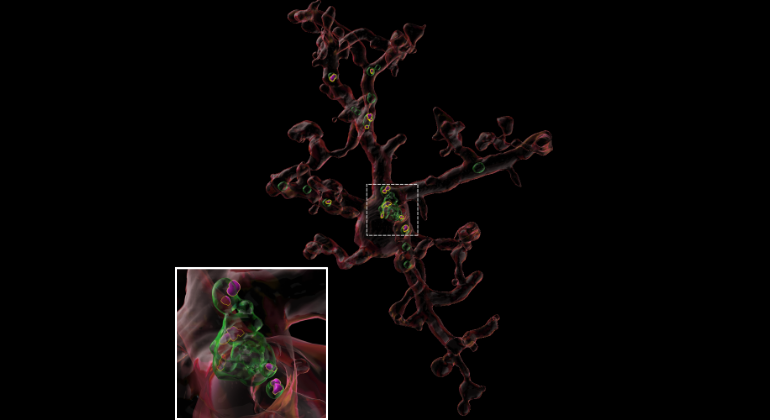
Image reconstruction of microglia from an aged mouse treated with TIMP2 showing synaptic material (purple) within the cell’s lysosomes (green). Credit: Mount Sinai Health System
<関連情報>
- https://www.mountsinai.org/about/newsroom/2026/youth-associated-protein-helps-restore-healthy-function-in-immune-cells-in-the-aging-brain
- https://www.nature.com/articles/s41467-026-74906-z
若年期関連タンパク質TIMP2は、健康なマウスと高齢マウスにおけるミクログリアの状態と機能を調節する Youth-associated protein TIMP2 regulates microglial state and function in healthy and aged mice
Brittany M. Hemmer,Sarah M. Philippi,Ana Catarina Ferreira,Samuele F. Petridis,Annie Phan & Joseph M. Castellano
Nature Communications Published:12 August 2026
DOI:https://doi.org/10.1038/s41467-026-74906-z
Abstract
There is little understanding of how aging serves as the strongest risk factor for several neurodegenerative diseases. Microglia undergo age-related maladaptive changes, including increased inflammation, impaired debris clearance, and cellular senescence, yet specific mediators that regulate these processes remain unclear. The aged brain is rejuvenated by youth-associated plasma factors, including tissue inhibitor of metalloproteinases 2 (TIMP2), which we have shown acts on the extracellular matrix (ECM) to regulate synaptic plasticity. Given emerging roles for microglia in these processes, we examined the impact of TIMP2 on microglial function. We show that TIMP2 deletion in mice exacerbates microglial phenotypes associated with aging, including transcriptomic changes in cell activation, changes in lysosomal-associated markers and phagocytosis, and elevated levels of stress and inflammatory proteins in the brain extracellular space measured by in vivo microdialysis. Deleting specific cellular pools of TIMP2 in vivo increases microglial CD68 and alters myelin phagocytosis. Treating aged mice with TIMP2 reverses several phenotypes observed in our deletion models, resulting in decreased microglial activation, reduced proportions of proinflammatory microglia, and enhanced phagocytosis of physiological substrates. Our results identify TIMP2 as a modulator of age-associated microglia dysfunction. Harnessing its activity may mitigate detrimental effects of age-associated insults on microglia function.