2026-08-18 カロリンスカ研究所(KI)
<関連情報>
- https://news.ki.se/new-tool-measures-the-biological-age-of-cells
- https://advanced.onlinelibrary.wiley.com/doi/10.1002/advs.76740
多機能なトランスクリプトーム時計であるPastaは、老化と若返りの化学的および遺伝的決定要因を解明する Pasta, a Versatile Transcriptomic Clock, Maps the Chemical and Genetic Determinants of Aging and Rejuvenation
Jérôme Salignon, Maria Tsiokou, Patricia Marqués, Enriqueta Rodríguez-Diaz, Hazel Ang, Federico Pietrocola, Christian G. Riedel
Advanced Science Published: 27 July 2026
DOI:https://doi.org/10.1002/advs.76740
ABSTRACT
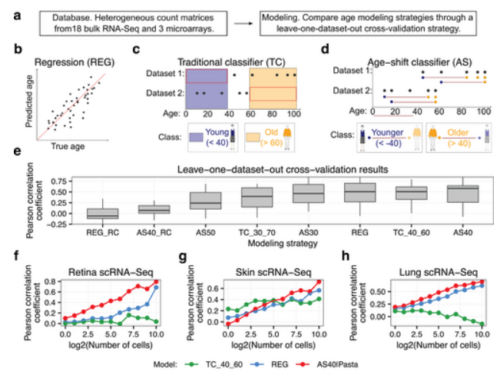
With the growing burden of age-related diseases, understanding and modulating the aging process has become a priority. Transcriptomic aging clocks (TACs) can track biological age but remain limited by platform dependence, tissue specificity, or restricted accessibility. To address this, we developed Pasta, a robust and broadly applicable human TAC, built using a novel ‘age-shift’ learning framework. Pasta accurately predicted relative age across diverse tissues and data types, including bulk and single-cell RNA-Seq as well as microarray data. Its predictions aligned with senescent and stem-like cellular states and relied on model coefficients enriched for p53 and DNA damage response pathways. Pasta’s age scores correlated with tumor grade and patient survival in several cancer types, indicating potential clinical relevance. Applied to over three million transcriptomes from the Connectivity Map L1000 dataset, Pasta identified both established and previously unrecognized age-modulatory compounds and genetic perturbations, highlighting mitochondrial translation and mRNA splicing as key determinants of cellular propensity for aging and rejuvenation, respectively. Experimental validation confirmed pralatrexate as a potent senescence inducer and piperlongumine as a rejuvenating agent in human cells. Together, these findings establish Pasta as a versatile and accessible tool for aging research and therapeutic discovery.