2026-09-17 ロックフェラー大学
<関連情報>
- https://www.rockefeller.edu/news/40454-hiv-antibody-drug-trial/
- https://www.nature.com/articles/s41591-026-04644-8
HIV感染成人男性における治療中断中の広範な中和抗体:第II相ランダム化比較試験RIO試験の副次的および探索的結果 Broadly neutralizing antibodies in adult males living with HIV undergoing analytical treatment interruption: secondary and exploratory outcomes of the phase II randomized controlled RIO trial
Marcilio J. Fumagalli, Anna Kaczynska, Marius Allombert, Ágata Lopes-Ribeiro, Mariângela de Oliveira Silva, Brianna J. Hernandez, Christy Lavine, Sebastian M. Espinosa, Helen Brown, Hanna Box, Emanuela Falaschetti, Louise-Rae Cherrill, Tamara Elliott, Ming Lee, Julie Fox, Sarah Pett, Amanda Clarke, Alison Uriel, Ole Sogaard, Rebecca Sutherland, Marta Boffito, Sabine Kinloch-Loes, Chloe Orkin, Simon Collins, … Michel C. Nussenzweig
Nature Medicine Published:15 September 2026
DOI:https://doi.org/10.1038/s41591-026-04644-8
Abstract
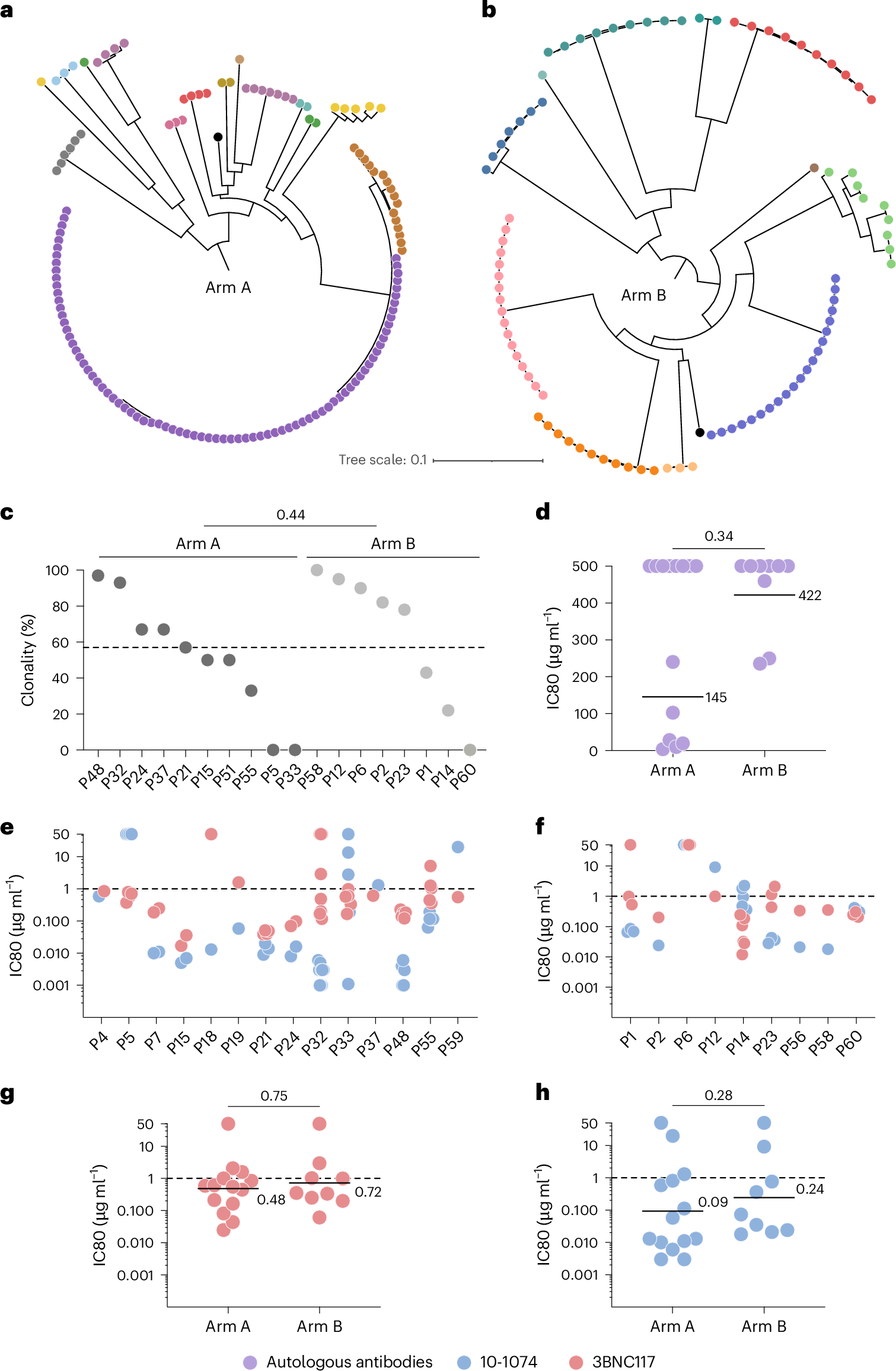
RIO is an ongoing phase 2 double-blind randomized placebo-controlled human trial. Sixty-eight adult men living with human immunodeficiency virus (HIV), who were predominantly white and initiated antiretroviral therapy (ART) during primary or early-stage infection, underwent treatment interruption and were randomly assigned to a group receiving one or two doses of two long-acting broadly neutralizing antibodies (bNAbs) 3BNC117-LS and 10-1074-LS (arm A, n = 34) or saline (arm B, n = 34). The primary clinical study met its primary endpoint and was published elsewhere, demonstrating significantly delayed viral rebound and prolonged ART-free control in participants receiving bNAbs compared with placebo. The infusions were generally safe and well tolerated, with no study-related serious adverse events reported. The most common reported treatment-related adverse events were fatigue, lethargy and somnolence. Here we report on prespecified secondary analyses examining viral rebound, antibody sensitivity and reservoir dynamics, as well as prespecified exploratory analyses of rebound virus evolution and autologous antibody activity. Preinfusion reservoir measurements showed low levels of intact proviral HIV-1 DNA in circulating CD4+ T cells in both arms. The rebounding viruses in participants who received the antibodies showed significant selection for resistance to 10-1074-LS but not to 3BNC117-LS. Notably, there was a significant correlation between greater initial reservoir sensitivity to autologous antibodies and 10-1074 and time to rebound. Finally, comparison of preinfusion and prerebound HIV-1 proviral reservoir showed a decrease in intact but not defective proviruses in arm A but not in arm B. Together, these findings suggest that baseline humoral immunity and prolonged exposure to LS-bNAbs jointly shape post-treatment viral rebound dynamics in individuals who initiate ART during primary infection. ClinicalTrials.gov identifier: NCT04319367.