2026-09-23 カリフォルニア大学アーバイン校(UCI)
<関連情報>
- https://news.uci.edu/2026/09/23/stealth-tactic-makes-chemotherapy-smarter/
- https://www.nature.com/articles/s41392-026-02835-w
プローブからプロドラッグへ:免疫プロテアソーム活性を疾患選択的治療のトリガーとして利用する From probe to prodrug: immunoproteasome activity as a trigger for disease-selective therapeutics
Cody A. Loy, Yijun Gu, Samuel C. Kim, Mariam V. Mohagheghi, Noah B. Trask, Marina Suarez-Pizarro, Lisa E. Wagar, Claudia A. Benavente & Darci J. Trader
Signal Transduction and Targeted Therapy Published:12 August 2026
DOI:https://doi.org/10.1038/s41392-026-02835-w
Abstract
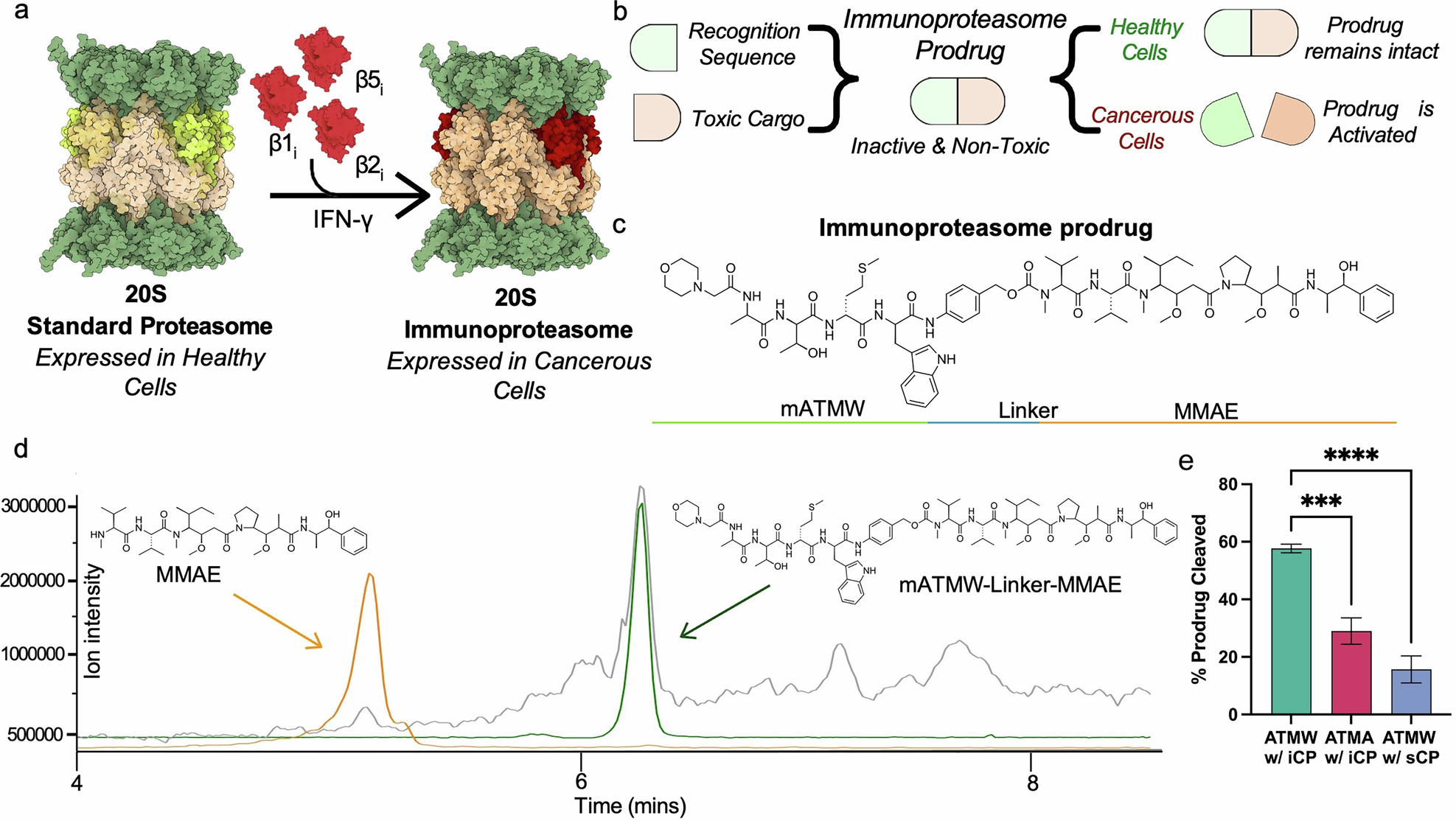
Developing novel strategies that can exploit a cell’s endogenous machinery to selectively release toxic compounds in diseased cells, while leaving healthy cells unaffected, is a challenging task to accomplish. An established approach involves antigen recognition on tumor cells, enabling targeted delivery of prodrugs in which a cytotoxic compound is appended to an antibody by a cleavable linker. However, this strategy depends on the presence of highly expressed surface markers for which antibodies can be developed, limiting its applicability to cancers that display these markers. A new approach that could rely on disease-specific expression of an intracellular enzyme, which can be more broadly targeted, could expand the therapeutic potential of prodrugs clinically. Here, we demonstrate that the immunoproteasome, an isoform of the standard proteasome that is upregulated under conditions of inflammation, has the potential to be harnessed as a prodrug release enzyme. We conjugate the highly toxic and widely used therapeutic cargo MMAE onto an immunoproteasome-selective peptide and demonstrate its selective release in cancerous cells at low nM to pM concentrations, while healthy cells remain viable. We also establish the first translational validation that using immunoproteasome prodrugs in vivo leads to a significant reduction in tumor volume without significant toxicities in small cell lung cancer. We anticipate this approach to be broadly applicable, as the immunoproteasome is upregulated in a variety of cancers and does not require antibody recognition to be effective.