2026-10-14 ワシントン大学セントルイス校
<関連情報>
- https://source.washu.edu/2026/10/vaccinating-moms-protects-offspring-from-deadly-superbug/
- https://www.science.org/doi/10.1126/sciadv.aeh8222
莢膜多糖体バイオコンジュゲートを用いた母体ワクチン接種は、マウスの肺炎桿菌による新生児敗血症を予防する Maternal vaccination with capsular polysaccharide bioconjugates protects against murine Klebsiella pneumoniae neonatal sepsis
Paeton L. Wantuch, Jessica Tung, Lloyd S. Robinson, Isra Darwech, […] , and David A. Rosen
Science Advances Published:14 Oct 2026
DOI:https://doi.org/10.1126/sciadv.aeh8222

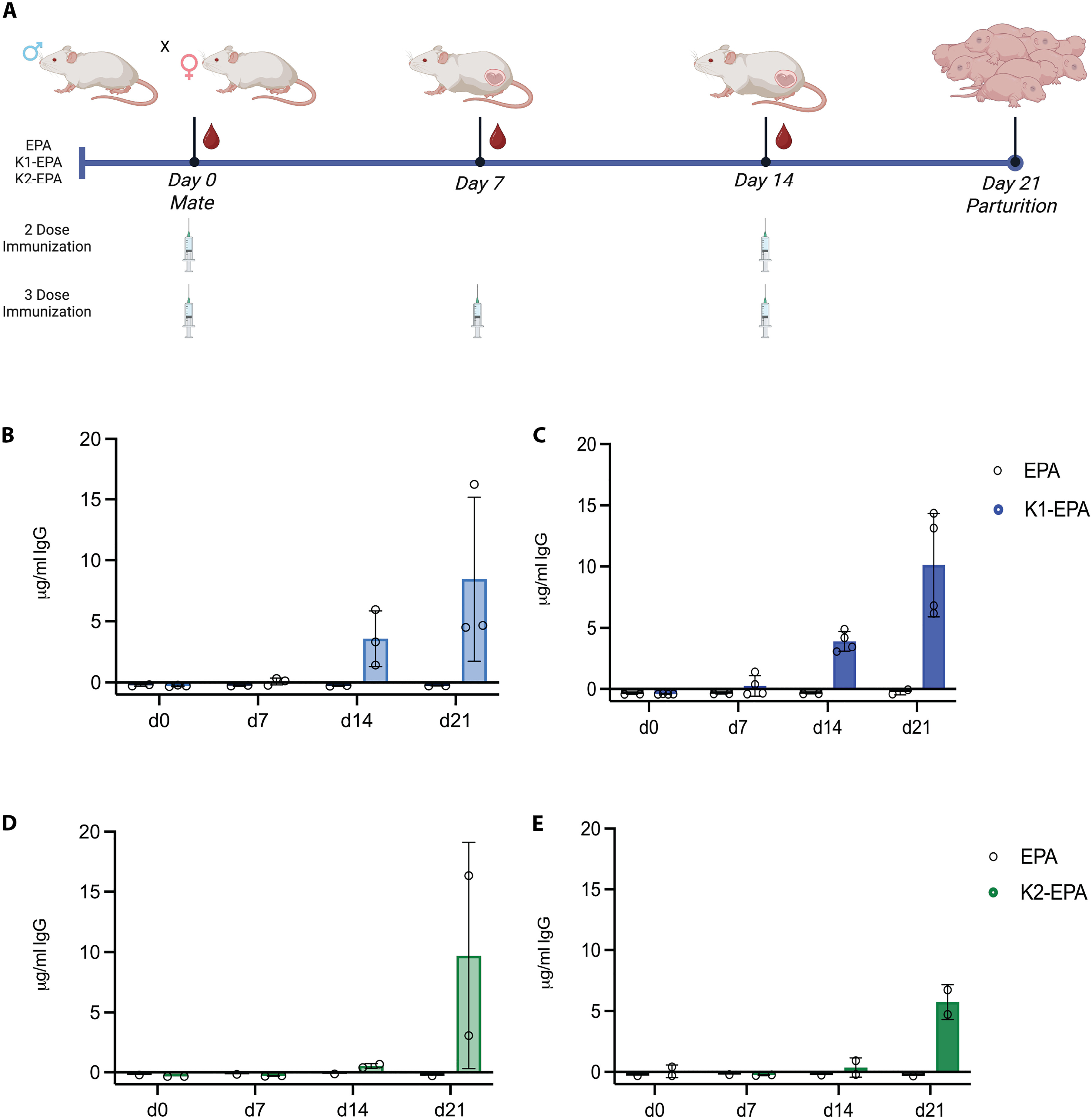
Fig. 1. Maternal immunization using K1 or K2 capsule conjugate vaccines.
Abstract
Klebsiella pneumoniae is the leading cause of neonatal sepsis in low- and middle-income countries and the foremost cause of infectious deaths in young children. K. pneumoniae isolates are becoming increasingly resistant to antibiotics, creating a great need for additional therapies or preventative strategies. Maternal vaccination serves as an attractive approach to protect from K. pneumoniae neonatal sepsis. Herein, we report a murine model of maternal immunization followed by pup challenge to evaluate putative K. pneumoniae vaccines. Dams were immunized with capsular polysaccharide bioconjugate vaccines at mating and boosted with two different immunization schedules throughout the gestational period. After parturition, offspring were tested for antigen-specific antibody levels and later challenged with a lethal dose of K. pneumoniae. Pups born to dams immunized with K1- and K2-conjugate vaccines demonstrated significant protection from sepsis relative to control pups. Antibodies transferred from vaccinated dams persisted and remained protective in pups for at least six weeks after birth. Collectively these results demonstrate a feasible and reproducible murine model of maternal immunization verifying the efficacy of bioconjugate vaccines in protecting against lethal neonatal K. pneumoniae infection.