2025-06-25 ブラウン大学
<関連情報>
- https://www.brown.edu/news/2025-06-25/heart-research
- https://www.nature.com/articles/s44161-025-00670-w
AIMP3はメチオニルtRNA合成酵素の編集活性を制御することで心臓の恒常性を維持する AIMP3 maintains cardiac homeostasis by regulating the editing activity of methionyl-tRNA synthetase
Anindhya S. Das,Charles P. Rabolli,Colton R. Martens,Han-Kai Jiang,Yingshen Zhang,Aubree A. Zimmer,Kevin Lin,Kedryn K. Baskin,Juan D. Alfonzo & Federica Accornero
Nature Cardiovascular Research Published:25 June 2025
DOI:https://doi.org/10.1038/s44161-025-00670-w
Abstract
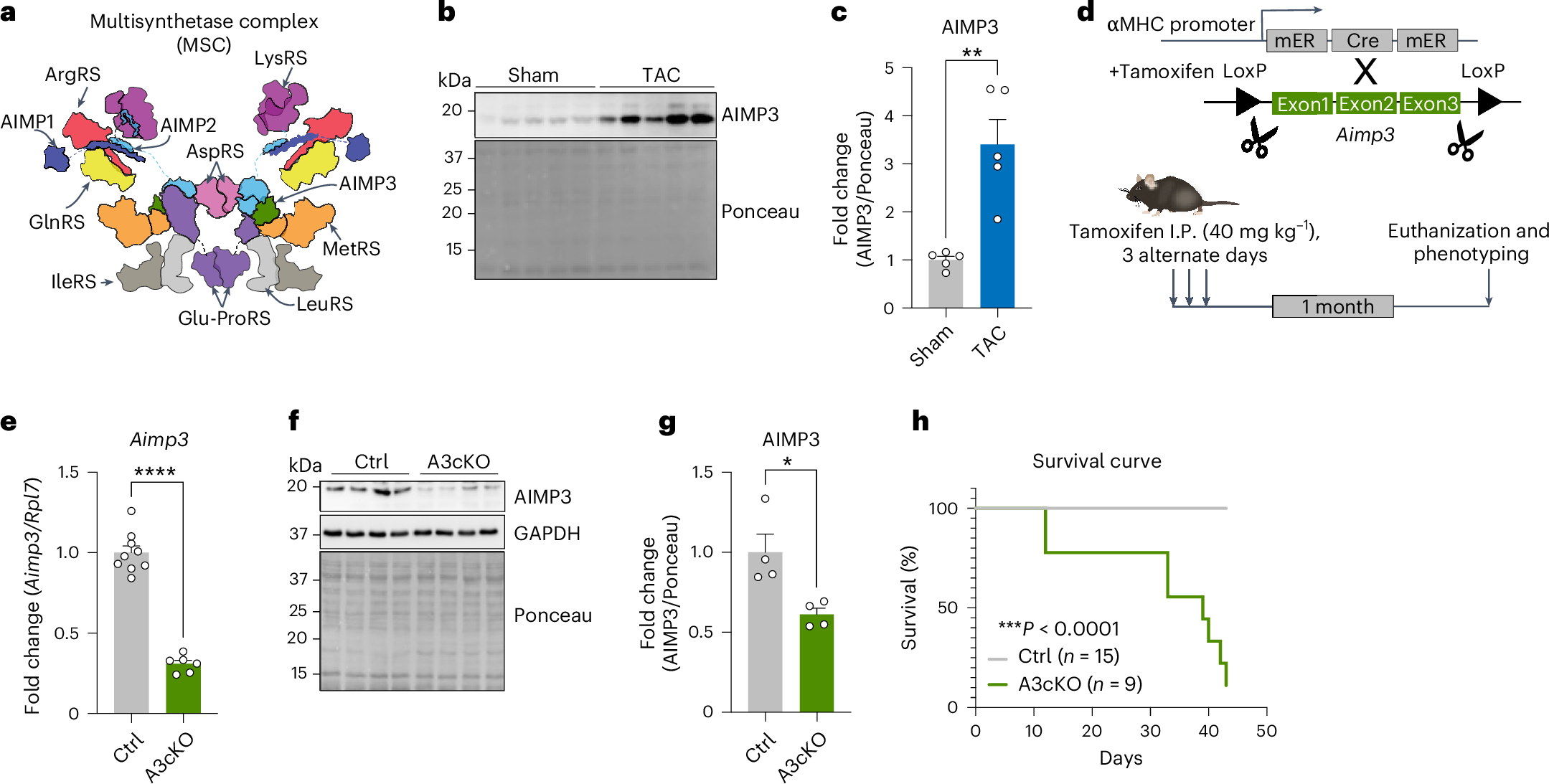
In mammals, nine aminoacyl tRNA synthetases (ARSs) and three auxiliary proteins (ARS-interacting multifunctional proteins 1–3 (AIMP1–3)) form the multisynthetase complex (MSC), a molecular hub that provides a subset of aminoacylated tRNAs to the ribosome and partakes in translation-independent signaling. Knowledge of the role of AIMPs in organ physiology is currently limited. AIMP3 (also known as EEF1E1) was proposed to anchor methionyl tRNA synthetase (MetRS) in the complex and regulate protein synthesis through translation initiation and elongation. Here we show that a cardiomyocyte-specific conditional knockout of AIMP3 in mice leads to lethal cardiomyopathy. MetRS localization, aminoacylation efficiency and global protein synthesis were unaffected in our model, suggesting an alternative mechanism for the pathology. We found that AIMP3 is essential for homocysteine editing by MetRS, a reaction that is necessary for the maintenance of translation fidelity. Homocysteine accumulation induced reactive oxygen species production, protein aggregation, mitochondrial dysfunction, autophagy and ultimately cell death.