2026-03-25 ニューヨーク大学(NYU)
<関連情報>
- https://www.nyu.edu/about/news-publications/news/2026/march/scientists-find–blink-of-an-eye–timing-in-how-we-use-our-brain.html
- https://www.nature.com/articles/s41593-026-02227-x
アセチルコリンは、学習と運動のための異種ドーパミン信号を分離する Acetylcholine demixes heterogeneous dopamine signals for learning and moving
Hee Jae Jang,Royall McMahon Ward,Carla E. M. Golden & Christine M. Constantinople
Nature Neuroscience Published:25 March 2026
DOI:https://doi.org/10.1038/s41593-026-02227-x
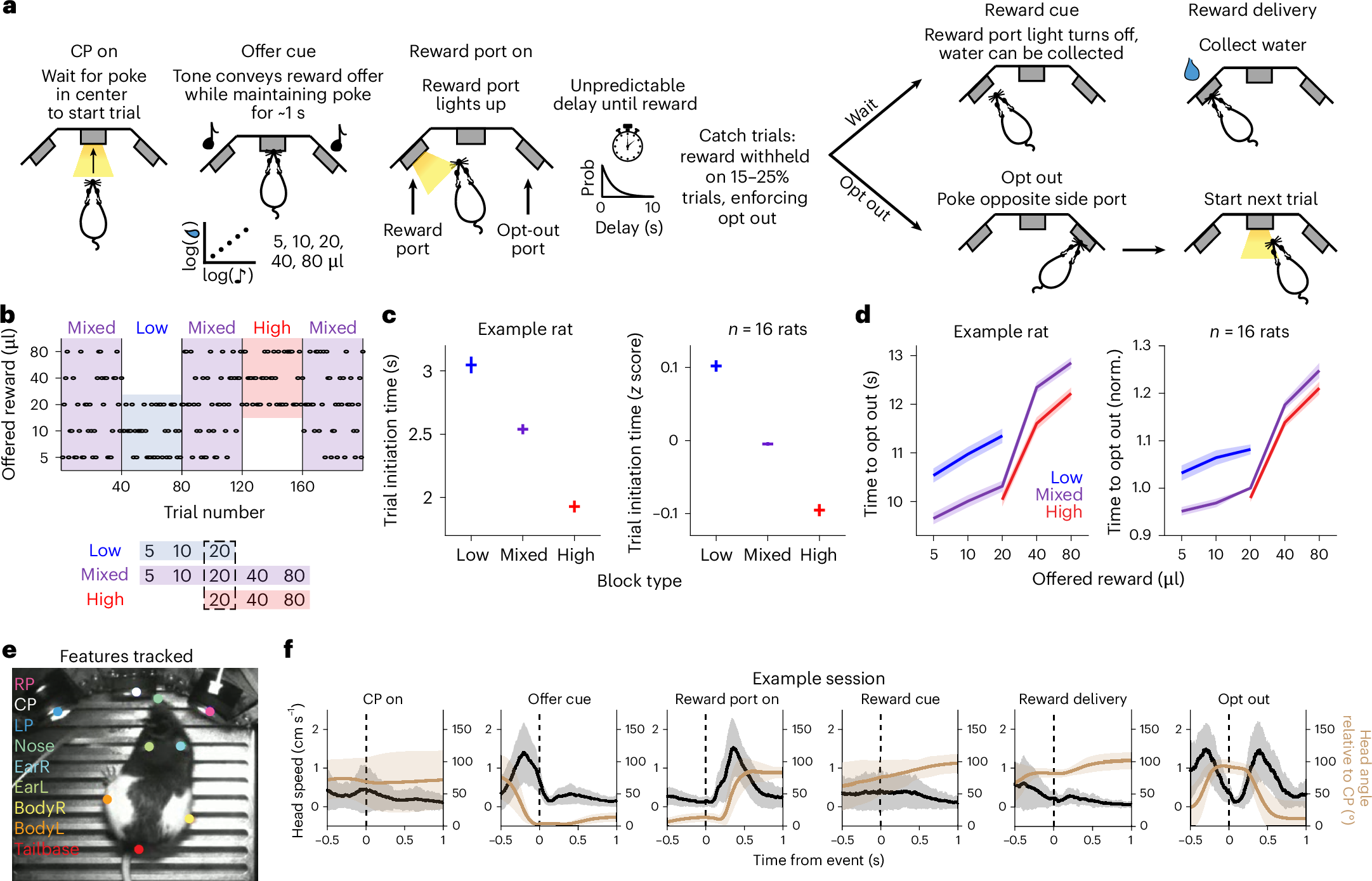
Abstract
Midbrain dopamine neurons promote reinforcement learning and movement vigor. An outstanding question is how dopamine-recipient neurons in the striatum parse these heterogeneous signals. Previous work suggests that cholinergic striatal interneurons may gate dopamine-dependent plasticity, but this has not been tested in behaving animals. Here we studied rats performing a decision-making task with reward-related and movement-related events. Optical measurement of dopamine and acetylcholine release in the dorsomedial striatum (DMS) revealed that reward cues evoked cholinergic pauses with different phase relationships relative to dopamine. When dopamine lagged cholinergic dips, dopamine predicted future behavior and DMS firing rates on subsequent trials. In contrast, when dopamine preceded cholinergic dips, there was no observable relationship between dopamine and learning. Finally, when dopamine was coincident with cholinergic bursts, it preceded and predicted the vigor of contralateral orienting movements. Our findings suggest that cholinergic dynamics determine whether dopamine promotes vigor or learning, depending on the instantaneous behavioral context.