2026-05-07 ペンシルベニア州立大学(Penn State)
<関連情報>
- https://www.psu.edu/news/health-and-human-development/story/child-abuse-may-be-connected-changes-development-body-regulation
- https://www.nature.com/articles/s41380-026-03642-z
児童虐待後の若年期における生理的年齢と恒常性調節障害 Physiological Age and Homeostatic Dysregulation Following Child Maltreatment in Youth
Qiaofeng Ye,Abner T. Apsley,Laura Etzel,Waylon J. Hastings,Christopher R. Chiaro,Hannah M. C. Schreier,Eric D. Claus,Alan A. Cohen,Zachary Fisher,Christine M. Heim,Jennie G. Noll,Chad E. Shenk & Idan Shalev
Molecular Psychiatry Published:08 May 2026
DOI:https://doi.org/10.1038/s41380-026-03642-z
Abstract
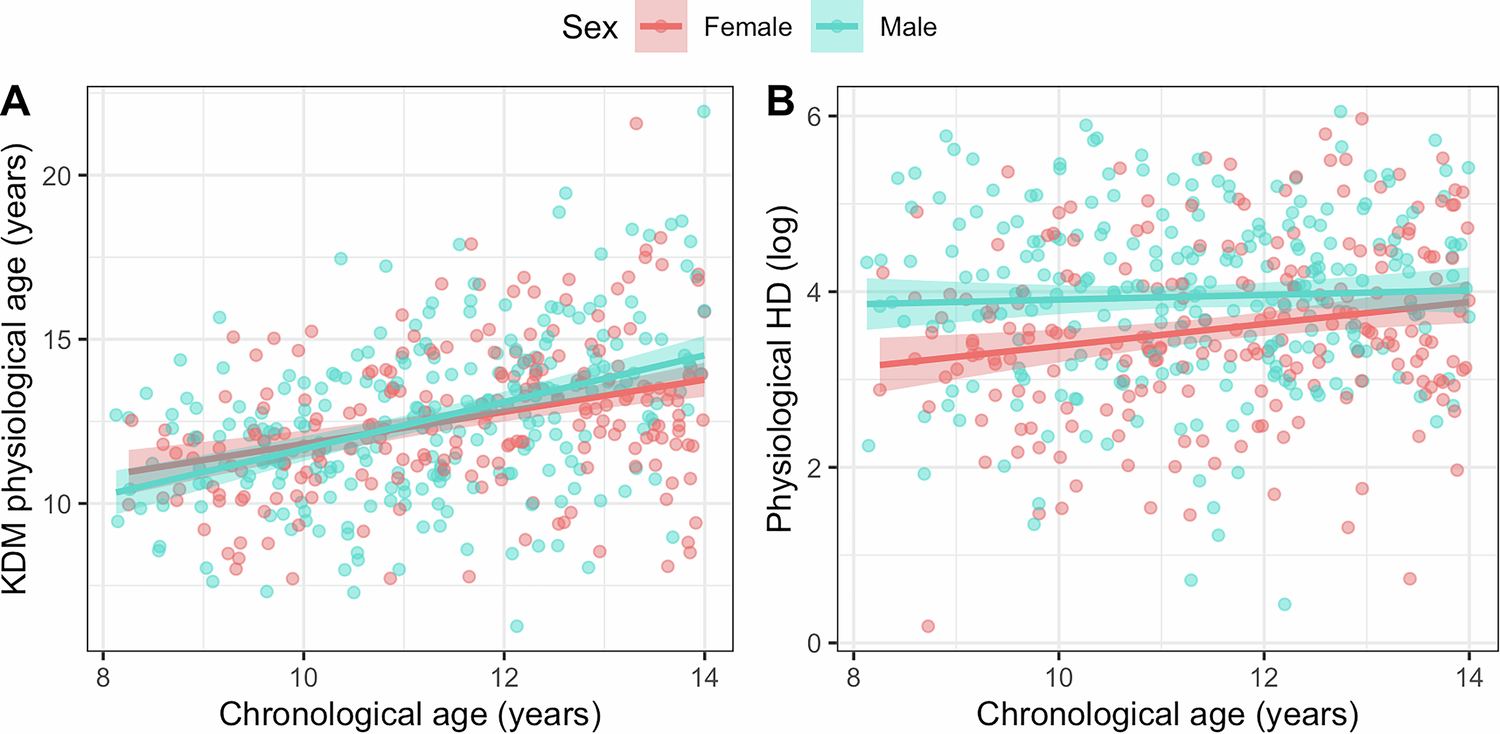
Child maltreatment has been associated with biological hallmarks of aging, including telomere shortening and epigenetic instability; however, its influence on physiological age and homeostatic dysregulation in early life remains unclear. The current study examined pediatric versions of physiological age and homeostatic dysregulation in children aged 8-13 with and without exposure to maltreatment. Maltreatment exposure was determined based on investigational records within 12 months prior to enrollment. Physiological measures were trained and validated utilizing external datasets — the National Health and Nutrition Examination Survey III and IV, respectively. Physiological age was computed using the Klemera-Doubal Method to indicate physiological developmental status. Homeostatic dysregulation level was computed as the Mahalanobis distance from an external reference group. 216 females and 245 males with a mean age of 11.4 years (SD 1.5) were included (76.6% White, 13.2% Black, and 13.0% Hispanic, 76.6% with maltreatment). Exposure to maltreatment was not associated with changes in physiological age but was associated with greater homeostatic dysregulation. Further analyses by maltreatment type and sex revealed that physical abuse was associated with greater homeostatic dysregulation, while sexual abuse was associated with delayed physiological development, specifically in males. Exposure to multiple types of maltreatment was associated with greater homeostatic dysregulation among males, but not among females. This study revealed that recent exposure to certain types of maltreatment may impair physiological development or regulation in children, with sex-specific patterns suggesting greater effects in males. Findings further indicate that physiological development composites in youth are sensitive to the impact of child maltreatment and can be incorporated in future work to evaluate the long-term sequelae of adverse exposures in pediatric populations. As the impact of maltreatment was only nominally significant after correction for multiple testing, validation work in other samples is needed.