2026-05-01 中国科学院(CAS)
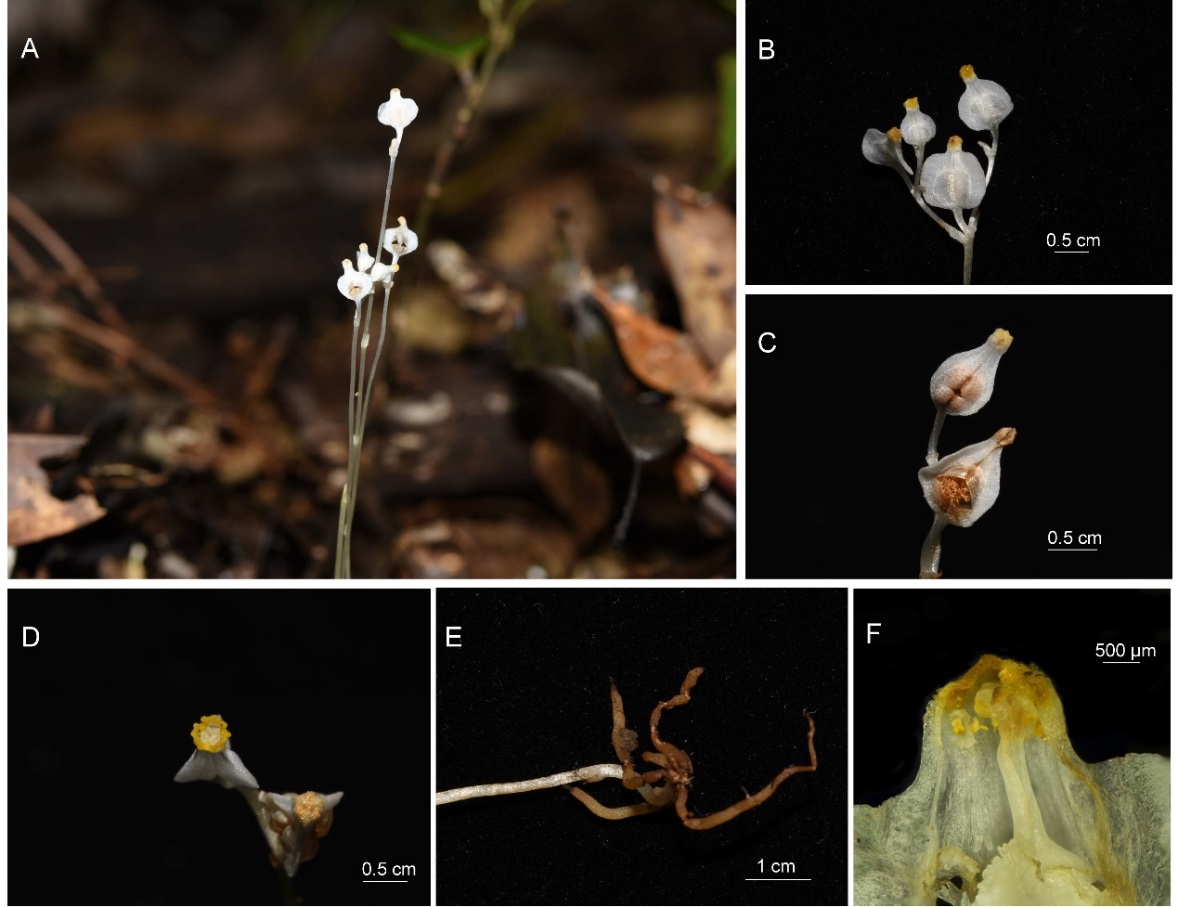
Habitat and morphology of Burmannia nepalensis.(Image by SHI et al.)
<関連情報>
- https://english.cas.cn/newsroom/research-news/202605/t20260509_1158680.shtml
- https://onlinelibrary.wiley.com/doi/10.1002/bod2.70021
歴史的な気候変動と地理的隔離が、亜熱帯中国における菌従属栄養性種の系統地理学的パターンを形成した Historical Climatic Fluctuations and Geographic Isolation Shaped the Phylogeographic Patterns of a Mycoheterotrophic Species in Subtropical China
Miaomiao Shi, Tong Zeng, Zhongtao Zhao, Xiaojuan Li, Xiangping Wang, Shiran Gu, Shijin Li, Tieyao Tu, Dianxiang Zhang
Biological Diversity Published: 31 March 2026
DOI:https://doi.org/10.1002/bod2.70021
ABSTRACT
Subtropical China, dominated by evergreen broad-leaved forests, harbors exceptionally rich and highly endemic plant diversity, yet the evolutionary history of its understory herbs remains poorly understood. Here, we investigated Burmannia nepalensis, a fully mycoheterotrophic herb endemic to these forests, to uncover the evolutionary and demographic processes shaping understory biodiversity. Using plastome sequences and nuclear microsatellite loci, we examined spatial patterns of genetic variation across 20 populations. The species exhibited low within-population genetic diversity but pronounced genetic differentiation among populations. Geographic isolation and historical climatic fluctuations emerged as the main drivers of population divergence. Concordant phylogeographic patterns from plastid and nuclear markers, together with species distribution modeling, suggest that B. nepalensis persisted in multiple glacial refugia during the Last Glacial Maximum (LGM), particularly in the Nanling Mountains, Wuyi Mountains, and southwestern karst regions. Demographic reconstructions indicate population expansion after the LGM, followed by a decline in effective population size approximately 3000 years before present (BP), likely driven by human-induced habitat fragmentation. Our findings highlight the combined roles of geography and climatic history in structuring genetic diversity in fully mycoheterotrophic plants, provide evidence for multiple northern refugia, and underscore the vulnerability of forest-dependent understory herbs in subtropical China.
Highlights
- Burmannia nepalensis shows low within-population genetic diversity but strong genetic differentiation among populations across subtropical China.
- Phylogeographic analyses reveal multiple glacial refugia during the Last Glacial Maximum (LGM), particularly in the Nanling, Wuyi, and southwestern karst regions.
- Demographic analyses suggest post-LGM population expansion followed by a recent decline, likely associated with human-induced habitat fragmentation.