2026-06-06 バーミンガム大学
<関連情報>
- https://www.birmingham.ac.uk/news/2026/children-with-persistent-shorter-sleep-face-twice-the-risk-of-ongoing-depression-in-adolescence
- https://link.springer.com/article/10.1007/s00787-026-03053-z
小児期の睡眠障害と青年期後期の持続性うつ病との将来的な関連性の調査:炎症の媒介的役割 Investigating the prospective associations of childhood sleep problems with persistent depression in emerging adulthood: the mediating role of inflammation
R. Amos,B. B. Durdurak,A. M. Gregory,S. Marwaha & I. Morales-Muñoz
European Child & Adolescent Psychiatry Published:18 May 2026
DOI:https://doi.org/10.1007/s00787-026-03053-z
Abstract
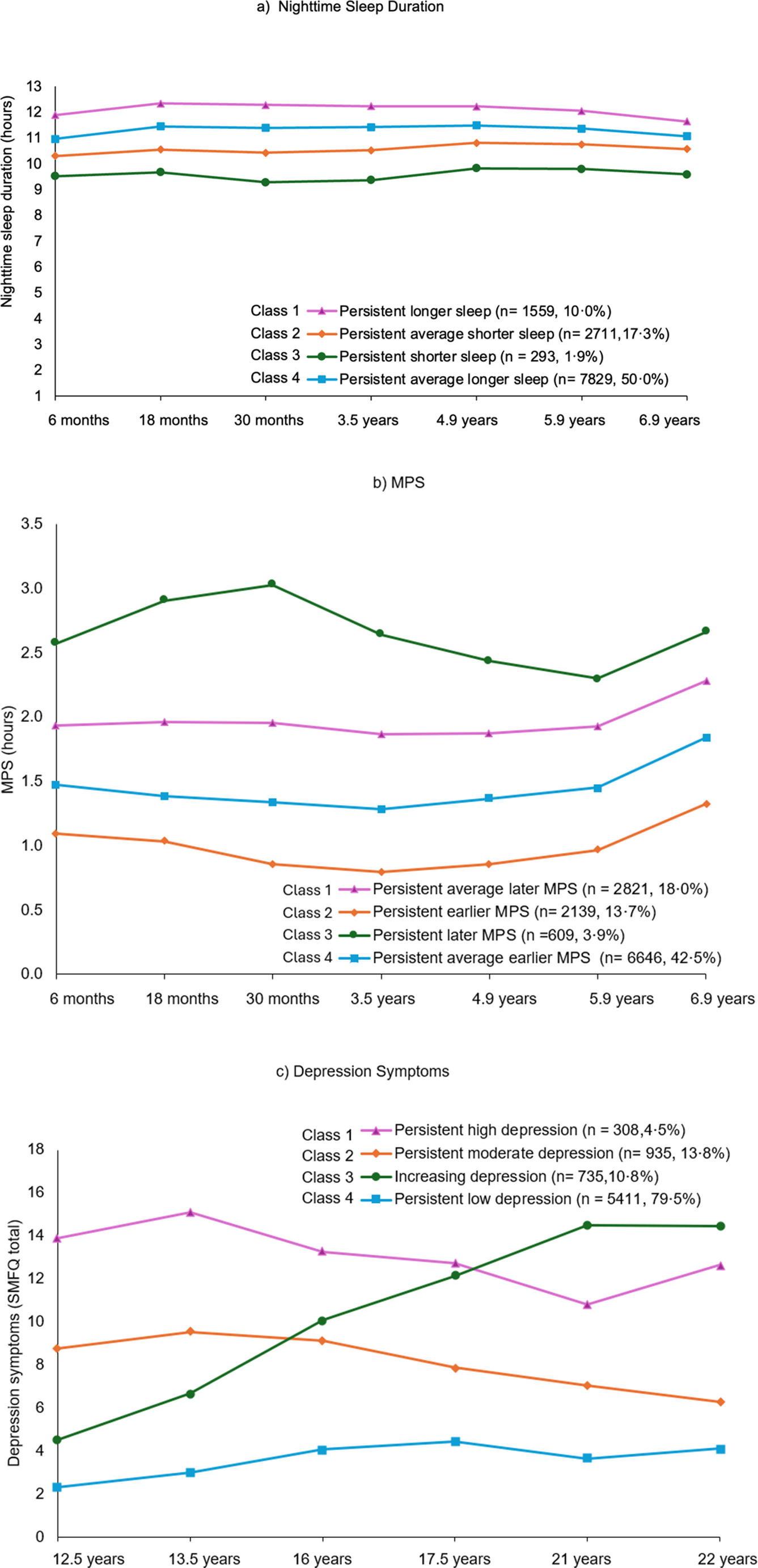
Sleep problems constitute a risk for depression. However, it is unclear if persistent sleep problems in childhood are associated with enduring depression symptoms in emerging adulthood and the mechanisms underlying this. Data from the Avon Longitudinal Study of Parents and Children birth cohort were used to examine associations between persistent sleep problems across childhood and persistent depression across adolescence and emerging adulthood, and whether inflammation mediates this link. Predictors were parental report of the child’s nighttime sleep duration and midpoint of sleep (MPS), from 6 months to 6–7 years old. Our outcome was self-reported persistent higher depression symptoms, between 13 and 22 years. Latent Class Growth Analysis (LCGA) was used to detect trajectories for sleep duration, MPS, and depression symptoms and used in subsequent logistic regression analyses. Path analyses explored whether C-Reactive Protein [CRP] and Interleukin-6 [IL-6] at age 9 mediated the relationships between exposures and outcome. Data were available on 6,785 participants. Three separate LCGAs revealed distinct trajectories of interest: (a) persistent shorter nighttime sleep, (b) persistent later MPS, and (c) persistent higher depression symptoms. Children with persistent shorter nighttime sleep were at higher risk of persistent higher depression (OR = 1.94, 95%CI = 1.01–3.73, p = 0.046) and was partially mediated by increased IL-6 levels (bias-corrected estimate = 0·002, 95%CI = 0.001–0.003, p < 0.001). Persistent shorter nighttime sleep duration across childhood is longitudinally associated with persistent higher depression in adolescence into emerging adulthood, and inflammation is part of the mechanism. Addressing short sleep duration and inflammatory responses in childhood may prevent the development of depression in young people.