2026-06-09 韓国基礎科学研究院(IBS)
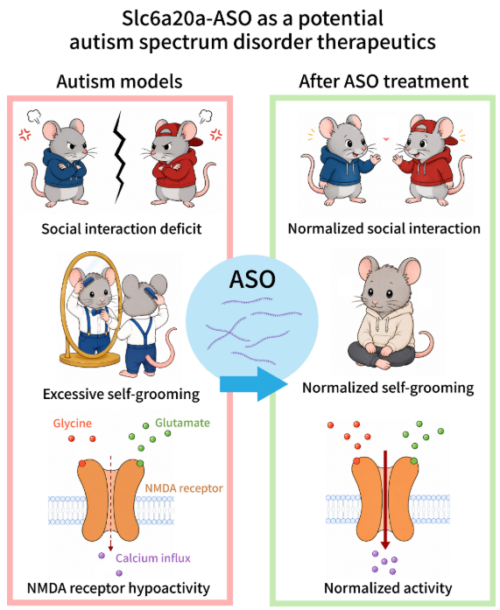
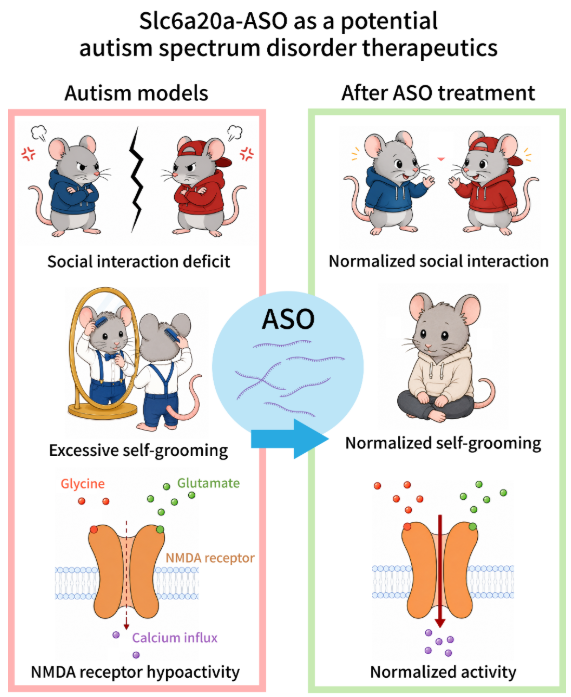
Figure 1. Treatment of mutant autism mouse models and human cortical organoids using Slc6a20a/SLC6A20-ASO
ASO restored social interaction deficit, excessive self-grooming in mouse models and NMDA receptor hypofunction in mouse models and human cortical organoids.
<関連情報>
- https://www.ibs.re.kr/cop/bbs/BBSMSTR_000000000738/selectBoardArticle.do?nttId=26755&pageIndex=1&searchCnd=&searchWrd=
- https://www.nature.com/articles/s41467-026-73881-9
グリシン調節性Slc6a20a -ASOは、 SHANK2およびSHANK3変異マウスと皮質オルガノイドにおいてNMDA受容体機能を回復させる Glycine-modulating Slc6a20a-ASO restores NMDA receptor function in SHANK2 and SHANK3-mutant mice and cortical organoids
Junyeop Daniel Roh,Mihyun Bae,Yusang Oh,Yeji Yang,Suho Lee,Woo-Chang Hwang,Esther Yang,Hyeonji Kim,Hyunjee Jang,Hyung-Wook Choi,Hyun Kim,Jin Young Kim & Eunjoon Kim
Nature Communications Published:29 May 2026
DOI:https://doi.org/10.1038/s41467-026-73881-9 Unedited version
Abstract
Suppressed NMDA receptor (NMDAR) function contributes to multiple brain disorders, including schizophrenia, autism spectrum disorder (ASD), and NMDAR encephalitis. Previous attempts to restore NMDAR activity by increasing ambient glycine, a critical co-agonist, through GlyT1 inhibition have yielded mixed outcomes, partly due to GlyT1’s extensive expression in essential brainstem regions. Slc6a20a, a glycine transporter widely expressed in cognition-relevant regions such as the cortex and hippocampus, offers a targeted alternative. Here we show that antisense oligonucleotide (ASO)-mediated Slc6a20a inhibition (Slc6a20a-ASO) normalizes ASD-related phenotypes in male Shank2– and Shank3-mutant mice, with model-dependent rescue profiles. Slc6a20a-ASO rescues NMDAR hypofunction and synaptic phospho-proteomic profiles in the prefrontal cortex. Furthermore, ASO targeting human SLC6A20 rescues suppressed NMDAR function in cortical organoids harboring SHANK2 or SHANK3 mutations. These findings underscore the potential and limitations of Slc6a20a/SLC6A20-ASO for treating disorders characterized by NMDAR hypofunction.