2026-08-11 シンガポール国立大学(NUS)
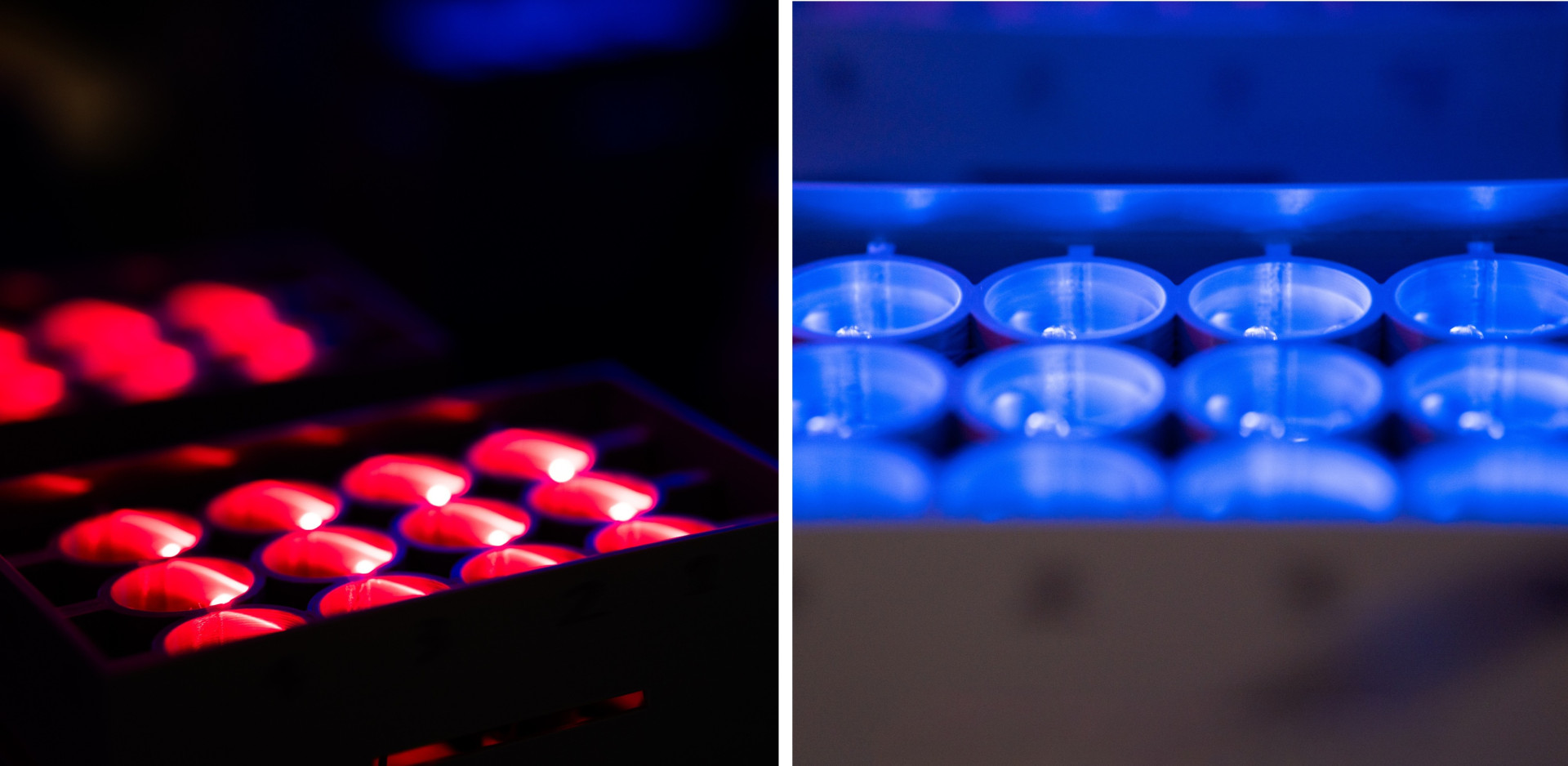
While yeast has been previously engineered to respond to single colours of light, this is the first time that a single strain of yeast has been engineered to respond to more than one colour.
<関連情報>
- https://news.nus.edu.sg/nus-researchers-engineered-colour-sensing-yeast/
- https://www.nature.com/articles/s41467-026-73399-0
酵母におけるデュアルチャネル光遺伝学による、細胞プロセスおよび経路の多重光制御 Dual-channel optogenetics in yeast for multiplexed light-based control of cellular processes and pathways
Linus Yu Han Tan,Zhangyuan Lin,Jing Wui Yeoh,Jingyun Zhang & Chueh Loo Poh
Nature Communications Published:22 May 2026
DOI:https://doi.org/10.1038/s41467-026-73399-0
Abstract
Optogenetics which involves the use of light to control cell functions on a genetic level has found utility in studying cell physiology, biomaterials and metabolic engineering. S. cerevisiae is an industrially relevant model organism that is used in many applications, but due to the large number of genes required and issues relating to cross-activation between different colours, optogenetics for different wavelengths of light have not been multiplexed in S. cerevisiae. In this paper, we develop a compact red light responsive optogenetic system for S. cerevisiae that requires only a single gene and no exogenous cofactors. Through engineering modular protein domains, we reduce the cross-activation of our system by blue light. We integrate our red light optogenetic system with EL222 blue light optogenetics to establish dual channel optogenetics in S. cerevisiae and demonstrate its utility for engineering biology through the light-based control of flavonoid luteolin synthesis and flocculation for ease of product extraction. We also demonstrate our system’s potential for the development of living materials by producing dual-coloured optogenetic patterns using S. cerevisiae. This work expands optogenetic applications in S. cerevisiae from single-light to multi-light systems, introducing the potential to multiplex different colours of light for dynamic, orthogonal control of separate cell processes.