2026-10-30 カリフォルニア大学リバーサイド校(UCR)
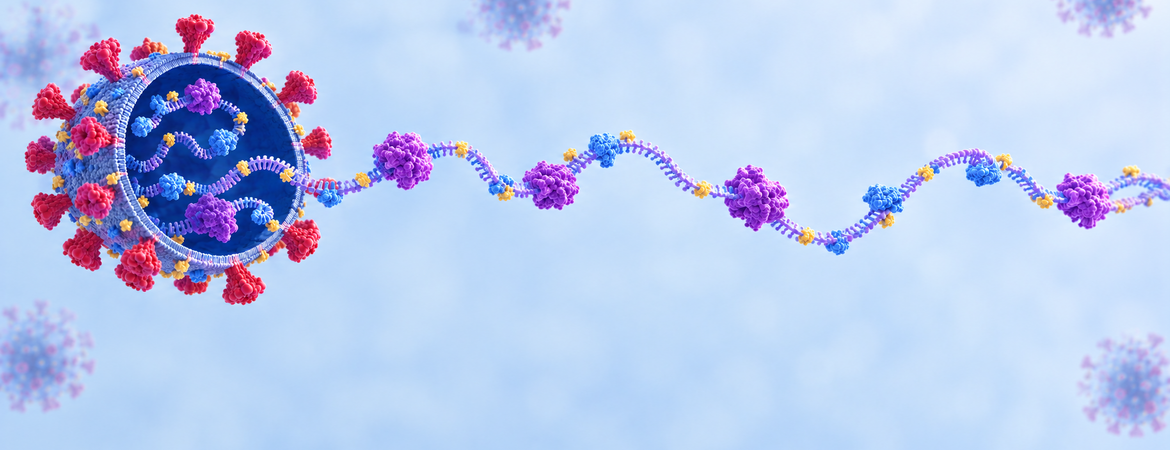
AI-generated header image maps the hidden RNA–protein landscape of SARS-CoV-2. A cutaway view of the virus reveals its RNA genome and associated viral proteins. We systematically mapped protein–RNA interactions across the SARS-CoV-2 genome to uncover previously unknown regulatory sites that contribute to viral replication. Large purple: RNA-dependent RNA polymerase (RdRp; NSP12); small yellow: NSP8 (polymerase cofactor/primase); blue: nucleocapsid (N) protein. (UCR/Xiang lab)
<関連情報>
- https://news.ucr.edu/articles/2026/10/30/rna-protein-interactions-could-lead-new-coronavirus-drug-targets
- https://www.nature.com/articles/s41467-026-78788-z
SARS-CoV-2 RNAとNSP8、NSP12、Nタンパク質との相互作用のゲノムスケールeCLIPマッピングにより、調節部位が明らかになった Genome-scale eCLIP mapping of SARS-CoV-2 RNA interactions with NSP8, NSP12, and N reveals regulatory sites
Joy S. Xiang, Karen X. Zhao, Laliv Tadri, Kurt Tamaru, Brian A. Yee, Katherine Rothamel, Jonathan C. Schmok, Jasmine R. Mueller, Samuel S. Park, Assael A. Madrigal, Rachael N. McVicar, Elizabeth M. Kwong, Ben A. Croker, Alex E. Clark, Aaron F. Carlin, Charly Acevedo, Declan F. McCole, Seán E. O’Leary, Rong Hai, Sandra L. Leibel & Gene W. Yeo
Nature Communications Published:30 October 2026
DOI:https://doi.org/10.1038/s41467-026-78788-z Early Provide
Abstract
The global impact of the COVID-19 pandemic highlights the need for a deeper understanding of SARS-CoV-2 replication. Although the essential roles of the RNA-dependent RNA polymerase (NSP12), primase (NSP8), and nucleocapsid (N) proteins are established, their contact points with the full-length viral RNA genome during active infection require further characterization. Here, we used enhanced crosslinking and immunoprecipitation (eCLIP) to map direct interactions of NSP8, NSP12, and N across the SARS-CoV-2 genome during live virus infection at early and late stages of replication. We mapped NSP8 and NSP12 binding to the 5′ and 3′ ends of positive- and negative-sense RNA, consistent with their roles in viral replication, transcription, and translation. We also observed an NSP12 binding site within the conserved Y1 domain of NSP3 that modulates RNA and protein abundance. In addition, N binds the 5′ untranslated region (UTR), supporting a role in translational regulation early in infection, and associates with the frameshift element, where it modulates ribosomal frameshifting. Together, these findings map SARS-CoV-2 RNA–protein interactions across the viral genome and delineate specific regulatory regions for potential antiviral intervention.