
2026-11-02 カリフォルニア大学リバーサイド校(UCR)
<関連情報>
- https://news.ucr.edu/articles/2026/11/02/new-strategy-identified-treating-lupus
- https://www.nature.com/articles/s12276-026-01881-2
プロラクチン受容体の長鎖型アイソフォームのノックダウンは、全身性エリテマトーデスにおける病原性免疫細胞を選択的に標的とし、糸球体病変を回避する Knockdown of the long isoform of the prolactin receptor selectively targets pathogenic immune cells in systemic lupus erythematosus and averts glomerular pathology
Joao Rodrigues Lima-Junior, Zunsong Hu, Kory Hamane, Anil Kumar, Adeleh Taghi Khani, Ashly Sanchez Ortiz, Xinying Guo, Da Hae Jung, Hanjun Qin, Shu Tao, Ignacio Sanz, Eric Meffre, Katherine Marzan, Jean L. Koff, Mary Y. Lorenson, Zhaohui Gu, Xiwei Wu, Ameae M. Walker & Srividya Swaminathan
Experimental & Molecular Medicine Published:02 November 2026
DOI:https://doi.org/10.1038/s12276-026-01881-2
Abstract
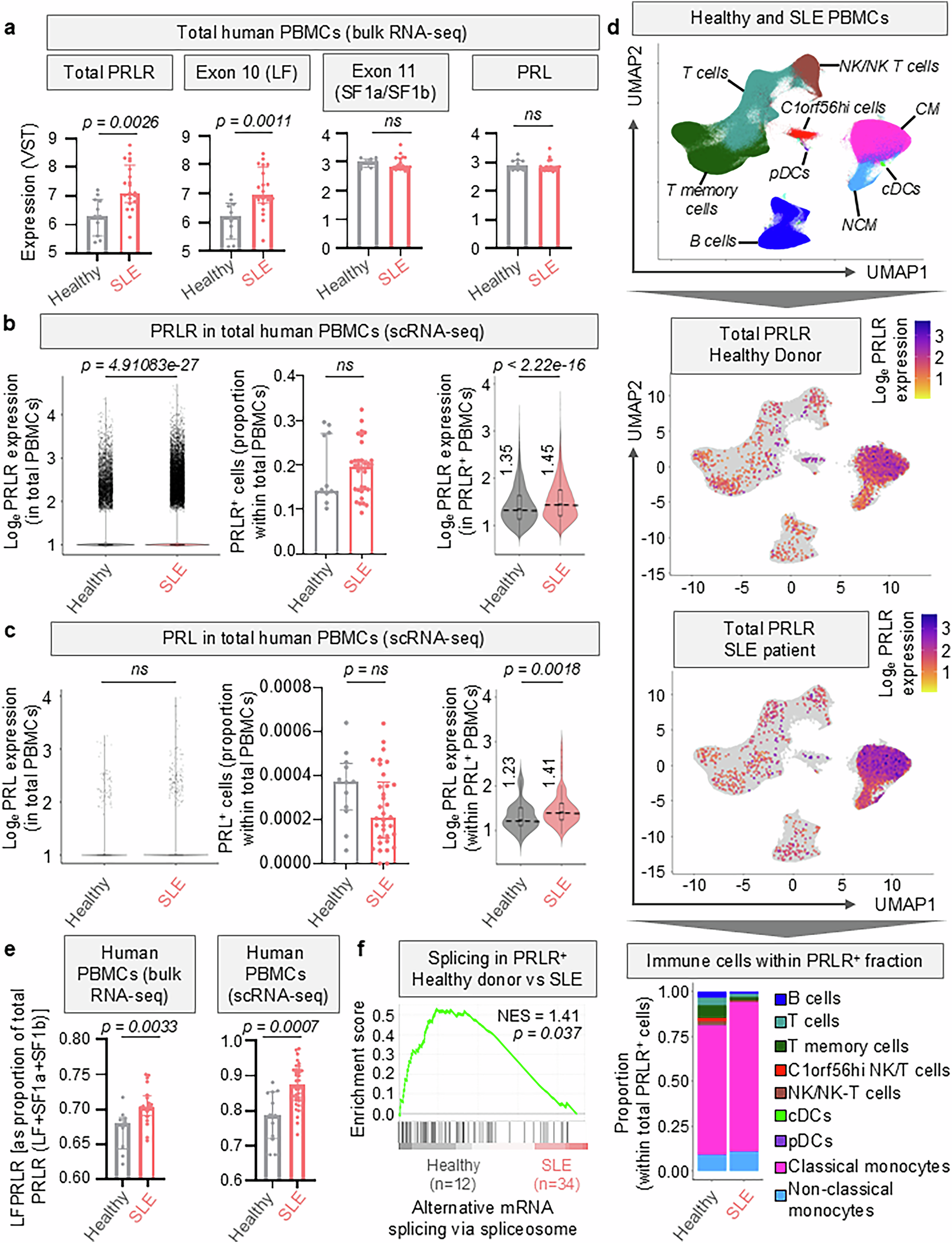
Systemic lupus erythematosus (SLE) is an autoimmune disease characterized by chronic inflammation in multiple organ systems. Although elevated circulating levels of the hormone/cytokine prolactin (PRL) have long been associated with increased SLE activity, the extent to which different isoforms of the prolactin receptor (PRLR) contribute to disease pathogenesis has not been explored. Here, we show that immune cells in SLE have aberrant splicing of the PRLR such that the ratio of the long (LF) to short (SF) splice isoforms is increased. To determine whether change in PRLR isoform expression was causal in this disease, we used a splice-modulating oligomer that knocks down expression of the LFPRLR while increasing expression of the SFPRLRs. Using patient samples ex vivo, SLE-prone mice in vivo, high-dimensional flow cytometry, and single-cell RNA sequencing, we demonstrated that the aberrant PRLR isoform expression in SLE both directly and indirectly contributes to the generation of autoreactive immune cell phenotypes. Accordingly, LFPRLR knockdown (KD) reduced STAT1 phosphorylation, decreased expression of type I interferon signaling/response genes known to be biomarkers and hub genes for SLE, reduced immunoglobulins with autoreactivity-associated sequence features, and averted glomerular pathology in SLE-prone mice. Importantly, LFPRLR KD reduced pathogenic B cell and other immune subsets that drive B cell activation, without negative impact on healthy donor counterparts. Current treatments for SLE adversely affect healthy cells and do not concurrently eradicate multiple pathogenic immune subsets. As LFPRLR splice-modulating oligomer does not share these disadvantages, KD of the LFPRLR represents a potential treatment strategy for SLE that merits further investigation.

