2026-06-09 ヒューストン大学(UH)
<関連情報>
- https://www.uh.edu/news-events/stories/2026/june/06092026-kumar-soft-tissue-rhabdomyosarcoma.php
- https://www.nature.com/articles/s41388-026-03767-z
- https://www.nature.com/articles/s42003-026-10184-1
TAK1は横紋筋肉腫における発癌シグナル伝達および分化阻害の重要な調節因子である TAK1 is a key regulator of oncogenic signaling and differentiation blockade in rhabdomyosarcoma
Anh Tuan Vuong,Aniket S. Joshi,Anirban Roy,Kavya Mathukumalli,Phuong T. Ho,Raksha Bhat,Meiricris Tomaz da Silva,Tagari Samanta,Meghana V. Trivedi,Bin Guo,Benny A. Kaipparettu & Ashok Kumar
Oncogene Published:06 April 2026
DOI:https://doi.org/10.1038/s41388-026-03767-z
Abstract
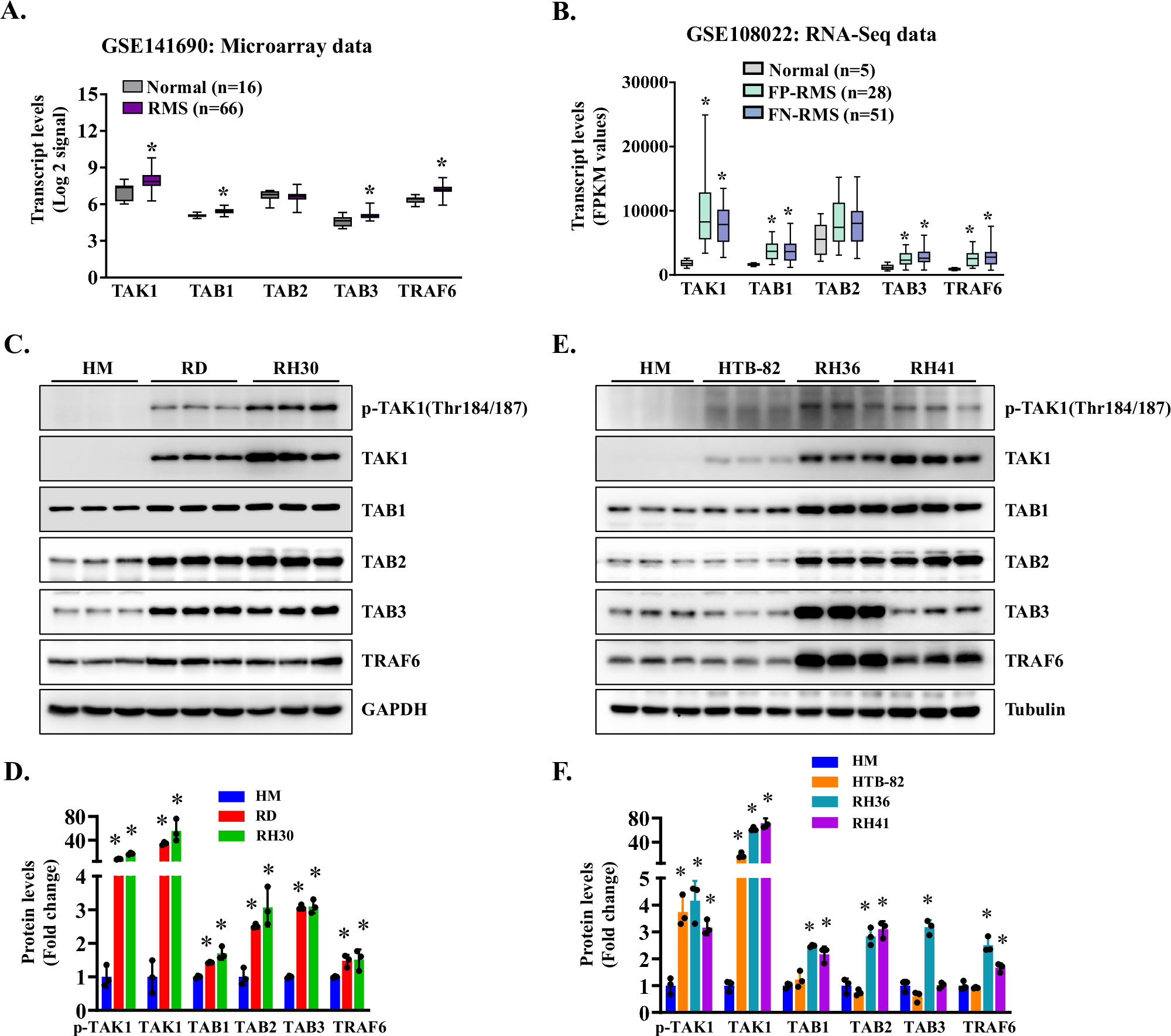
Rhabdomyosarcoma (RMS) is a malignant soft tissue sarcoma with a skeletal muscle phenotype, accounting for approximately 50% of all pediatric soft tissue sarcomas and 8% of all childhood cancers. Although RMS cells express myogenic regulatory factors, they fail to undergo terminal differentiation into mature muscle cells. Transforming growth factor β-activated kinase 1 (TAK1) is a key signaling mediator that activates multiple intracellular pathways, yet its role in RMS has remained unknown. Here, we show that TAK1 expression and activity are markedly elevated in RMS cell lines and patient tumor specimens. RNA-Seq and reverse phase protein array (RPPA) analyses revealed that TAK1 regulates the expression and activity of many molecules involved in cell cycle control, cell proliferation, and oncogenic signaling. Inhibition of TAK1 suppresses RMS cell proliferation, migration, and invasiveness, while also promoting terminal myogenic differentiation. TAK1 inhibits differentiation in RMS, in part, through up-regulating YAP1 signaling. Our results also demonstrate that inducible knockdown of TAK1 in human RMS xenografts retards tumor growth and enhances myogenic differentiation in vivo. Collectively, these findings uncover a previously unrecognized role for TAK1 in RMS growth and differentiation, and suggest that TAK1 can be a potential therapeutic target for the treatment of RMS.
IRE1α-XBP1シグナル伝達経路を標的とすることで、横紋筋肉腫の腫瘍増殖が阻害され、筋分化が促進される Targeting the IRE1α-XBP1 signaling axis impairs tumor growth and promotes myogenic differentiation in rhabdomyosarcoma
Anh Tuan Vuong,Aniket S. Joshi,Phuong T. Ho,Meiricris Tomaz da Silva,Bin Guo,Meghana V. Trivedi & Ashok Kumar
Communications Biology Published:06 May 2026
DOI:https://doi.org/10.1038/s42003-026-10184-1 Unedited version
Abstract
Rhabdomyosarcoma (RMS) is a pediatric soft-tissue sarcoma arising from mesenchymal progenitors with skeletal muscle features. The unfolded protein response (UPR) maintains proteostasis during endoplasmic reticulum stress, with the IRE1α-XBP1 axis representing a key signaling branch. Here, we demonstrate that components of this pathway are significantly upregulated in RMS cell lines and primary tumors. Genetic or pharmacological inhibition of IRE1α or spliced XBP1 (sXBP1) suppresses cell proliferation, promotes terminal myogenic differentiation, and enhances vincristine-induced cytotoxicity in RMS cells. Silencing of sXBP1 further reduces the cancer stem-like cell population and impairs migration and invasion. Mechanistically, IRE1α-XBP1 signaling promotes RMS progression through sXBP1-dependent upregulation of BMPR1A and subsequent activation of BMP-SMAD1 signaling. Consistently, inducible knockdown of sXBP1 or pharmacological inhibition of IRE1α endonuclease activity significantly attenuates xenograft RMS growth. Collectively, these findings identify the IRE1α-XBP1 axis as a critical regulator of RMS growth, differentiation, and chemosensitivity, and support its therapeutic targeting in RMS.