20206-06-10 カロリンスカ研究所(KI)
◆従来、猫アレルゲンは喘息悪化の要因と考えられてきたが、実際の生活環境における影響は必ずしも明確ではなかった。本研究では、喘息児の症状や健康状態を追跡し、猫の飼育状況との関連を分析した。その結果、猫を飼育している家庭の子どもと飼育していない家庭の子どもの間で、短期的な喘息コントロールや症状に大きな差は確認されなかった。ただし、研究者らは本結果がすべての喘息児に当てはまるわけではなく、特に猫アレルギーが強い患者では個別の対応が必要であると指摘している。
◆本研究は、ペット飼育に関する従来の一律的な制限を見直し、患者ごとのリスク評価に基づく喘息管理の重要性を示す知見となっている。
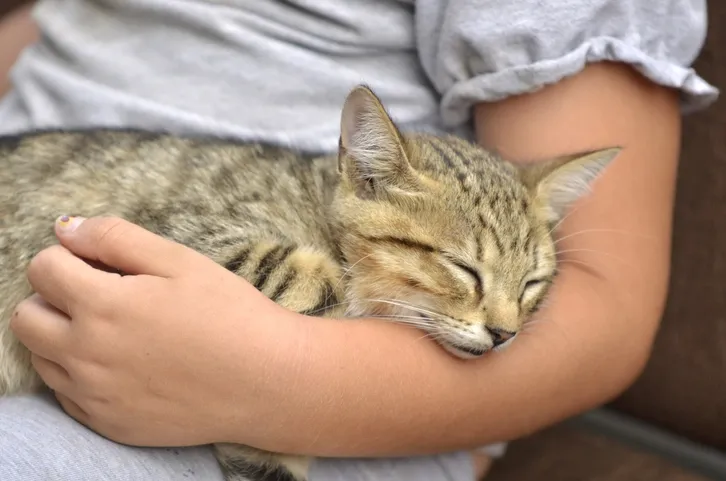
Photo: Getty Images
<関連情報>
- https://news.ki.se/living-with-cats-does-not-appear-to-worsen-childrens-asthma-in-the-short-term
- https://www.frontiersin.org/journals/allergy/articles/10.3389/falgy.2026.1840756/full
喘息とアレルギーを持つ小児のコホートにおける猫への曝露と喘息の転帰 Cat exposure and asthma outcomes in a cohort of children with asthma and allergy
Resthie R. Putri,Cecilia Lundholm,Anna Hedman,Mwenya Mubanga,Hanna Karim,Jon R. Konradsen,Catarina Almqvist
Frontiers in Allergy Published:10 June 2026
DOI:https://doi.org/10.3389/falgy.2026.1840756
Abstract
Introduction:
The impact of current pet exposure on children with allergic asthma is not yet fully understood. This study aimed to investigate the association between cat exposure and asthma outcomes in children with established asthma and allergy.
Methods:
A population-based cohort study using Swedish national health, sociodemographic, and quality registers was conducted. We included 30 277 children aged 4–17 years (born 2006–2020), with validated diagnoses of asthma and allergy, who had asthma care during the two years preceding exposure assessment. Cat exposure was defined as parental cat ownership recorded in the National Cat Register in 2023. Asthma outcomes, assessed during 2023–2024, included: asthma exacerbation and moderate-to-severe asthma. In a subset with available data (n = 1428), Forced Expiratory Volume in 1 Second (FEV1) and asthma control test (ACT) were evaluated. Odds ratios (ORs) were adjusted for sex, age, initial asthma severity, baseline airway allergy severity, parental asthma and allergy, population density, parental birth country, and socioeconomic status.
Results:
Of the study population (median age: 9.5 years, 39% females), 9.4% (n = 2,862) had cat exposure. Initial asthma severity was comparable between the cat-exposed and non-exposed groups (19.5% vs. 20.6% with moderate-to-severe asthma). Asthma exacerbation occurred in 3.3% of the cat-exposed group vs. 3.5% of the non-exposed group (adjusted OR: 1.12, 95% CI: 0.90–1.39). Moderate-to-severe asthma was observed in 9.6% vs. 10.1% (adjusted OR: 0.96, 0.84–1.10). No significant differences were found in ACT or FEV₁ z-scores. Within the cat-exposed group, no association between the number of cats, cat sex, or age and asthma outcomes was observed.
Conclusion:
In this cohort of children with asthma and allergy, no association between cat exposure and asthma exacerbations, severity, lung function, or asthma control was observed. These findings suggest that cat exposure may not adversely affect asthma outcomes in this population.