2026-08-12 カリフォルニア大学リバーサイド校(UCR)
<関連情報>
- https://news.ucr.edu/articles/2026/08/12/athleticism-doesnt-require-sacrificing-longevity-or-fertility
- https://link.springer.com/article/10.1007/s10519-026-10277-x
マウスにおける自発的な車輪走行行動の選択的育種は、長期的なペア繁殖条件下における生涯繁殖成功率や寿命の低下とは関連しない Selective Breeding for Voluntary Wheel-Running Behavior in Mice is not Associated with Reduced Lifetime Reproductive Success or Lifespan Under Long-Term Paired Breeding Conditions
Natalie N. Whitehead,Nicole E. Schwartz,Chenkun Jiang,Haley M. Read,Natalie C. Holt & Theodore Garland Jr.
Behavior Genetics Published:12 August 2026
DOI:https://doi.org/10.1007/s10519-026-10277-x
Abstract
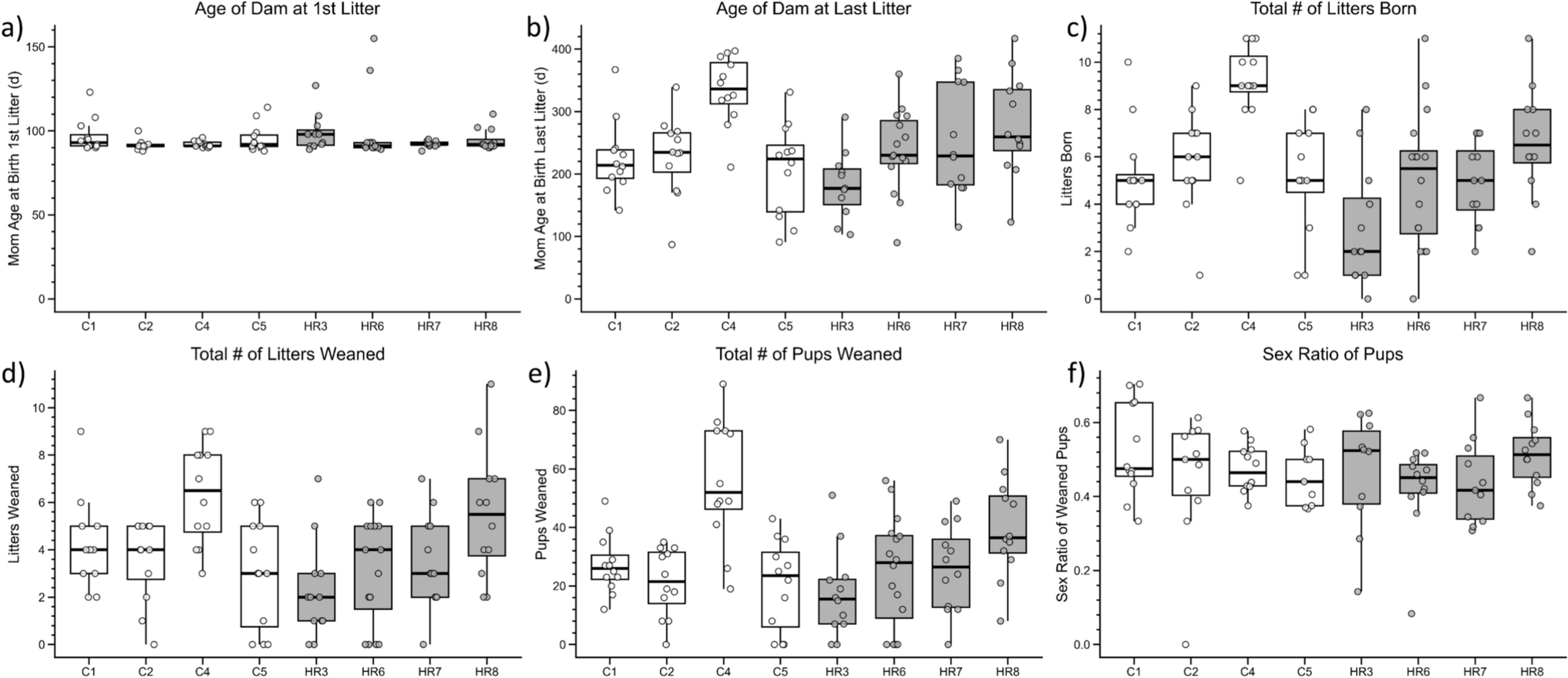
We studied lifespan and lifetime reproductive success (LRS) in mice from a selection experiment that includes 4 replicate High Runner (HR) lines bred for voluntary wheel-running behavior and 4 non-selected Control (C) lines. HR mice typically run ~ threefold farther on a daily basis, leading to substantially increased energy expenditure and food consumption, and are also more active and eat more when housed without wheels. HR and C mice have been shown to differ for many other traits that could affect reproduction, including body mass and composition, aerobic capacity, hormonal profile (including corticosterone and leptin), and other behavioral traits (e.g., maternal care, thermoregulatory nesting, anxiety-like behavior in an elevated plus maze). At generation 97, male–female pairs were maintained until end of life in standard cages without wheels, with ad lib food and water. The number of pups weaned (LRS) ranged from 0–80, with a mean of 29.1 ± 8.1 (SE) for C lines and 25.8 ± 4.4 for HR (P = 0.73). Thus, artificial selection for high voluntary exercise did not significantly alter LRS. In addition, we found no statistical difference in average lifespan for dams or sires. However, replicate lines differed significantly for several traits, presumably due primarily to random genetic drift. At the level of individual variation, correlations among reproductive traits and lifespan provided little evidence for negative associations, and LRS was not negatively related to parental longevity. Overall, long-term selection on voluntary locomotor behavior did not produce detectable reductions in reproductive output or lifespan under standard laboratory conditions.