2026-09-24 ジョージア工科大学
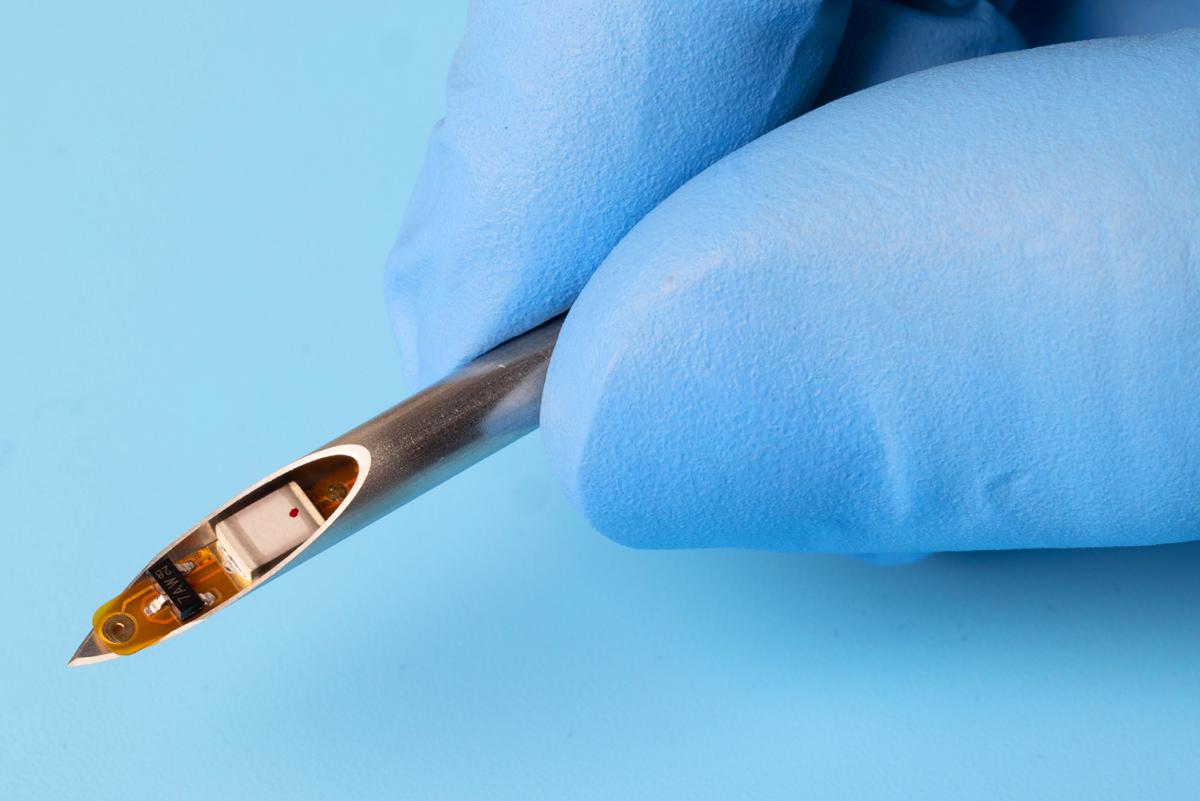
The researchers’ wireless networking system allows them to create implantable devices small enough to be implanted via syringe instead of surgery.
<関連情報>
- https://news.research.gatech.edu/2026/09/24/engineers-connect-health-wearables-and-implants-using-body-network
- https://coe.gatech.edu/news/2026/09/engineers-connect-health-wearables-and-implants-using-body-network
- https://www.science.org/doi/10.1126/science.adz5300
ウェアラブル治療機器と埋め込み型治療機器間の通信のための体内ネットワークシステム An in-body networking system for communication between wearable and implantable therapeutics
Ramy Ghanim, Yoon Jae Lee, Garan Byun, Joy Jackson, […] , and Alex Abramson
Science Published:24 Sep 2026
DOI:https://doi.org/10.1126/science.adz5300
Abstract
Networks of bioelectronic sensors and actuators enable closed-loop therapies that connect distant, related physiological dynamics. Currently, device interactions are limited by communication methods that inefficiently penetrate tissue and require bulky components. Inspired by the ionic signaling of the nervous system, we engineered a communication platform that uses tissue as a conductive medium to transmit signals among implants and wearables through epidermal, subcutaneous, intraperitoneal, and gastrointestinal spaces. Devices generate transient electric fields that selectively activate other devices when receiving pulses that switch on their specific transistor circuits. Implants are syringe-injectable, require negligible power consumption in listening states, and provide >10× greater tissue communication coverage than Bluetooth. In vivo in rats, we demonstrate coordinated, full-body networks of sensors and neural interfaces that enable wireless dual-limb motor control.