2026-07-20 フランス国立科学研究センター(CNRS)
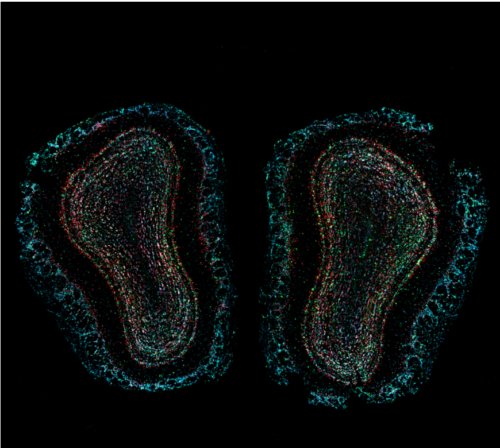
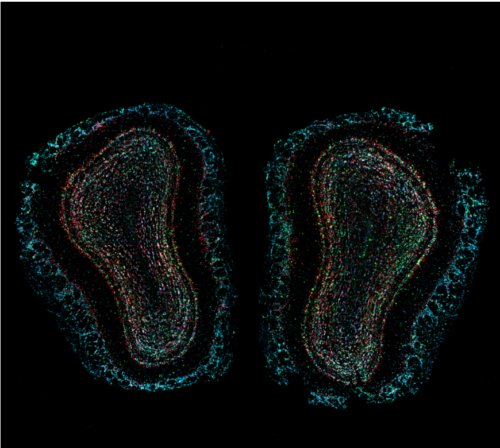
Cross section of a mouse olfactory bulb. Image obtained by epifluorescence microscopy.
© Jules Dejou, Université Claude Bernard Lyon 1, 2026.
<関連情報>
- https://www.cnrs.fr/en/press/prousts-madeleine-finally-explained-neuroscience
- https://journals.plos.org/plosbiology/article?id=10.1371/journal.pbio.3003845
幼少期の肯定的な嗅覚記憶は嗅球に根ざしており、嗅覚系を超えた大規模な変化を引き起こす Positive early-life olfactory memory is rooted in the olfactory bulb and triggers large-scale changes beyond the olfactory system
Jules Dejou,Anna Athanassi,Théo Brunel,Marc Thevenet,Anne Didier ,Nathalie Mandairon
PLOS Biology Published: July 14, 2026
DOI:https://doi.org/10.1371/journal.pbio.3003845
Abstract
Olfactory childhood memories are particularly important for forming one’s identity. However, we don’t know how they exert their privileged influence and shape brain structure. To address this, we modeled childhood olfactory memory in mice based on a human survey indicating that our earliest olfactory memory arises from repeated positive experiences paired with a pleasant odorant. Accordingly, mice were exposed during childhood to an attractive odorant in a playful environment. In adulthood, memory recall relied on neonatal-born granule cells (GCs) in the olfactory bulb, as their optogenetic silencing impaired retrieval, and on increased functional connectivity in the reward system. With age, memory persistence depended on re-exposure to the childhood odorant and was associated with the disengagement of neonatal-born GCs, alongside with strengthened limbic functional connectivity. Together, these findings identify neonatal neurons as a key substrate for encoding childhood olfactory memory and reveal dynamic reorganization of brain networks supporting its long-term significance.