2026-11-02 東京科学大学
<関連情報>
IL-6関連Fas-FasLシグナル伝達に伴う衛星グリア細胞のリモデリングは、神経損傷後の慢性神経因性疼痛の一因となる Satellite glial cell remodeling associated with IL-6-associated Fas–FasL signaling contributes to chronic neuropathic pain after nerve injury
Chen Su, Fan Yang, Mengmeng Yan, Mitsuhiro Enomoto, Jingquan Chen, Wenchao Gu, Kunikazu Tsuji, Shingo Sato, Chihiro Akazawa, Toshitaka Yoshii & Takashi Hirai
Scientific Reports Published:29 September 2026
DOI:https://doi.org/10.1038/s41598-026-73640-2 Early provide
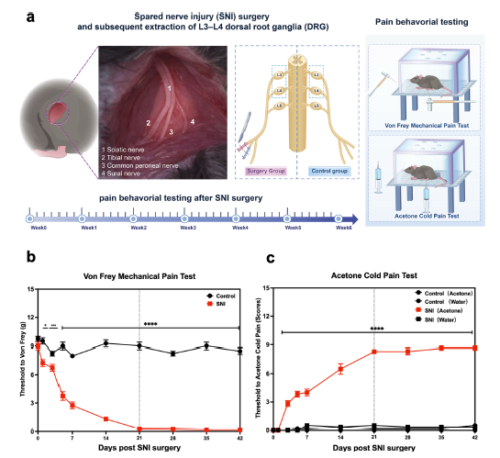
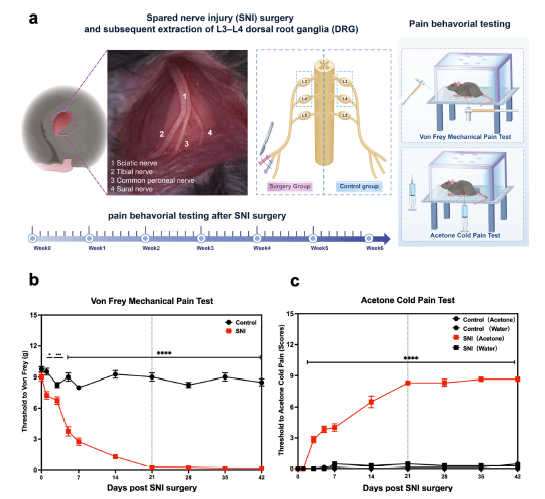
Fig. 1 Establishment of a chronic neuropathic pain model following spared nerve injury (SNI).
Abstract
Neuropathic pain after peripheral nerve injury is associated with sustained remodeling of the dorsal root ganglion (DRG) microenvironment. Although the neuronal mechanisms have been extensively studied, how neuron–glia–immune interactions contribute to chronic pain maintenance remains unclear. We investigated whether persistent interleukin-6 (IL-6) signaling is linked to Fas–Fas ligand (FasL)-associated satellite glial cell (SGC) remodeling during chronic neuropathic pain. Chronic neuropathic pain-like behavior was investigated using a spared nerve injury (SNI) mouse model in female mice. Chronic-phase DRG changes were examined using single-cell RNA-seq reanalysis, bulk transcriptomics, Sox10-Venus SGC-enriched RNA sequencing, reverse transcription quantitative PCR, immunofluorescence staining, western blotting, enzyme-linked immunosorbent assay, and terminal deoxynucleotidyl transferase dUTP nick-end labeling assays. Responses associated with IL-6 and Fas–FasL were evaluated using in vivo Fas–FasL blockade with KP7-6 and in vitro IL-6 stimulation assays. SNI induced persistent mechanical and cold hypersensitivity with chronic-phase DRG remodeling. Transcriptomic analyses revealed immune-like remodeling of SGC-enriched cells, enhanced IL-6 responsiveness, and upregulation of Fas–FasL-associated molecules. IL-6 expression was enriched mainly in neuronal populations, whereas Il6ra expression and IL-6 response signatures were increased in SGCs. FasL immunoreactivity was predominantly observed in SGCs, whereas Fas immunoreactivity was detected in SGCs and Iba1+ immune-related cells. KP7-6 treatment attenuated chronic pain-like behaviors, reduced inflammatory and apoptotic responses, decreased Iba1+ cell accumulation, and partially restored Kir4.1 expression. In vitro, IL-6 stimulate FasL expression and inflammatory responses in peripheral glial cells, which were attenuated by Fas–FasL blockade. These findings suggest that SGC remodeling through IL-6-associated Fas–FasL signaling may contribute to neuroinflammatory remodeling and chronic neuropathic pain maintenance after nerve injury.