2026-11-05 東京医科大学,国立健康危機管理研究機構,東京大学,理化学研究所
<関連情報>
- https://www.tokyo-med.ac.jp/news/893542b9f31d1ea9f82be1146d6fda5e27bdd6d1.pdf
- https://www.nature.com/articles/s41591-026-04744-5
マイクロバイオームを介した相反する軸が、修正可能なライフスタイルと健康および慢性疾患を結びつける Opposing microbiome-mediated axes link modifiable lifestyles to health and chronic diseases
Naoyoshi Nagata, Ran Wei, Gen Kaneko, Suguru Nishijima, Ryo Aoki, Yasushi Kojima, Yoshiaki Tamura, Masaya Sugiyama, Takashi Hamabata, Toru Nakagawa, Kohjiro Ueki, Mitsuru Ohsugi, Yumiko Nakanishi, Ayumi Ito, Shohei Asami, Ryo Suzuki, Michael Kuhn, Peer Bork, Masahira Hattori, Hiroshi Ohno & Naomi Uemura
Nature Medicine Published:05 November 2026
DOI:https://doi.org/10.1038/s41591-026-04744-5
Abstract
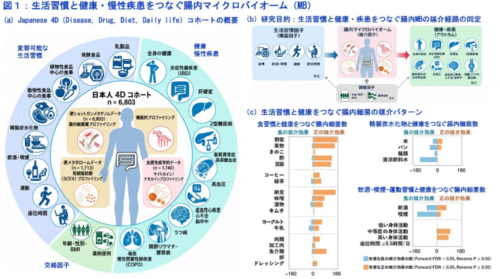
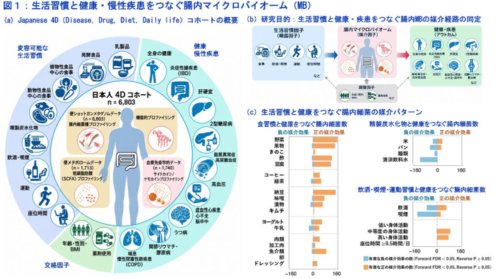
Analyses disentangling the role of the gut microbiome in linking lifestyle factors to health outcomes remain limited. Here, using fecal shotgun metagenomics from 6,803 adults in the Japanese 4D cohort, we identified two opposing microbiome-mediated axes linking lifestyle to health and 15 diseases. A health-associated axis enriched in microbial metabolism of dietary components was linked to plant-based, soy and dairy intake. In contrast, a disease-associated axis, enriched in oral-derived bacteria and pathobionts, was linked to refined carbohydrates and sedentary behavior. Starter culture microorganisms used to ferment foods did not show statistically significant mediation of the observed health effects. Alcohol was associated with both health- and disease-oriented mediation patterns involving microbial host-glycan utilization. Microbiome-defined health- and disease-oriented mediator axes were supported by fecal short-chain fatty acids and plasma cytokines from >1,700 individuals, revealing butyrate-associated anti-inflammatory and pro-inflammatory host profiles, respectively. Microbiome-based prediction (MADE) scores captured lifestyle–microbiome–disease mediation patterns and distinguished individual diseases across 13 independent external cohorts from the United States, China, Sweden, Russia and Australia. We identify the gut microbiome as a key mediator linking lifestyle to health and disease, providing a framework for microbiome-based assessment to guide lifestyle interventions for health promotion and disease prevention.