2026-04-29 英国研究イノベーション機構(UKRI)
<関連情報>
- https://www.ukri.org/news/air-pollution-exposure-in-the-womb-linked-to-slower-development/
- https://physoc.onlinelibrary.wiley.com/doi/10.1113/JP290327
胎児期の大気汚染への曝露は、幼児期の神経発達の変化と関連している Prenatal air pollution exposure is associated with altered neurodevelopmental outcomes in early childhood
Alexandra F. Bonthrone, Brendan Bos, Ben Barratt, Hoi Ching Olina Pang, Sean Beevers, Andrew Chew, Shona Falconer, Joseph V. Hajnal, Frank J. Kelly, …
The Journal of Physiology Published: 28 April 2026
DOI:https://doi.org/10.1113/JP290327
Abstract
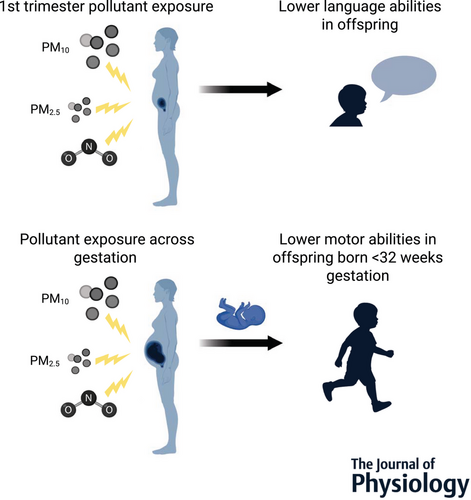
Prenatal air pollution exposure is associated with altered neurodevelopmental outcomes in childhood. It is unknown whether specific infant characteristics or prenatal exposure windows influence the relationship between prenatal exposure and neurodevelopmental outcomes. We studied 498 (262 male) toddlers born at 23+6–43+4 gestational weeks (125 born <37+0 weeks) who were recruited to the developing human connectome project. We characterised the association between average prenatal exposure to particulate matter [PM2.5 and PM10] and nitrogen dioxide (NO2) across gestation in each trimester modelled using maternal residential postcode, and cognitive, language and motor abilities assessed with the Bayley Scales of Infant and Toddler Development-3rd edition (age at assessment 17.3–34.5 months). Higher first trimester exposure to all pollutants was associated with lower language scores in toddlerhood adjusting for sex, ethnic group, maternal pregnancy complications, gestational age at birth, birth-weight z-score, home language environment and socioeconomic deprivation. Moderation analyses revealed higher exposure to all pollutants across gestation was associated with lower motor scores in preterm infants adjusting for sex, birth-weight z-score, ethnic group, maternal pregnancy complications, socioeconomic deprivation and duration of respiratory support. Increased air pollution exposure early in pregnancy is associated with altered early language development. Preterm infants demonstrate increased vulnerability to the adverse effects of gestational pollutant exposure on motor development in early childhood. Maternal exposure to air pollution during pregnancy is a potentially modifiable risk factor and reductions may improve neurodevelopmental outcomes.
Key points
- The effect of prenatal air pollution exposure on neurodevelopment in toddlers was examined.
- Higher 1st trimester exposure was associated with lower language scores.
- Higher exposure across gestation was associated with worse motor skills in very preterm infants.