2026-06-03 東京大学
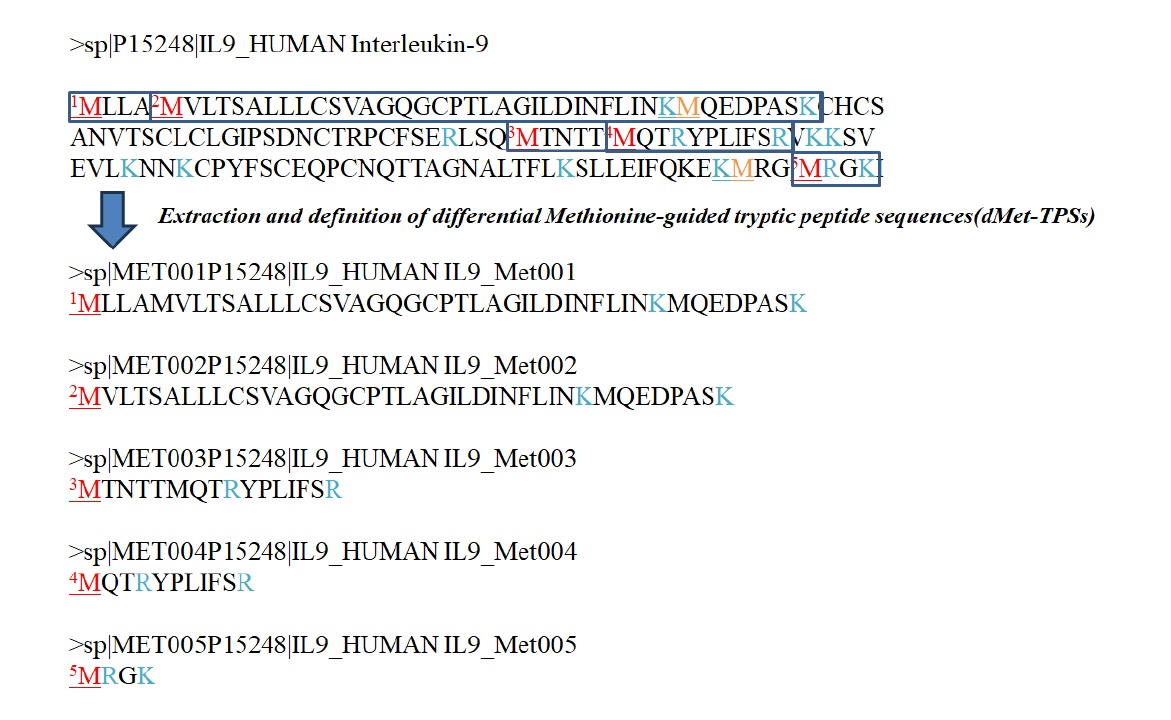
図1:隠れた翻訳開始部位を同定するためのデータベース構築戦略
<関連情報>
- https://www.ims.u-tokyo.ac.jp/imsut/jp/about/press/page_00396.html
- https://link.springer.com/article/10.1186/s13059-026-04120-z
リアルタイム検索支援型多重定量プロテオミクスにより、ヒトがん細胞におけるシステム全体にわたる隠れた翻訳開始が明らかになった Real-time search-assisted multiplexed quantitative proteomics reveals system-wide cryptic translation initiation in human cancer cells
Hiroko Kozuka-Hata,Tomoko Hiroki,Aya Kitamura,Naoaki Miyamura,Tetsu Akiyama,Jun-ichiro Inoue,Kouhei Tsumoto & Masaaki Oyama
Genome Biology Published:28 May 2026
DOI:https://doi.org/10.1186/s13059-026-04120-z Unedited version
Abstract
Background
It is generally considered that eukaryotic translation initiation prominently occurs from the first AUG codon by ribosomal scanning from the 5-cap end of each mRNA. In order to identify cryptic internal translation initiation sites defined by alternative AUG codons on a proteome-wide scale, we generate a customized amino acid sequence database which contain differential AUG-guided tryptic peptide fragments computationally predicted from well-curated Swiss-Prot human protein reference sequences and applied it for high-resolution mass spectrometry-based proteomic analysis.
Results
The ultra-deep proteomic detection based on the real-time search platform on Orbitrap Eclipse Tribrid mass spectrometry system leads to identification of not only more than 26,000 unique peptides from already annotated human protein coding sequences but also 794 novel peptide fragments defined by alternative downstream translation initiation in human cancer cells. Very notably, Tandem Mass Tag-based multiplex quantitative analysis of patient-derived glioblastoma initiating cells uncovers epidermal growth factor-dependent translational regulation on a wide range of differential AUG-guided non-canonical proteoforms as well as cancer-related transcription factors and cell cycle/cell division regulators in a cell-type specific manner.
Conclusions
Our study provides the first proteome-wide evidence of downstream AUG-guided cryptic translation initiation dynamics in human cancer cells.