2026-06-12 バージニア工科大学(Virginia Tech)

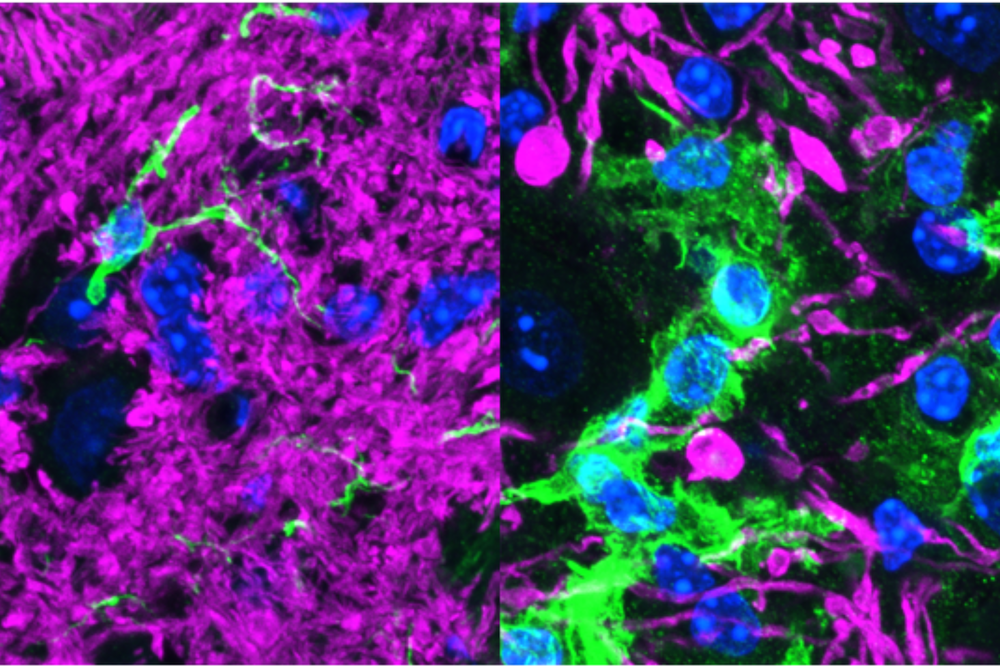
Hirudicryptus canariensis (left) Siphoniulus neotropicus (microscopic image at right) are the two rare millipedes whose DNA helped researchers complete the first evolutionary history of all living millipede orders. Photos by Rafael Garcia and Paul Marek for Virginia Tech.
<関連情報>
- https://news.vt.edu/articles/2026/06/cals-millipede-evolutionary-tree.html
- https://www.cell.com/current-biology/abstract/S0960-9822(26)00640-8
未調査の最後の2つの目を含めることによるヤスデの系統樹の再構築 Reshaping the millipede tree of life by inclusion of the last two unsampled orders
Luisa F. Vasquez-Valverde ∙ Petra Sierwald ∙ William A. Shear ∙ … ∙ Matt T. Kasson ∙ Julián Bueno-Villegas ∙ Paul E. Marek
Current Biology Published:June 12, 2026
DOI:https://doi.org/10.1016/j.cub.2026.05.035
Highlights
- Phylogenomics resolves the ca. half-billion-year evolutionary history of millipedes
- A time-calibrated phylogeny suggests an Ordovician presence
- All extant orders spare one were present by the end of the Jurassic
- Predator defenses such as volvation and alkaloids each evolved multiple times
Summary
Fossil evidence indicates that millipedes were the first animals adapted to life on land about 425 million years ago, becoming the very first land animals and beating vertebrates by a staggering 50 million years.1,2 These multi-legged arthropods provide a vital ecological role in forests by decomposing coarse organic matter and contributing to the formation of nutrient-rich soils.3,4 To date, 14,232 species have been described, with at least as many still awaiting discovery.5 Despite their ecological significance and ancient origins in the Ordovician, the evolutionary relationships among millipedes have remained unresolved, and a synthesis of the 16 orders that comprise the class Diplopoda had never been attempted. In this study, we analyzed the last two remaining unsampled orders, Siphonocryptida and Siphoniulida, two rare paleoendemics whose placement had been unresolved until now. Our results show that all extant diplopod orders except one were present by the end of the Jurassic, that millipedes evolved potent terpenoid alkaloid chemical defenses 261 million years ago, and that Siphonocryptida is a derived lineage of Polyzoniida. Early millipede lineages possessed sophisticated sensory structures, including compound eyes and Tömösváry organs, which were repeatedly lost over 459 million years of diversification. These findings provide a robust framework for understanding the evolution of the earliest fully terrestrial animals and support ongoing efforts to discover and describe thousands of new millipede species.