2026-06-26 マックス・プランク研究所
<関連情報>
- https://www.mpg.de/26848028/premature-births-and-low-birth-weight-risks-posed-by-wildfires
- https://read.dukeupress.edu/demography/article/63/3/869/411119/Wildfires-and-Birth-Outcomes-Evidence-From-Spain
山火事と出生結果:スペインからの証拠 Wildfires and Birth Outcomes: Evidence From Spain
Risto Conte Keivabu;Maria Rubio-Cabañez
Demography Published:June 01 2026
DOI:https://doi.org/10.1215/00703370-12665495
Highlights
- Wildfire exposure during pregnancy harms birth outcomes in Spain.
- Wildfire exposure lowers birth weight and raises the risk of low birth weight and preterm birth.
- Impacts are uniform across sociodemographic groups.
- Both fire proximity and fire-driven PM2.5 affect birth outcomes.
Abstract
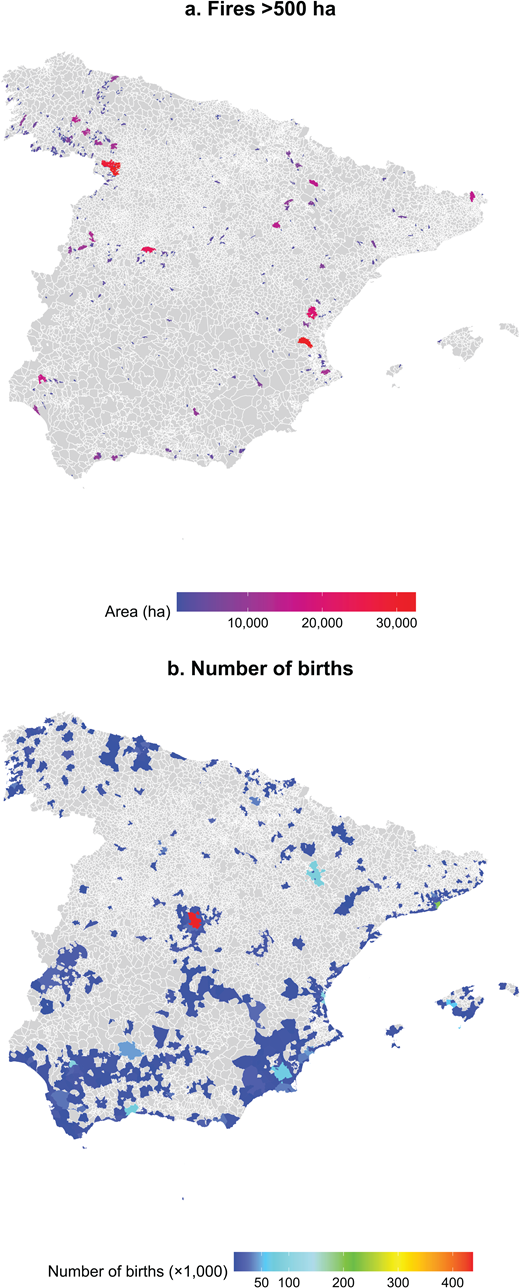
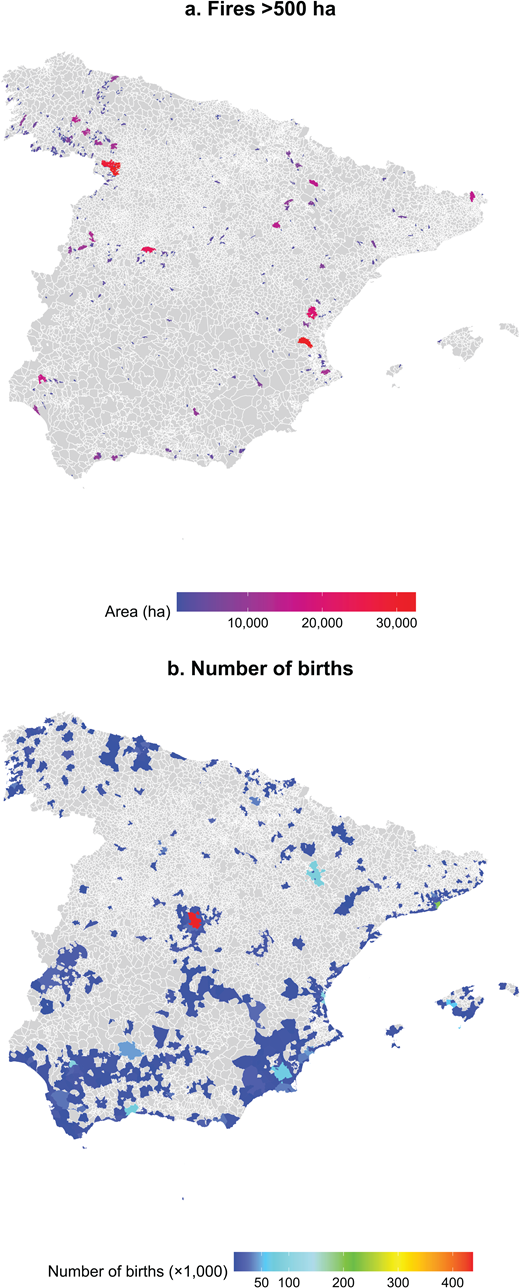
Climate change is increasing the occurrence of fire-conducive weather conditions worldwide and is generating higher risks of wildfire exposure. Despite growing research on the impact of wildfires on health outcomes, studies on birth outcomes, on sociodemographic heterogeneities, and in the European context are lacking. This study examines the impact of wildfires on birth outcomes in Spain, a country facing multiple climate change‒related health risks. We use Spanish administrative data covering approximately 3.5 million live births between 2008 and 2021. This dataset is combined with precise measurements of wildfire exposure based on data from the European Forest Fires Information System. We observe a decrease in birth weight and an increase in the probability of low birth weight and preterm birth owing to wildfire exposure during pregnancy, with the effect concentrated in the first and third trimesters of pregnancy. Our results show no significant differences between sociodemographic groups, suggesting a uniform impact of wildfire exposure. We also examine the role of air pollution induced by wildfires, particularly PM2.5, and find that PM2.5 also contributes to adverse birth outcomes, suggesting that both maternal stress and air pollution generated by wildfires pose dangers to fetal development. The findings underscore the need for public health interventions aimed at mitigating the health effects of wildfires on vulnerable populations, particularly pregnant women.