2026-06-30 バース大学
<関連情報>
- https://www.bath.ac.uk/announcements/using-brain-technology-awareness-is-detected-in-unresponsive-patients/
- https://www.nature.com/articles/s43856-026-01574-x
長期にわたる意識障害における意識および認知の脳波に基づく評価の進歩 Advancing EEG-based assessment of consciousness and cognition in prolonged disorders of consciousness
Naomi du Bois,Attila Korik,Stephanie Hodge,Leah Hudson,Ainjila S. Elahi,Alain Bigirimana,Natalie Dayan,Jose M. Sanchez-Bornot,Alison McCann,Kudret Yelden,Lloyd Bradley,Krishnan P. S. Nair,Simon Judge,Damon Hoad,Emma Vines,Venu Harilal,Sheryl Parke,Paul Johnson,Jacqueline Pogue,Emma Dodds,Abayomi Salawu,Raymond Carson,Karl McCreadie,Jacqueline Stow,… Damien Coyle
Communications Medicine Published:17 April 2026
DOI:https://doi.org/10.1038/s43856-026-01574-x
Abstract
Background
Accurate assessment of residual awareness in patients with Prolonged Disorders of Consciousness (PDoC) remains a major clinical challenge, as conventional behavioural tools can underestimate covert cognition. This study evaluates whether a structured, multi-phase motor imagery Brain–Computer Interface (MI-BCI) protocol provides objective electroencephalography (EEG)-based indicators of awareness that complement behavioural assessments.
Methods
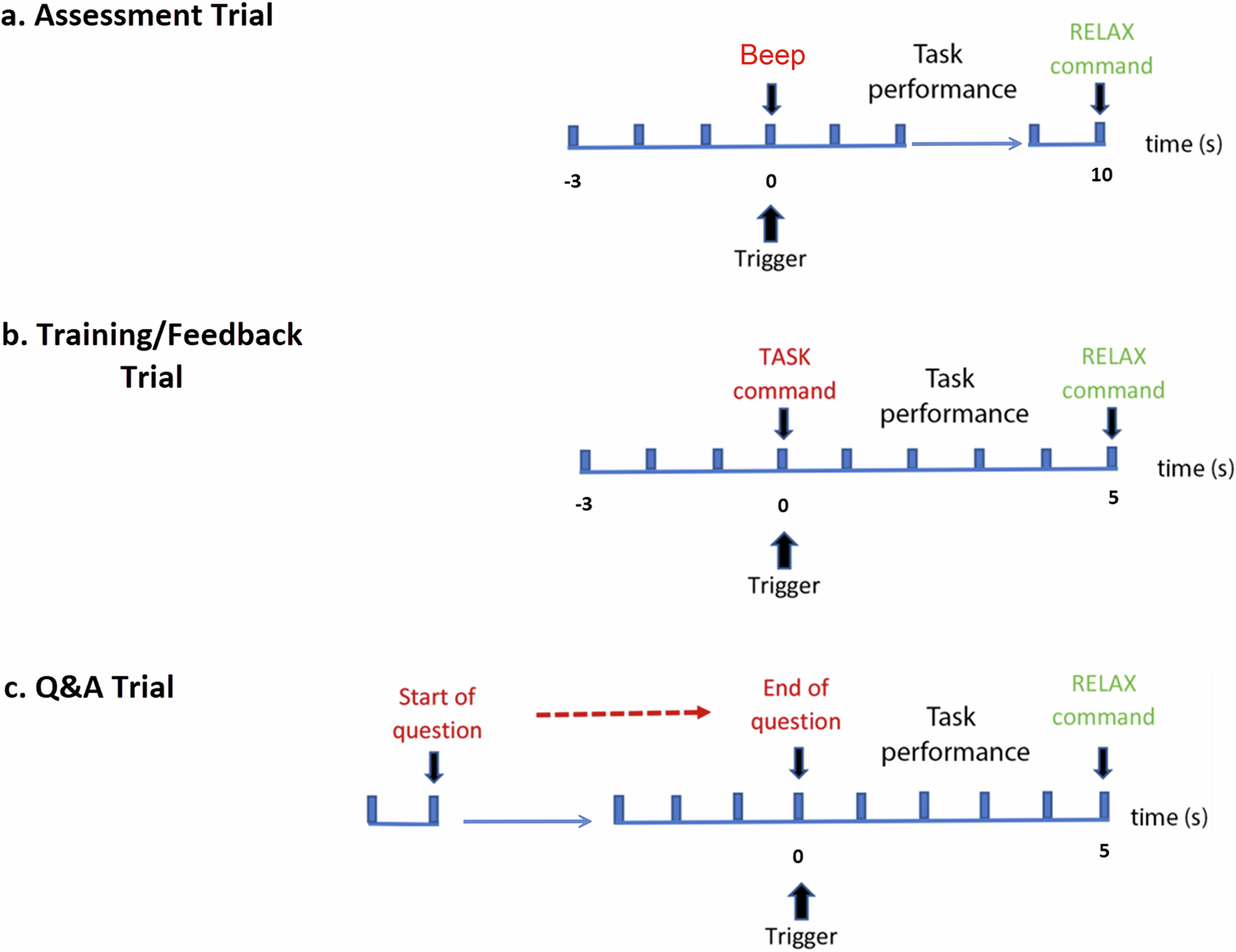
Forty-four participants (N = 44) completed repeated imagined-movement tasks using wearable EEG (PDoC: Unresponsive Wakefulness Syndrome (UWS, n = 14), Minimally Conscious State (MCS, n = 17), Locked-In Syndrome (LIS, n = 11); two able-bodied participants as benchmarks; ClinicalTrials.gov: NCT03827187; 30-01-2019). The protocol assessed sensorimotor rhythm modulation, training with and without neurofeedback, and binary question answering across phases. Standard behavioural assessments (CRS-R and WHIM) were administered at each session.
Results
Significant MI-BCI decoding accuracy (DA) is achieved by 73.8% of patients, of whom 90% progress to Q&A testing and frequently exceed the 70% usability threshold, revealing marked inter-individual heterogeneity. For significant MI-BCI runs, LIS outperform MCS (p = 0.007) and UWS (p = 0.048), while UWS exceed MCS during Q&A (p = 0.049), driven by familiar-voice stimuli. Using leave-one-subject-out cross-validation, combining predictions from DA and behavioural assessments improves balanced diagnostic accuracy to 62% (from 55%), increasing sensitivity to MCS (39% to 69%), with a modest reduction in LIS sensitivity (78% to 67%). Task-related activity over sensorimotor and parietal cortices differentiate diagnostic groups.
Conclusions
The structured MI-BCI protocol demonstrates potential as a movement-independent, EEG-based tool for distinguishing UWS, MCS and LIS. Integrating DA and spatial patterns yields diagnostic information that may augment behavioural assessment and advance objective tools for evaluating awareness in PDoC.