2026-07-22 マウントサイナイ医療システム(MSHS)
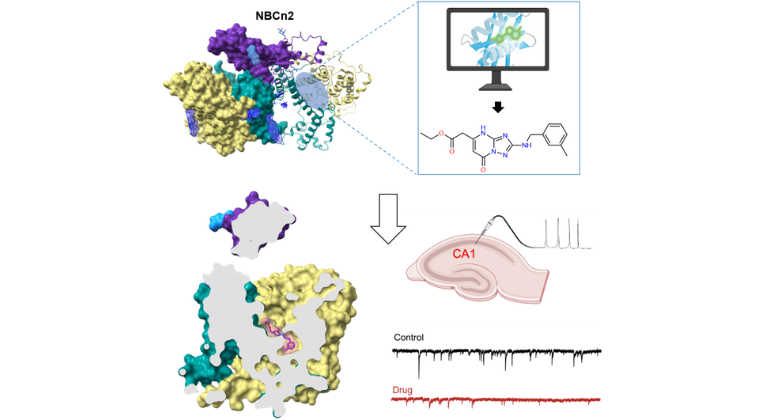
Researchers at the Icahn School of Medicine at Mount Sinai mapped a brain protein linked to autism and epilepsy and developed a compound that blocks it, reducing brain activity in tissue studies and pointing to a potential new treatment approach. Wacker et al., Nature Communications.
<関連情報>
- https://www.mountsinai.org/about/newsroom/2026/study-reveals-structure-of-brain-protein-and-identifies-potential-drug-target-for-epilepsy-research
- https://www.nature.com/articles/s41467-026-75444-4
構造解析の知見により、神経細胞性炭酸塩輸送体NBCn2の創薬が可能になる Structural insights enable drug discovery for the neuronal NBCn2 carbonate transporter
Shifan Yang,Yihan Zhao,Sezen Vatansever,Gregory Zilberg,Michael J. Capper,Jinglong Zhang,Joshua Stamos,Keino Hutchinson,Audrey L. Warren,Alexander C. Stone,Anwar Abbassi,Eric Purisic,Lap Ho,Aiqun Li,Jinye Dai,Avner Schlessinger,Bin Zhang & Daniel Wacker
Nature Communications Published:22 July 2026
DOI:https://doi.org/10.1038/s41467-026-75444-4 Unedited version
Abstract
NBCn2 (SLC4A10), a member of the SLC4 solute carrier (SLC) family, is a sodium-dependent (bi)carbonate transporter that regulates acid extrusion in various brain regions. Mutations in NBCn2 cause severe neurodevelopmental disorders in humans, and knock out studies suggest that its role in regulating neuronal excitability could hold therapeutic potential for seizure disorders such as epilepsy. Despite its physiological importance, NBCn2’s molecular mechanisms remain largely unknown, and there is limited availability of tool compounds to further probe its role in health and disease. Combining cryoEM with computational docking and simulation studies, we herein elucidate NBCn2’s molecular architecture and substrate binding mechanisms on the atomic scale. Via structure-based drug discovery we further identify a compound series that inhibits NBCn2-mediated transport, and characterize its inhibitory mechanisms via cryoEM. Lastly, we showcase the potential of this compound series to template useful probes by demonstrating pharmacological activity both in primary culture as well as brain slices.