2026-07-28 東京科学大学
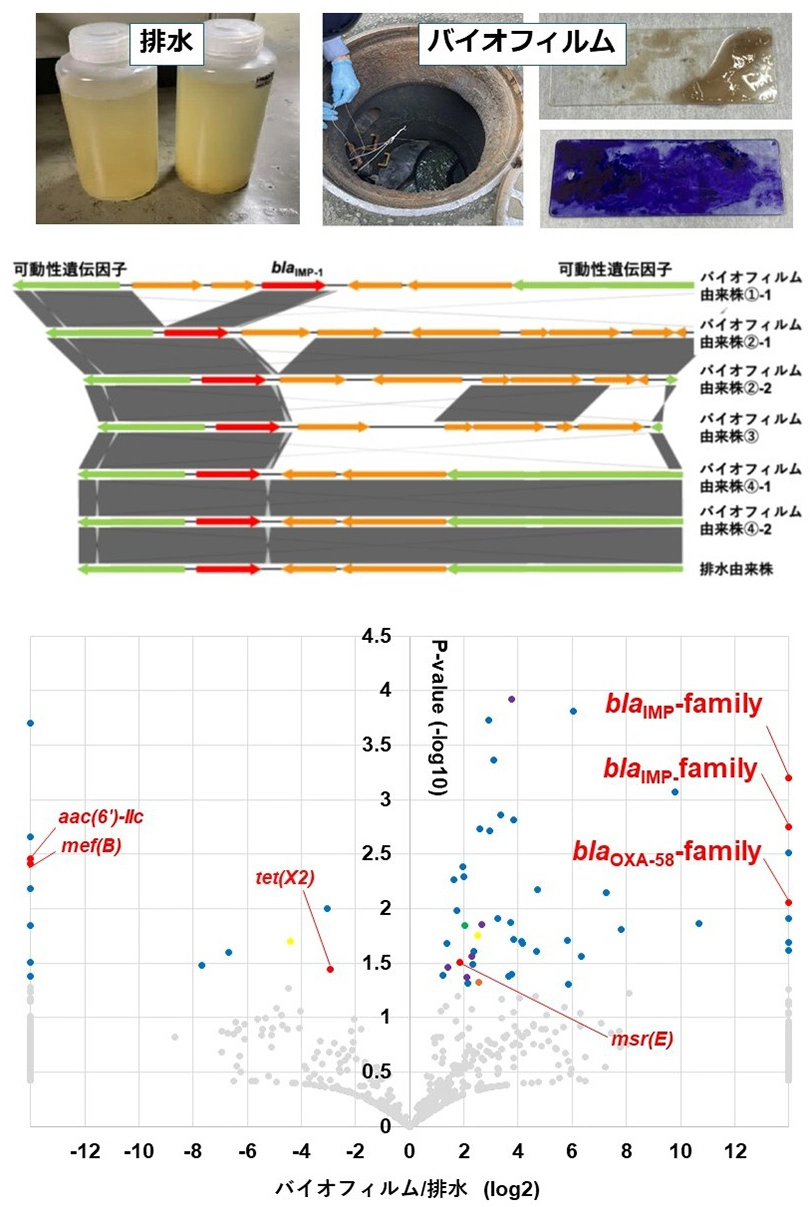
図1. 病院排水中バイオフィルムにおける薬剤耐性蓄積と活性化
<関連情報>
- https://www.isct.ac.jp/ja/news/6g158f0trd3z
- https://www.sciencedirect.com/science/article/pii/S2590207526000341
病院排水バイオフィルムの活性化された抗菌薬耐性に関するゲノム解析 Genomic insights into activated antimicrobial resistance of in situ hospital-wastewater biofilm
Yusuke Ota, Yoko Nukui, Yoshiaki Gu, Ryoichi Saito
Biofilm Available online: 23 June 2026
DOI:https://doi.org/10.1016/j.bioflm.2026.100377
Abstract
Antimicrobial resistance (AMR), particularly among carbapenemase-producing organisms, poses a major global health threat. Although hospital wastewater is considered an AMR hotspot, its functional contribution to resistance dynamics remains poorly defined. We developed in situ biofilms in hospital wastewater and applied integrated metagenomic, metatranscriptomic, and culture-based analyses to characterize community structure and gene expression. Biofilms exhibited greater biomass and higher contamination with extended-spectrum β-lactamase-producing Escherichia coli than planktonic wastewater. Biofilms were enriched in surface-adapted Flavobacteriaceae species and a broader array of carbapenemase genes, whereas wastewater showed higher abundance of gut-associated Bacteroidaceae species and virulence factors. Mobile genetic elements linked multiple AMR genes and showed increased expression in biofilms, including blaIMP family carbapenemases. Culture confirmed blaIMP-1 in four biofilm isolates and one wastewater isolate. These findings indicate that hospital-wastewater biofilms can serve as important reservoirs that promote the persistence and potential dissemination of clinically relevant carbapenem resistance.