
2026-08-24 マサチューセッツ工科大学(MIT)
<関連情報>
- https://news.mit.edu/2026/language-skills-stay-strong-older-adults-even-while-other-cognitive-abilities-decline-0824
- https://www.nature.com/articles/s41467-026-76598-x
高齢者の脳における言語ネットワークの地形、側性化、選択性、および機能的結合性の維持 Preserved topography, lateralization, selectivity, and functional connectivity of the language network in older brains
Anne Billot,Niharika Jhingan,Maria Varkanitsa,Agata Wolna,Cory Shain,Idan Blank,Rachel Ryskin,Swathi Kiran & Evelina Fedorenko
Nature Communications Published:24 August 2026
DOI:https://doi.org/10.1038/s41467-026-76598-x
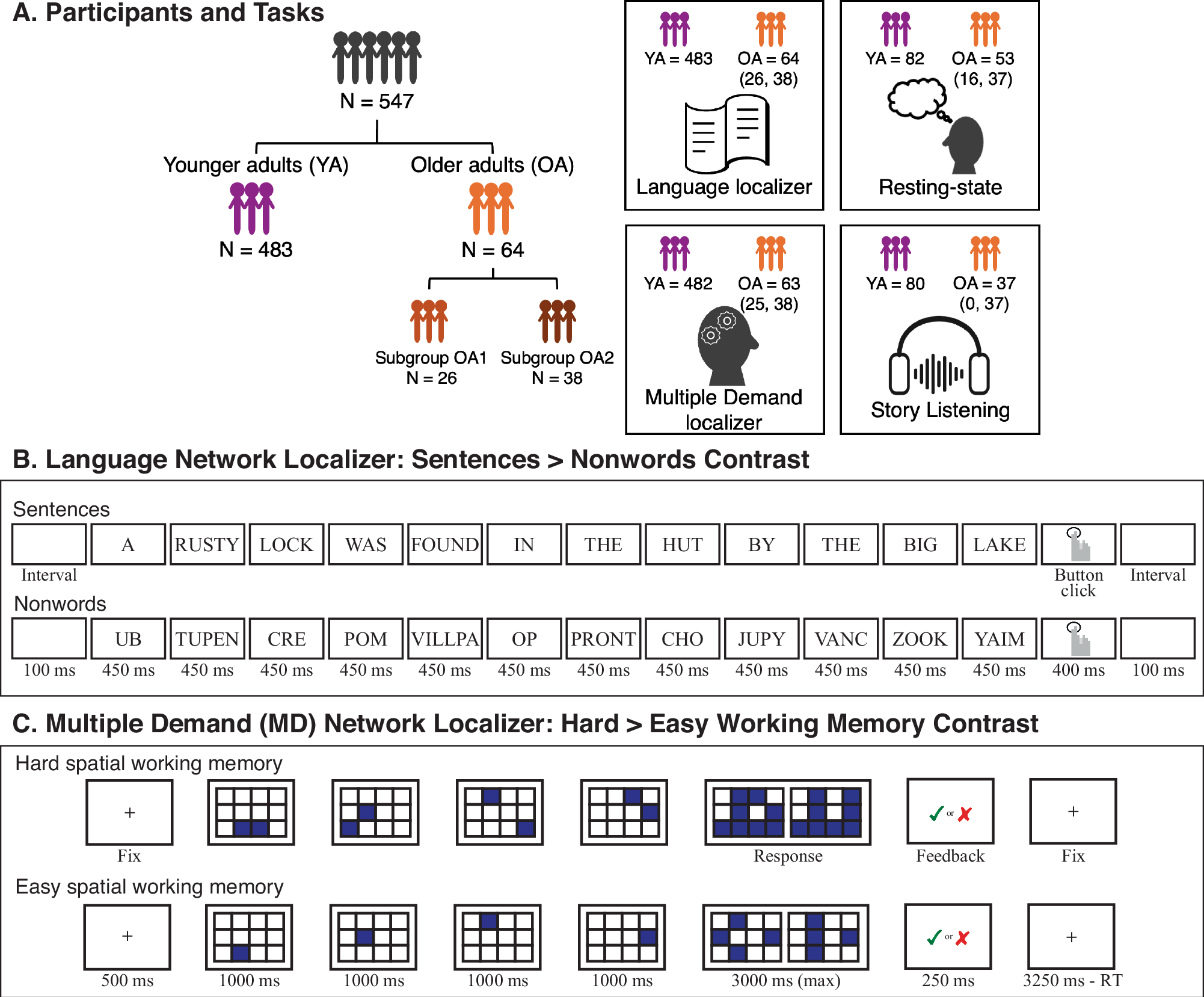
Abstract
Healthy aging is associated with structural and functional brain changes. However, cognitive abilities vary in how they change with age: executive functions decline, while aspects of linguistic processing remain relatively preserved. This heterogeneity predicts differences among brain networks in whether and how they change with age. To evaluate this prediction, we used precision fMRI to examine the language-selective network and the Multiple Demand (MD) network, which supports executive functions, in older adults (N = 64) relative to young controls (N = 483). The MD network of older adults shows weaker, less spatially extensive, and more topographically variable activations during an executive function task and reduced within-network functional connectivity. In contrast, we find remarkable preservation of the language network in older adults: it responds during language comprehension as strongly and selectively as in younger adults, with similar left-hemispheric lateralization and within-network functional connectivity. These findings align with behavioral preservation of language comprehension in healthy aging.

