2025-08-12 コロンビア大学
<関連情報>
- https://www.cuimc.columbia.edu/news/will-making-neurons-young-again-stop-als
- https://www.nature.com/articles/s41593-025-02033-x
胚性運動神経細胞のプログラム因子はいまだ成熟していない遺伝子発現を再活性化し、出生後の運動神経細胞におけるALS病理を抑制する Embryonic motor neuron programming factors reactivate immature gene expression and suppress ALS pathologies in postnatal motor neurons
Emily R. Lowry,Tulsi Patel,Jonathon A. Costa,Elizabeth Chang,Shahroz Tariq,Hranush Melikyan,Ian Davis,Siaresh Aziz,Georgia Ntermentzaki,Francesco Lotti & Hynek Wichterle
Nature Neuroscience Published:12 August 2025
DOI:https://doi.org/10.1038/s41593-025-02033-x
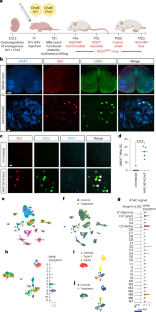
Abstract
Aging is a major risk factor in amyotrophic lateral sclerosis (ALS) and other adult-onset neurodegenerative disorders. Whereas young neurons are capable of buffering disease-causing stresses, mature neurons lose this ability and degenerate over time. We hypothesized that the resilience of young motor neurons could be restored by reexpression of the embryonic motor neuron selector transcription factors ISL1 and LHX3. We found that viral reexpression of ISL1 and LHX3 selectively in postnatal motor neurons reactivates aspects of their youthful gene expression program and alleviates key disease-relevant phenotypes in the SOD1G93A mouse model of ALS. Our results suggest that redeployment of lineage-specific neuronal selector transcription factors can be an effective strategy to attenuate age-dependent phenotypes in neurodegenerative disease.