2025-11-07 英国研究イノベーション機構(UKRI)
<関連情報>
- https://www.ukri.org/news/bioengineered-bone-marrow-model-successful-in-leukaemia-research/
- https://www.sciencedirect.com/science/article/pii/S0142961225007227
骨髄ニッチのモデルとして合成ペプチドハイドロゲルが、急性骨髄性白血病に対するCRISPR-CAR T細胞併用療法の有効性を実証 Synthetic peptide hydrogels as a model of the bone marrow niche demonstrate efficacy of a combined CRISPR-CAR T-cell therapy for acute myeloid leukaemia
W. Sebastian Doherty-Boyd, P. Monica Tsimbouri, Vineetha Jayawarna, Matthew Walker, Aqeel F. Taqi, Niall Mahon, Dominic Meek, Peter Young, Aline Miller, Adam West, Manuel Salmeron-Sanchez, Matthew J. Dalby, Hannah Donnelly
Biomaterials Available online: 26 October 2025
DOI:https://doi.org/10.1016/j.biomaterials.2025.123803
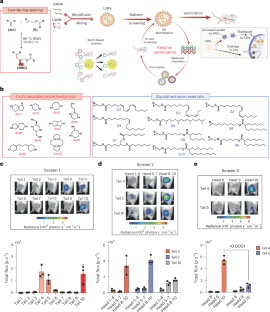
Graphical abstract

Abstract
Leukaemias, driven by mutations in haematopoietic stem cells (HSCs), rely on interactions with the bone marrow (BM) niche and other cell populations such as mesenchymal stromal cells (MSCs) for growth and survival. While chimeric antigen receptor (CAR) T-cell therapy shows promise for other haematological malignancies, its application to acute myeloid leukaemia (AML) is hindered by tumour heterogeneity and off-target toxicity. Combining CRISPR-Cas9 gene editing with CAR T-cell therapy has potential for selectively targeting AML cells while sparing healthy tissue. However, validating the efficacy of these treatments prior to clinical trial is hampered by the differences between humans and animal models typically used for pre-clinical testing. Furthermore, traditional in vitro models fail to replicate the complexity of the BM niche and often overestimate treatments’ efficacy. Here, we present a bioengineered human-cell containing endosteal BM niche model combining a fibronectin-presenting polymeric surface and a synthetic peptide hydrogel (PeptiGel) that mimics native BM tissue’s mechanical properties. This platform supports niche phenotypes in MSCs and HSCs and enables the evaluation of combined CRISPR-CAR T-cell therapy, demonstrating potential as a preclinical human model for testing novel therapies.