2026-04-17 カリフォルニア大学リバーサイド校(UCR)
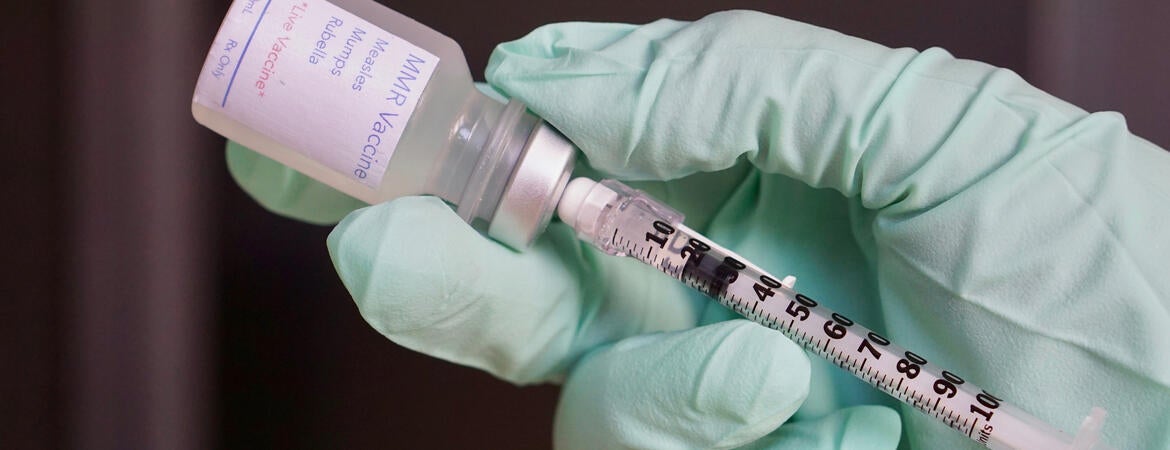
Image credit: Samara Heisz/iStock/Getty Images Plus.
<関連情報>
- https://news.ucr.edu/articles/2026/04/17/measles-vaccine-gaps-persist-among-er-patients
- https://www.sciencedirect.com/science/article/abs/pii/S0735675726001452
救急外来患者の全国サンプルにおける麻疹、おたふく風邪、風疹ワクチンの知識、接種状況、および受容状況のギャップ Gaps in knowledge, receipt, and acceptance of measles, mumps, rubella vaccines in a National Sample of emergency department patients
Sahithi Malireddy, Alexandra Eftimie, Shaokui Ge, Christopher Alvarez, Jesus Torres, Brian Chinnock, Michael Gottlieb, Vijaya Arun Kumar, Kristin L. Rising, Efrat Rosenzweig Kean, Stephanie Eucker, Robert M. Rodriguez
The American Journal of Emergency Medicine Available online: 27 March 2026
DOI:https://doi.org/10.1016/j.ajem.2026.03.022
Highlights
- One quarter of adult emergency departmnet patients had not heard of the MMR vaccine.
- Almost one-half of adult patients were not up to date on MMR vaccination.
- Lack of knowledge and decreased uptake of the MMR vaccine was more common among males, African American and Hispanic individuals, younger adults, non-English speakers, and those lacking access to primary care.
- Over one-third of unvaccinated adults would accept the MMR vaccine if offered in EDs
- EDs may serve as high-impact sites for MMR vaccine surveillance and messaging, especially to underserved populations.
Abstract
Background
Measles cases are increasing in the U.S., raising concern about gaps in adult measles, mumps, and rubella (MMR) vaccination, which is poorly captured by current surveillance. Emergency departments (EDs) act as safety-nets for underserved populations and can help identify gaps in adult MMR uptake. We assessed adult MMR up-to-date status, knowledge, and willingness to receive vaccination in the ED, nationally.
Methods
We conducted a cross-sectional survey of adults aged 18–64 at ten U.S. EDs from April–December 2024. Participants completed a structured survey assessing MMR knowledge, self-reported vaccination status, reasons for non-receipt, and willingness to receive MMR in the ED. Outcomes were summarized as proportions with 95% confidence intervals (CIs). Multivariable logistic regression identified factors associated with not being up to date and willingness to accept vaccination.
Results
Among 2456 participants, 25.0% (95% CI 23.3–26.7%) had not heard of the MMR vaccine, and 44.0% (42.5–46.4%) were not up to date. Factors associated with being unvaccinated included male sex (OR 2.21 [1.84–2.66]), African American (non-Hispanic) race (OR 2.27 [1.75–2.96]), Hispanic ethnicity (OR 1.98 [1.49–2.62]), non-English speakers (OR 1.53 [1.12–2.09]), and lack of primary care access (OR 1.25 [1.01–1.58]). Among those not up to date, 36.5% (33.6–39.4%) were willing to receive MMR vaccine if offered in the ED.
Conclusions
Substantial gaps in adult MMR vaccination persist, especially among underserved populations. ED-based strategies might support targeted vaccine education and delivery during periods of increased transmission.