2025-04-15 ワシントン大学セントルイス校
<関連情報>
- https://source.washu.edu/2026/04/mrna-vaccines-follow-unconventional-immune-path-to-destroy-tumors/
- https://medicine.washu.edu/news/mrna-vaccines-follow-unconventional-immune-path-to-destroy-tumors/
- https://www.nature.com/articles/s41586-026-10353-6
mRNAワクチンはCD8+ T細胞のプライミングにおいて非従来型の経路を活性化する mRNA vaccines engage unconventional pathways in CD8+ T cell priming
Suin Jo,Lijin Li,Chandrani Thakur,Kevin A. Telfer,Hussein Sultan,Ray A. Ohara,Michelle He,Giri Nam,Jing Chen,Feiya Ou,Monia Draghi,Nicholas M. Valiante,Robert D. Schreiber,Gwendalyn J. Randolph,Naresha Saligrama,Theresa L. Murphy,William E. Gillanders & Kenneth M. Murphy
Nature Published:15 April 2026
DOI:https://doi.org/10.1038/s41586-026-10353-6
Abstract
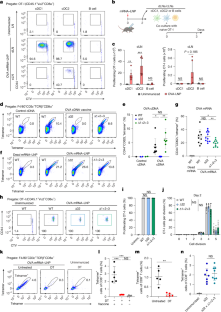
Vaccines composed of mRNA and lipid nanoparticles (LNPs) activate B cells and T cells by inducing in vivo production of specific protein antigens. While B cells can be activated directly by antigens, T cell activation requires antigen processing and presentation by MHC molecules on specialized antigen-presenting cells (APCs). In response to viral infections, tumours, and protein- and cDNA-based vaccines, antigen presentation to CD8+ T cells is particularly dependent on type 1 conventional dendritic (cDC1) cells, which are specialized for efficient cross-presentation of exogenous antigens1,2,3,4. However, whether similar mechanisms have a role in mRNA–LNP vaccination is unclear. Here we report that mRNA–LNP vaccines do not require cDC1 cells or the WDFY4-dependent cross-presentation pathway for CD8+ T cell priming but instead engage both cDC1 and cDC2 cells redundantly. While CD8+ T cells primed exclusively by either cDC1 or cDC2 cells showed phenotypic differences, both could mediate anti-tumour responses and memory formation. Importantly, acquisition by cDCs of peptide–MHC-I complexes from non-haematopoietic cells, called cross-dressing, provides a substantial component of CD8+ T cell priming, in a manner dependent on type I interferon. mRNA–LNP induction of cross-dressing might explain their ability to activate CD8+ T cells against antigens not encoded by the vaccine.