2025-05-01 京都府立医科大学
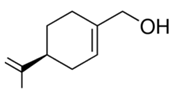
図1 シソ由来天然成分ペリリルアルコール (POH)の化学構造式
<関連情報>
- https://www.kpu-m.ac.jp/doc/news/2026/20260501press.html
- https://www.kpu-m.ac.jp/doc/news/2026/files/41618.pdf
- https://www.mdpi.com/1422-0067/27/8/3704
エストロゲンレセプター陽性乳がんの抗エストロゲン療法抵抗性に対する新規標的分子ANT2の発見 Identification of ANT2 as a Druggable Target for Endocrine-Resistant ERα-Positive Breast Cancer
Erika Iguchi,Motoki Watanabe,Kaito Kobayashi,Shogen Boku,Wataru Nishio,Chikage Kato,Midori Morita,Koichi Sakaguchi,Michihiro Mutoh,Tomoshi Kameda and Yasuto Naoi
International Journal of Molecular Sciences Published: 21 April 2026
DOI:https://doi.org/10.3390/ijms27083704
Abstract
Endocrine therapy is the mainstay for estrogen receptor (ER) α-positive breast cancer (BC), yet many patients display acquired resistance. We then screened natural compounds using human ERα-positive BC cells and identified perillyl alcohol (POH), a monoterpene from perilla, that reduces ERα protein levels. Chemoproteome analysis using POH-immobilized nanomagnetic beads revealed adenine nucleotide translocase 2 (ANT2), a mitochondrial inner membrane protein, as a direct target of POH. Molecular dynamics (MD) simulations predicted POH binding to the central pore of ANT2, which functions in ATP transport. ANT2 depletion reduced ERα levels, and public datasets indicate that high ANT2 expression correlates with poor prognosis in ERα-positive BC. POH also inhibited the growth of Tamoxifen- and Fulvestrant-resistant BC cells. RNA sequencing showed that fatty acid elongation-related genes were upregulated in Fulvestrant-resistant cells but downregulated by ANT2 depletion. Both ANT2 depletion and POH treatment led to the accumulation of intracellular lipid droplets in Fulvestrant-resistant cells, consistent with impaired fatty acid elongation. Finally, in silico screening using MD simulations identified venetoclax and nystatin as potential ANT2 pore binders. Both compounds reduced ERα levels in ERα-positive BC cells and increased lipid droplet formation in Fulvestrant-resistant cells. These findings highlight ANT2 as a druggable target against endocrine-resistant BC.