2026-06-02 スタンフォード大学
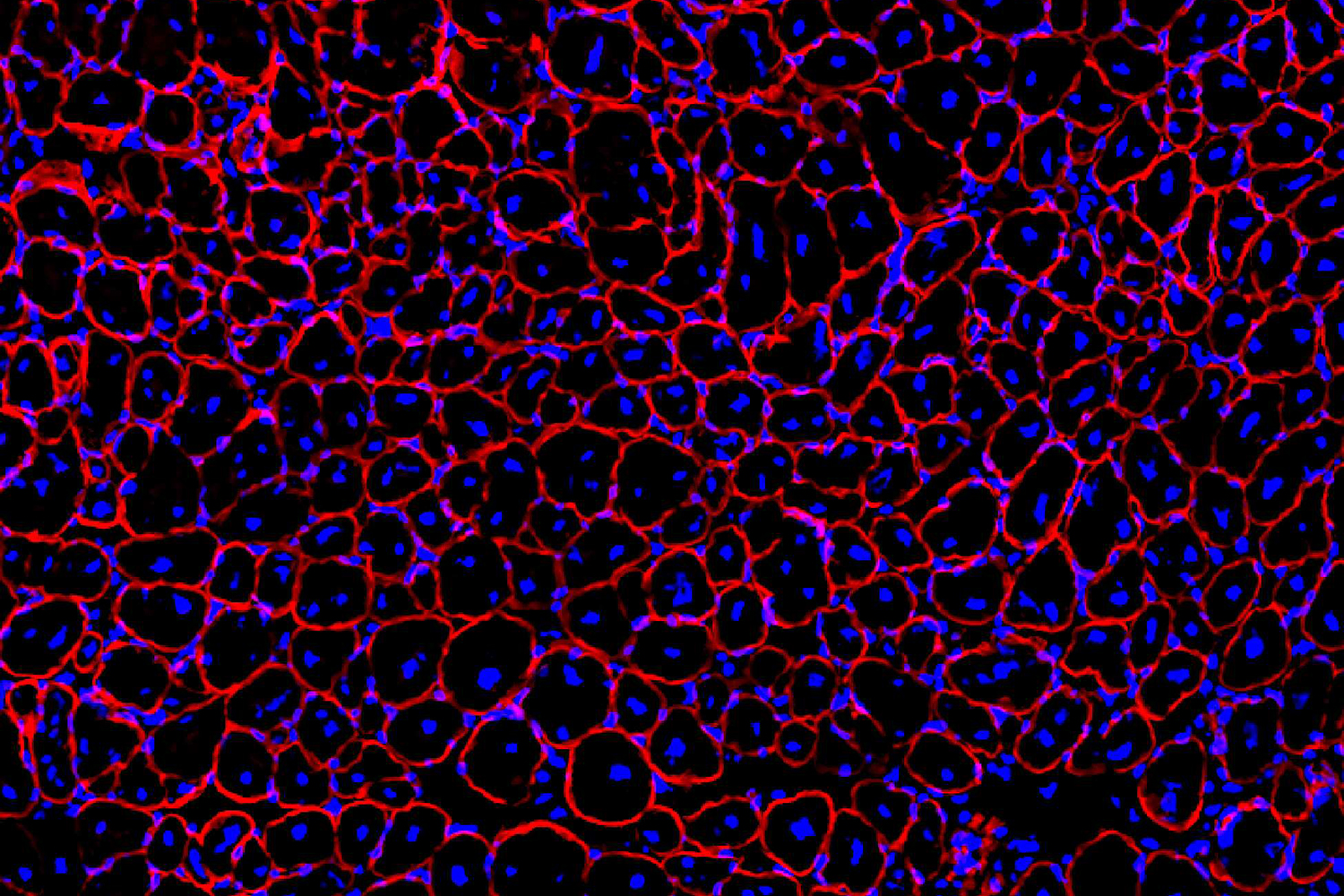
Centrally nucleated myofibers indicate regenerated muscle fibers. | Minas Nalbandian and Helen M. Blau
<関連情報>
- https://news.stanford.edu/stories/2026/06/muscle-loss-regeneration-glp-1-ozempic-research
- https://www.pnas.org/doi/10.1073/pnas.2606533123
15-PGDH阻害は、GLP-1受容体作動薬誘発性体重減少時の筋肉修復と筋力回復を促進する 15-PGDH inhibition promotes muscle repair and strength recovery during GLP-1 receptor agonist–induced weight loss
Minas Nalbandian, Jameel Lone, Emmeran Le Moal, +8 , and Helen M. Blau
Proceedings of the National Academy of Sciences Published:June 2, 2026
DOI:https://doi.org/10.1073/pnas.2606533123
Significance
Glucagon-like peptide-1 receptor agonists (GLP-1 RAs) are revolutionary treatments for obesity and diabetes, yet growing evidence indicates that the resulting weight loss includes loss of lean mass, including skeletal muscle, a major organ essential for physical activity and whole-body metabolic health. We identify 15-hydroxyprostaglandin dehydrogenase (15-PGDH), a prostaglandin-degrading “gerozyme,” as a potent, druggable target and show that its inhibition enhances muscle stem cell function and regenerative myofiber growth during semaglutide-induced weight loss. Our data suggest that PGDHi and GLP-1 RA synergize to promote effective muscle repair and functional recovery of force.
Abstract
Glucagon-like peptide-1 receptor agonists, including long-acting semaglutide, are transformative anti-obesity therapies. However, emerging evidence indicates that weight loss may come at the expense of skeletal muscle mass, a tissue essential for mobility, metabolic regulation, and overall health. Here, we show that inhibition of the gerozyme 15-hydroxyprostaglandin dehydrogenase (15-PGDH), a prostaglandin-degrading enzyme that increases with injury and aging, improves muscle repair and strength recovery in the presence of semaglutide. In a high fat diet-induced mouse model of obesity, semaglutide alone caused significant loss of muscle mass, while preserving contractile function. Following injury, obese mice exhibited pathological calcifications previously reported for the heritable myopathy, Duchenne Muscular Dystrophy. Semaglutide had both beneficial and deleterious effects, reducing calcific remodeling, but causing reduced regenerated myofiber sizes. This impaired regenerative myofiber growth in semaglutide-treated mice was surmounted by cotreatment with a 15-PGDH inhibitor (PGDHi), which stimulated muscle stem cell function and myofiber growth, leading to enhanced strength. Importantly, PGDHi synergizes with semaglutide to boost postinjury muscle quality and muscle force without compromising weight loss.