2026-06-16 愛媛大学
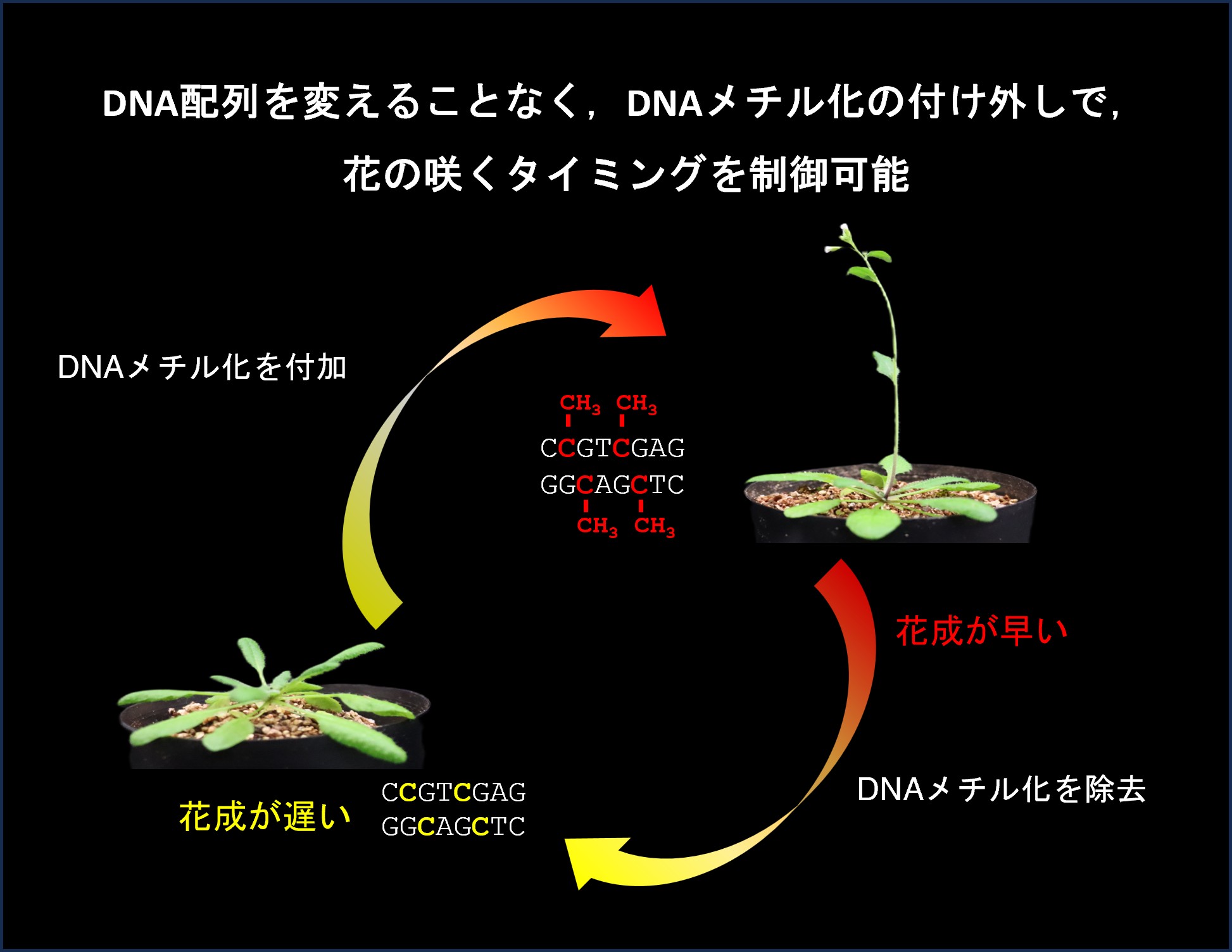
DNA配列を変えることなく、DNAメチル化の付け外しで、花の咲くタイミングを制御可能
<関連情報>
- https://www.ehime-u.ac.jp/data_relese/pr_20260616_agr/
- https://academic.oup.com/pcp/article-abstract/67/5/739/8377254
シロイヌナズナにおけるニッカーゼ型SpCas9とDNAメチル化関連酵素の直接融合による簡便かつ局所的なDNAメチル化編集技術の開発 Development of a simple and locus-restricted DNA methylation editing system using direct fusion of a nickase-type SpCas9 and DNA methylation-related enzymes in Arabidopsis thaliana
Shunya Hirata,Taisei Ozono,Kenshin Kawai,Chiyoko Machida,Kappei Kobayashi,Yoko Ikeda,Taisuke Nishimura,Hidetaka Kaya
Plant and Cell Physiology Published:11 December 2025
DOI:https://doi.org/10.1093/pcp/pcaf162
Abstract
DNA methylation is an important epigenetic modification that regulates gene expression and supports genome stability. DNA methylation editing technology differs from conventional genome editing technology, which introduces mutations into genes, in that it enables changing gene expression without altering the base sequence. In this study, we attempted simple and locus-restricted DNA methylation editing in Arabidopsis thaliana using fusion proteins directly linking a nickase-type SpCas9 protein with DNA methylation-related enzymes. First, fusion of the human Ten-eleven translocation methyl cytosine dioxygenase 1 (TET1) catalytic domain (TET1cd) to nSpCas9 led to removing 5-methylcytosine in the FLOWERING LOCUS WA (FWA) promoter region of the wild-type plant, resulting in increased expression of the FWA gene and consequently, a late-flowering phenotype. Conversely, fusion of a mutant form of the bacterial DNA methyltransferase MQ1 (MQ1v) to nSpCas9 induced de novo DNA methylation in the fwa101-D mutant, in which the FWA promoter region is hypomethylated, and suppressed FWA gene expression, resulting in an early-flowering phenotype compared with the fwa101-D mutant. Of particular importance, our nSpCas9 system achieves targeted DNA methylation editing within a genomic window of ~10–20 kb. The nSpCas9 system features a compact and simplified vector structure due to the DNA methylation-related enzyme directly fusing to nSpCas9. Furthermore, sgRNA can be easily replaced, making it highly flexible. We propose a new method for targeted epigenome editing technology in plants, paving the way for innovative strategies in both basic research on epigenetics and crop development through epigenome editing.