
2026-07-01 カリフォルニア大学リバーサイド校(UCR)
<関連情報>
- https://news.ucr.edu/articles/2026/07/01/families-describe-daily-health-challenges-near-salton-sea
- https://link.springer.com/article/10.1186/s44329-026-00060-y
室内空気質が子供の呼吸器の健康と生活の質に及ぼす影響に関する混合研究法による調査 A mixed-methods study of indoor air quality on children’s respiratory health and quality of life
Ashley Trinidad,William C. Porter,Sophia Rodriguez,Gabriela Ortiz,Maria Pozar & Ann Marie Cheney
BMC Environmental Science Published:01 July 2026
DOI:https://doi.org/10.1186/s44329-026-00060-y
Abstract
Background
Racial and ethnic minority populations are disproportionately exposed to poor air quality, increasing risk for respiratory and cardiovascular complications. Exposure to poor indoor air quality is especially problematic given the amount of time spent indoors. This study aims to illustrate Latinx caregivers’ perceptions of the environmental conditions that shape children’s respiratory health and the strategies they use to care for children with chronic respiratory conditions.
Methods
From Spring to Summer 2023, we conducted a mixed-methods study that involved qualitative data via photovoice with 15 caregivers of children with asthma or respiratory health problems living in the Salton Sea region, a region heavily impacted by windblown dust storms and poor air quality, and quantitative indoor air quality data within participants’ homes. Using photovoice methodology, our study employed photography to narrate the perceived effects of the Salton Sea environment on children’s health and caregivers’ experiences of caring for their children in this environment. Data were collected during spring and summer weekend-long photo-elicitation periods, followed by semi-structured interviews to elicit the meanings of the photographs. Qualitative data were analyzed using a blended deductive and inductive approach, and quantitative indoor air quality data provided additional context for interpreting the photographic meaning.
Results
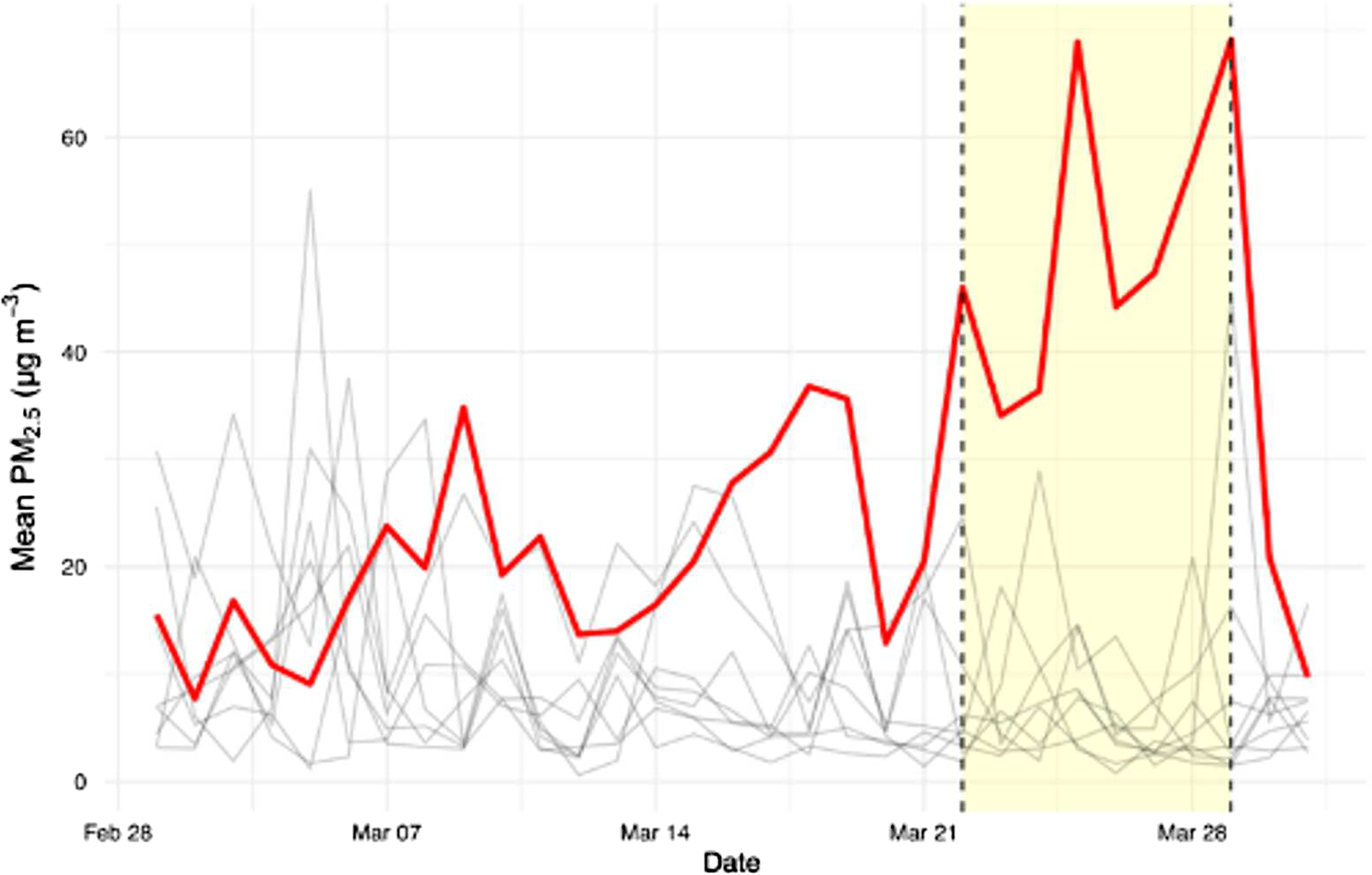
A total of 15 Latina mothers living within 15 miles of the Salton Sea participated in the study. Outdoor dust events significantly affected indoor air quality, doubling typical indoor particulate matter levels. Analysis of photovoice data indicated parents respond to poor air quality by keeping their children indoors to prevent exposure to ambient particulate matter. Extreme weather events affect the quality of life for both children and their caregivers, contributing to children missing school and caregivers missing work.
Conclusion
Our findings are consistent with existing literature demonstrating that residents’ socio-economic position affects the urgency of addressing air-quality-related health concerns. To combat high levels of indoor particulate matter, we recommend that families keep doors and windows closed or sealed with weatherstripping during extreme weather events and use air filters to help circulate and clean the air. Next steps include investigation into how housing typologies and seasonality impact indoor air quality.

