2026-08-24 エディンバラ大学
<関連情報>
- https://www.ed.ac.uk/news/woodlands-linked-to-reduced-antidepressant-use
- https://www.thelancet.com/journals/lanplh/article/PIIS2542-5196(26)00076-8/fulltext
スコットランドにおける都市部の森林改善とメンタルヘルスの関係性の調査:連結された国家行政データセットを用いた自然実験 Investigating the relationship between urban woodland improvements and mental health in Scotland: a natural experiment using linked longitudinal national administrative datasets
Scott Ogletree, PhD ∙ Antonio Ross-Perez, PhD ∙ Tom Clemens, PhD ∙ Prof Jamie Pearce, PhD ∙ Prof Rich Mitchell, PhD ∙ Prof Catharine Ward Thompson, PhD
The Lancet Planetary Health Published: August 13, 2026
DOI:https://doi.org/10.1016/j.lanplh.2026.101503
Summary
Background
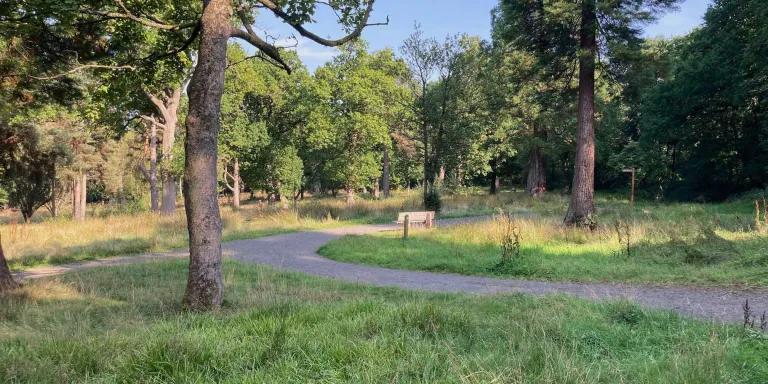
Natural spaces have the potential to improve mental health conditions such as depression and anxiety. Urban woodlands present an opportunity to provide local residents with nearby green and natural areas, when such areas are safe, inviting, and easy to access. We examined a broad programme of woodland improvements in Scotland that targeted less-advantaged communities to identify the effects improved woodland spaces could have on mental health outcomes.
Methods
Individual de-identified sociodemographic data from the Scottish Longitudinal Study were linked with residential histories and mental health prescription records from National Health Service (NHS) Scotland between 2012 and 2016. Geospatial data on the location of urban woodland improved under the Woods In And Around Town (WIAT) scheme funded by Scottish Forestry. We used longitudinal random-effects models to assess the association of between-individual and within-individual changes in improved woodland exposure with the risk of being prescribed antidepressant or anxiolytic medications over the 5-year period.
Findings
A total of 129 335 adults were included in the final sample. In the cross-sectional, between-individual analysis, we observed a greater risk (adjusted odds ratio [aOR] 1·10 [95% CI 1·03–1·20] p<0·05) of antidepressant prescription for those living within 800 m (approximately 10-min walk) of an improved woodland compared with those living further away, but no significant difference in the risk of anxiolytic prescription. In the longitudinal, within-individual analysis, we observed lower prescription use for antidepressants (aOR 0·90 [95% CI 0·87–0·93] p<0·01) and anxiolytics (aOR 0·94 [0·90–0·99] p<0·01) during periods spent living within 800 m of an improved woodland when compared with periods spent living beyond 800 m of an improved woodland.
Interpretation
We suggest that the greater risk of antidepressant use between individuals reflects the fact that the WIAT improvement programme targeted more socioeconomically deprived areas. However, the significantly reduced risk of mental health prescription for individuals moving from outside of a WIAT area into a WIAT area suggests that the intervention had a positive effect on individuals’ mental health over time. These findings point to the value of environmental interventions, such as urban woodland investments, as a preventive public health strategy, especially in deprived areas that tend to have greater mental health burdens and less access to green space.
Funding
Economic and Social Research Council; GroundsWell Consortium, a UK Prevention Research Partnership.