2026-08-21 コロンビア大学
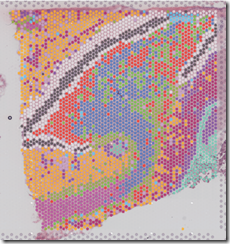
The researchers examined nearly half a million brain cells from the hippocampus of depressed and non-depressed individuals, finding that the whole circuit suffers from molecular changes in depression. Colored circles mark different types of neurons in a hippocampus examined by the researchers. Image provided by Maura Dupont.
<関連情報>
- https://www.cuimc.columbia.edu/news/depression-stalls-formation-new-brain-cells
- https://www.nature.com/articles/s41591-026-04571-8
大うつ病性障害における成人海馬神経新生の調節異常 Dysregulated adult hippocampal neurogenesis in major depressive disorders
Madeleine S. Peng,Jialin Jiang,Lucia Polizzi,Tiancheng Shi,Rakshitha Ramkumar,Victor O. Anosike,Giulia Guasoni,Alexandra M. Wamalwa,Madeline B. Mariani,Cheick A. Sissoko,Alexandria N. Tartt,Camille Fulmore,Gorazd B. Rosoklija,Yung-yu Huang,Victoria Arango,Shujuan T. McDonald,Natasha Bitoljanu,J. John Mann,Phi T. Nguyen,Andrew J. Dwork,Lewis M. Brown,René Hen,Hanga Galfalvy & Maura B. Dupont
Nature Medicine Published:21 August 2026
DOI:https://doi.org/10.1038/s41591-026-04571-8
Abstract
Major depressive disorder (MDD) is associated with reduced hippocampal volume, altered connectivity and negative memory bias, suggesting disrupted hippocampal plasticity. Dysregulated adult hippocampal neurogenesis is a potential contributor, but its relevance in humans and role in MDD remain unclear. Here we investigated the molecular basis of hippocampal dysfunction in nonmedicated individuals with MDD by integrating analyses of neurogenic trajectories, cell-type- and subfield-specific gene expression, chromatin accessibility and protein expression. We identify a neurogenic lineage in the adult human hippocampal subgranular zone and provide evidence for a stalled neurogenic process in MDD, associated with transcriptional regulation, stress-related reprogramming and interferon signaling across developmental stages. Excitatory and inhibitory neurons show dysregulation of transcription factor networks affecting cell states. Cellular stress, excitatory–inhibitory imbalance, impaired synaptic plasticity, reduced metabolic capacity and immune activation, underlie impaired neurogenesis and reduced hippocampus circuit plasticity. Findings indicate genetic and epigenetic regulation of gene expression in MDD, and overlapping pathogenetic mechanisms with autoimmune, neurodevelopmental and neurodegenerative diseases. This work provides a new understanding of the pathogenesis of hippocampus-dependent cognitive symptoms in MDD and suggests potential therapeutic targets.