2026-08-25 エディンバラ大学
<関連情報>
- https://www.ed.ac.uk/news/supportive-brain-cells-may-drive-cognitive-decline
- https://www.nature.com/articles/s41591-026-04608-y
ヒトの加齢に伴う認知機能低下におけるオリゴデンドロサイト機能障害 Oligodendrocyte dysfunction in human age-related cognitive decline
Georgina A. Craig,Emeric Merour,Luise A. Seeker,Annette J. Haughian,Keon Arbabi,Jamie Rose,Alana Hoffmann,Jessica Thapar,Andrea Corsinotti,Stephen Mitchell,Janie Corley,Susan D. Shenkin,Colin Smith,Tara L. Spires-Jones,Lu O. Sun,Simon R. Cox,Anna Williams,Shreejoy J. Tripathy,Brian Popko & Véronique E. Miron
Nature Medicine Published:25 August 2026
DOI:https://doi.org/10.1038/s41591-026-04608-y
Abstract
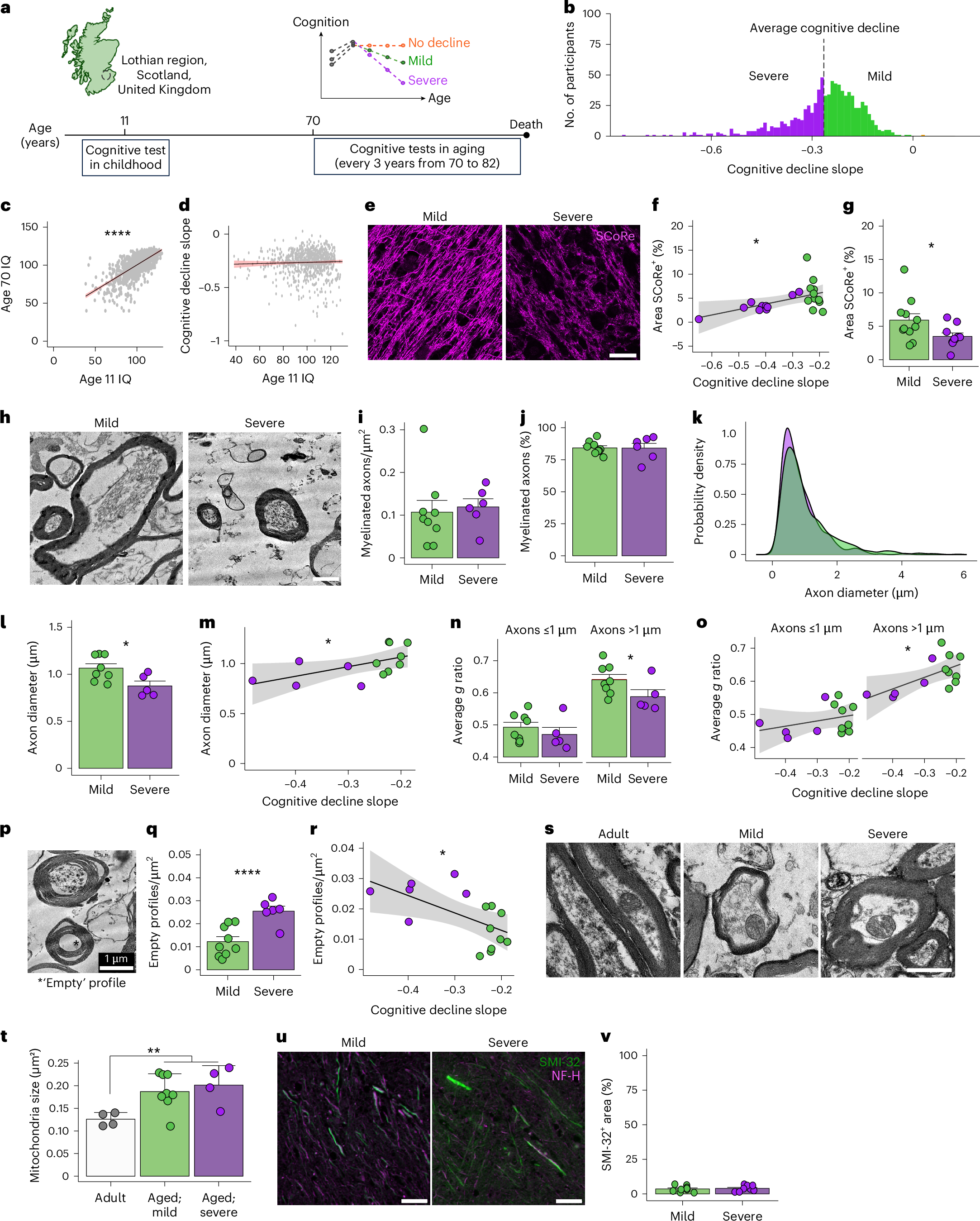
Cognitive decline in aging impacts quality of life, for which therapeutic interventions are lacking. Why some individuals experience more severe cognitive decline with aging is unclear. Here we uncover a role for the brain’s myelin-forming cells—oligodendrocytes—in explaining this variance. By investigating neuropathological and transcriptomic changes in human white matter associated with individual rates of cognitive decline in aging, we find that worse cognitive trajectories unexpectedly associate with smaller myelinated axon size, thicker myelin and more oligodendrocytes with downregulation of NRF2. Aged oligodendrocyte-specific NRF2-knockout mice showed attenuated cognitive improvement over time and mirrored the white matter pathology of human cognitive decline in aging. These findings place the oligodendrocyte as a contributor to cognitive decline and highlight the NRF2 pathway as a therapeutic target to preserve cognition in human aging.