2026-07-21 オックスフォード大学
<関連情報>
- https://www.ox.ac.uk/news/2026-07-21-new-study-reveals-a-third-of-adolescents-have-seen-self-harm-content-online-despite
- https://www.nature.com/articles/s44220-026-00682-w
アルゴリズムによって誘導されるオンライン自傷行為コンテンツへの接触と、32,000人の青少年におけるより広範な心理社会的リスクとの関連性 Algorithmically driven exposure to online self-harm content and its association with broader psychosocial risk in 32,000 adolescents
Holly Bear,Emma Soneson,Galit Geulayov & Mina Fazel
Nature Mental Health Published:21 July 2026
DOI:https://doi.org/10.1038/s44220-026-00682-w
Abstract
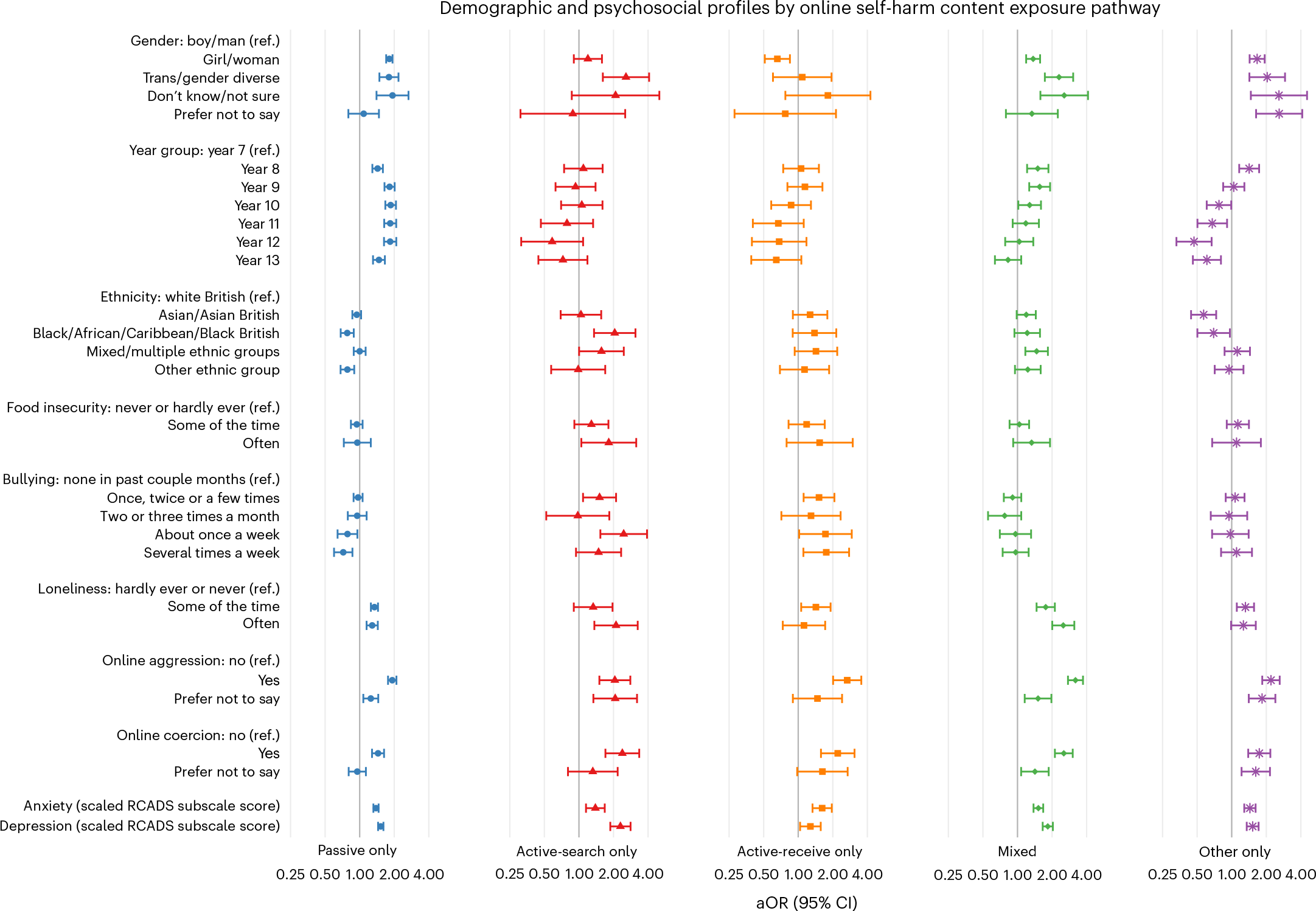
Adolescents increasingly inhabit digital environments where exposure to self-harm content may occur unintentionally or through active engagement, yet little is known about how different exposure pathways relate to psychosocial risk. Here we examine past-month exposure to online self-harm content, its frequency and pathways of exposure using 2025 OxWell Student Survey data from 32,102 students aged 11–18 years in England. One-third of students (34.5%) reported past-month exposure, predominantly unintentional (passive) and most commonly through algorithmic feed suggestions (66.2% of exposed students). Exposure occurred across five distinct pathways, each associated with elevated psychosocial risk as characterized by higher loneliness, greater experience of online harms and poorer mental health. Students exposed through intentional (active) or mixed exposure pathways had particularly pronounced risk profiles. These findings highlight the high proportion of adolescents currently exposed to online self-harm content, most often unintentionally encountered through algorithm-driven social media feeds. Reducing harm will require a multipronged public health response to limit widespread passive exposure driven by platform algorithms, alongside tailored approaches to identify and support the smaller but more vulnerable group of adolescents more actively engaging with this content. Coordinated action spanning adolescent digital literacy, platform design, regulation and enforcement is essential.