2026-07-27 東京大学
<関連情報>
- https://www.u-tokyo.ac.jp/focus/ja/press/z0406_00014.html
- https://isevjournals.onlinelibrary.wiley.com/doi/10.1002/jev2.70341
COVID-19における腸内細菌叢由来の細菌性細胞外小胞:その特徴と免疫学的影響 Gut Microbiota-Derived Bacterial Extracellular Vesicles in COVID-19: Their Signature and Immunological Impact
Aya Ishizaka, Michiko Koga, Tomoya Hayashi, Ken J Ishii, Hiroyuki Yamamoto, Hiroshi Yotsuyanagi, Taketoshi Mizutani
Journal of Extracellular Vesicles Published: 23 July 2026
DOI:https://doi.org/10.1002/jev2.70341
ABSTRACT
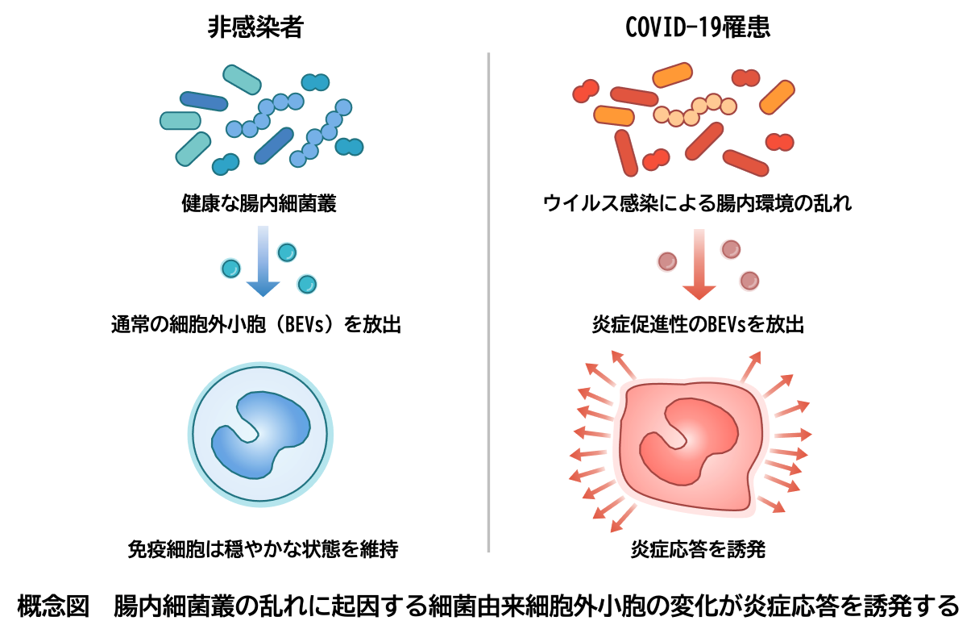
Gut microbial dysbiosis has been observed in several diseases. Although causal links and direct effects on host cells remain unclear, bacteria-derived extracellular vesicles (BEVs) from the gut microbiota may regulate the host immune response. We examined the impact of severe acute respiratory syndrome coronavirus 2 (SARS-CoV-2) infection on the gut microbiome and BEVs release, and the effects of released BEVs on cytokine responses in monocyte-derived cell lines. Fecal samples from 17 patients with coronavirus disease 2019 (COVID-19) and 20 healthy individuals were collected to isolate bacterial and BEV fractions. Parental BEV-releasing bacteria were identified from vesicle-encapsulated bacterial DNA by 16S rRNA gene sequencing. Patients with COVID-19 exhibited altered gut microbiota composition and the profile of bacterial DNA-containing BEVs (dcBEVs) release compared to healthy controls. BEVs from patients, but not from healthy individuals, significantly changed cytokine levels in U937 monocyte cells. Following COVID-19 recovery, dcBEV profiles diverged into two distinct groups: those that retained the capacity to induce cytokines in monocytes and those that lost this functionality. BEVs from single bacterial cultures within families altered after COVID-19 onset affected the expression of genes in monocytes, primarily immune-response genes, notably chemokine ligands and G protein-coupled receptors. SARS-CoV-2–induced dysbiosis alters the profile of dcBEVs release, thereby modulating the host immune response and potentially contributing to COVID-19 pathogenesis.