2026-07-27 インペリアル・カレッジ・ロンドン(ICL)
<関連情報>
- https://www.imperial.ac.uk/news/articles/2026/smart-wound-dressing-speeds-up-healing-by-triggering-bodys-own-repair-signals/
- https://www.nature.com/articles/s41563-026-02682-8
力応答性生体材料は、内因性成長因子を利用することで組織修復を促進する Force-responsive biomaterials drive tissue repair by harnessing endogenous growth factors
Magdalene Y. Ho,Nuria Oliva,Christopher Basu,Marcos R. Rodriguez,Jose Antonio Duran-Mota,Divya M. Gollapalli,Victor G. Szwarcberg,Mo Akhavani,Kyle P. Quinn & Benjamin D. Almquist
Nature Materials Published:27 July 2026
DOI:https://doi.org/10.1038/s41563-026-02682-8
Abstract
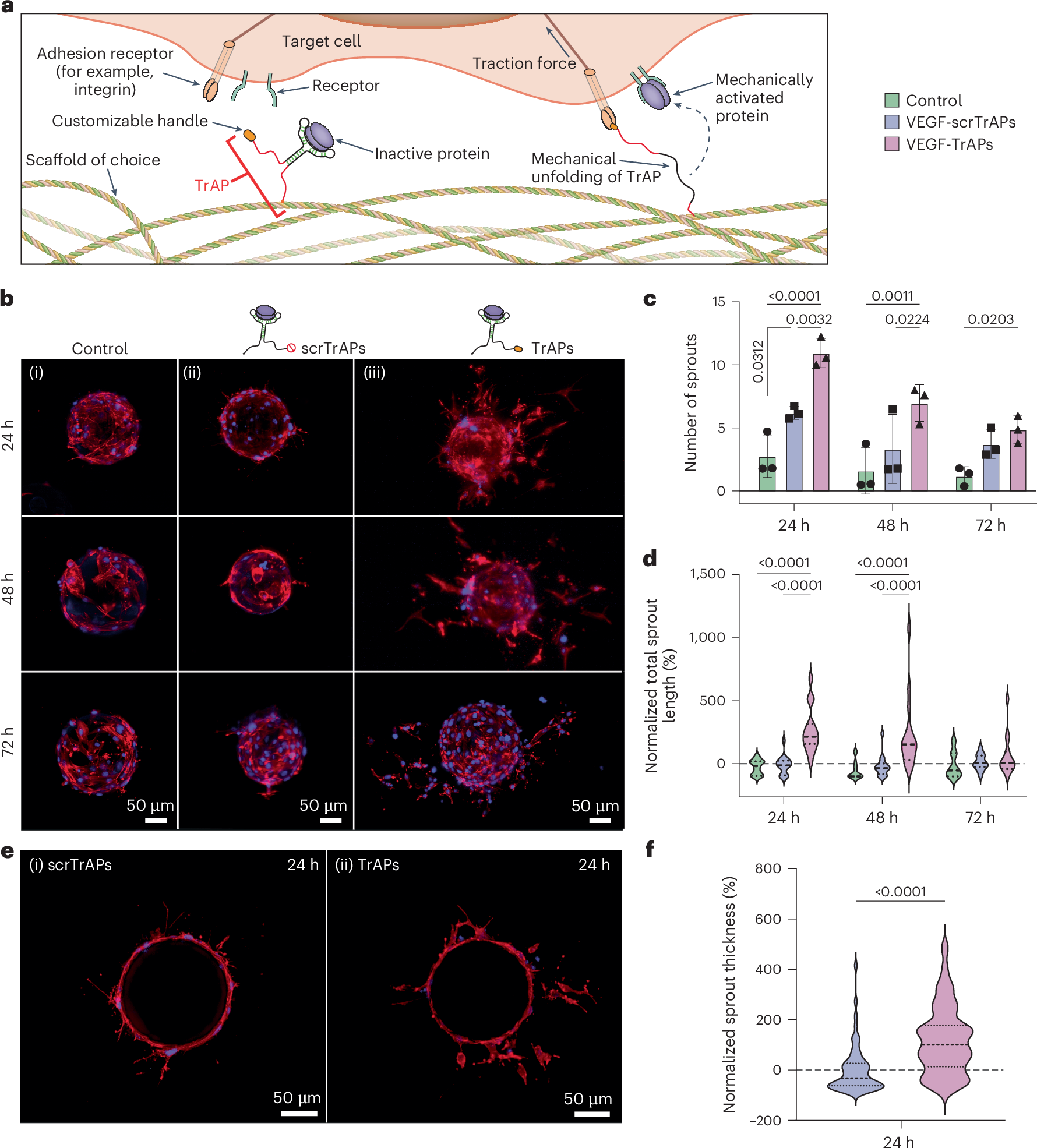
Materials enabling the cell-responsive delivery of endogenous biologics, such as growth factors, have the potential to modulate wound repair cost-effectively and safely. Unlike passive drug delivery strategies that require supraphysiological doses of recombinant protein or stimuli-responsive systems that rely on external triggers, we demonstrate a strategy that harnesses cellular traction forces as an intrinsic delivery trigger. Traction-force-activated payloads are bioinspired aptamer constructs attached to biomaterial scaffolds that selectively harvest, concentrate and reactivate multiple endogenous growth factors from cells, injury sites and blood lysate in vivo (rat femur and mouse skin) and ex vivo (human skin), at doses orders of magnitude lower than current clinical standards. Unmodified oligonucleotide aptamers retain functionality in enzyme-rich wound environments, substantially expanding the translational potential of nucleic-acid-based therapeutics. The ability to harvest and redeliver endogenous growth factors without exogenous triggers, recombinant proteins or cold-chain logistics via mechanoresponsive biomaterials opens possibilities for accessible, cost-effective combinatorial biologic therapies.