2026-08-04 ミュンヘン大学(LMU)
<関連情報>
- https://www.lmu.de/en/newsroom/news-overview/news/transition-from-milk-to-solid-food-shapes-immune-system-development-2a0c5579.html
- https://www.nature.com/articles/s41467-026-75853-5
離乳期前後の食事によるIFNγを介した調節回路の活性化は、cDC1の成熟とCD8 + T細胞の分化を促進する Peri-weaning, diet-induced activation of an IFNγ-mediated regulatory circuit promotes cDC1 maturation and CD8+ T cell differentiation
Doğuş Altunöz,Ramin Shakiba,Kaushikk Ravi Rengarajan,Hamsa Narasimhan,Nikos E. Papaioannou,Sadiq Nasrah,Jessica Vetters,Maria L. Richter,María Parra Reyes,Nadine Nuschele,Denise Messerer,Sabine Schwamberger,Andreas Goschin,Dimitrios Starfas,Melanie Schmid,Tobias Straub,Michele Proietti,Katrin Böttcher,Maria Colomé-Tatché,Dirk Haller,Jan P. Böttcher,Stephanie C. Ganal-Vonarburg,Sophie Janssens,Christian Schulz,… Barbara U. Schraml
Nature Communications Published:04 August 2026
DOI:https://doi.org/10.1038/s41467-026-75853-5
Abstract
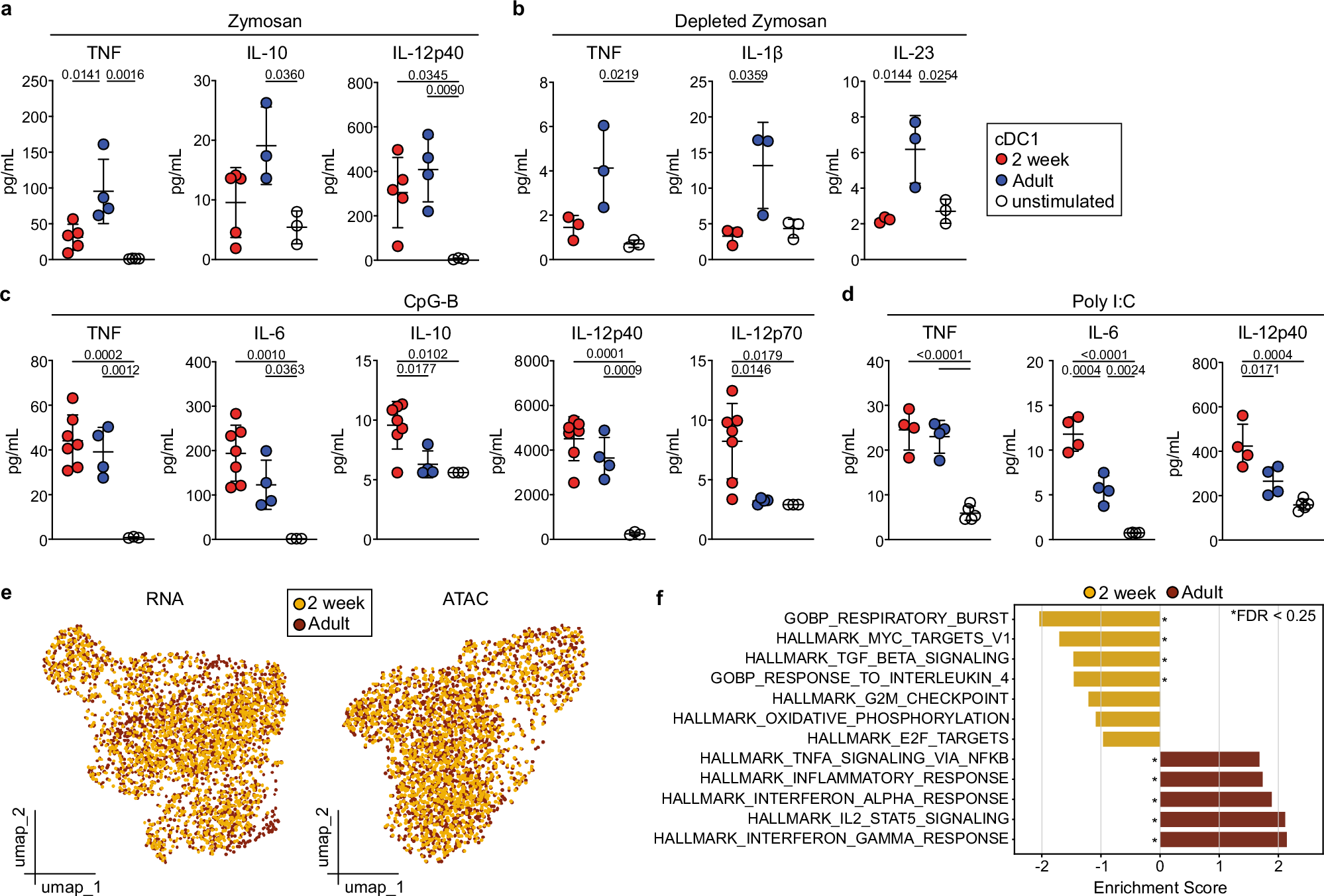
Maintaining a balanced immunity between pathogen defense and tolerance to environmental antigens in neonates is essential for survival and the establishment of life-long immune homeostasis. Instructed by environmental signals, type 1 conventional dendritic cells (cDC1) contribute to both processes but how the balance may be achieved is unclear. Here, we uncover an interferon (IFN)γ-driven regulatory circuit in early life that relays dietary cues to spleen cDC1. IFNγ-mediated STAT1-signaling induces an immunogenic maturation program in spleen cDC1 that enables them to shape the effector differentiation of antigen-experienced effector memory CD8⁺ T cells. This cDC1 program emerges during the transition from breastfeeding to solid food at weaning, occurs in germ-free mice, and remains operative to dietary intervention in adult mice. At weaning, this IFNγ signal enables spleen cDC1 to shape the effector phenotype of food-antigen-specific CD8+ T cells in a feedforward manner, thereby recalibrating the developing T cell pool. Our findings identify diet as a modifiable cue that can tune systemic cDC1-mediated immunity, opening new opportunities to steer immune responses during early life and beyond.